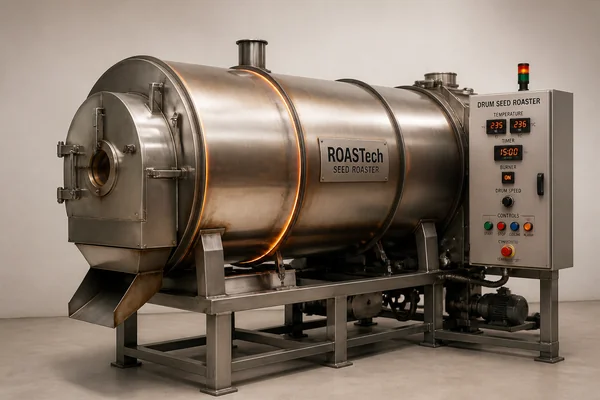
Roasting is not just about flavor. Heat denatures the protein inside the seed and opens micro-pores in the cell walls, which lets oil flow out far more easily under pressure. Published research on sesame found that oil yield improved from 33.5% to 62.6% when seeds were roasted before extraction — one of the largest single gains available anywhere in an oil mill line.
Roasting temperatures vary widely by seed, typically from about 90°C up to 260°C. Sesame, for example, is commonly roasted at approximately 170°C for around 15 minutes. Because the window between under-roasted (low yield) and scorched (off-flavors, dark oil) is narrow, the design of the roaster itself matters. The two dominant designs on the market — covered in detail on our seed roasting machine category page — are the rotating drum roaster and the flat-bottom (pan) roaster.
A drum roaster is a horizontal cylinder that rotates while heat is applied to its shell. As the drum turns, seeds tumble continuously, so every kernel keeps changing its contact point with the hot wall. This constant motion is what gives drum roasters their reputation for evenness: small, round, free-flowing seeds such as sesame and rapeseed circulate naturally and roast very uniformly with little scorching.
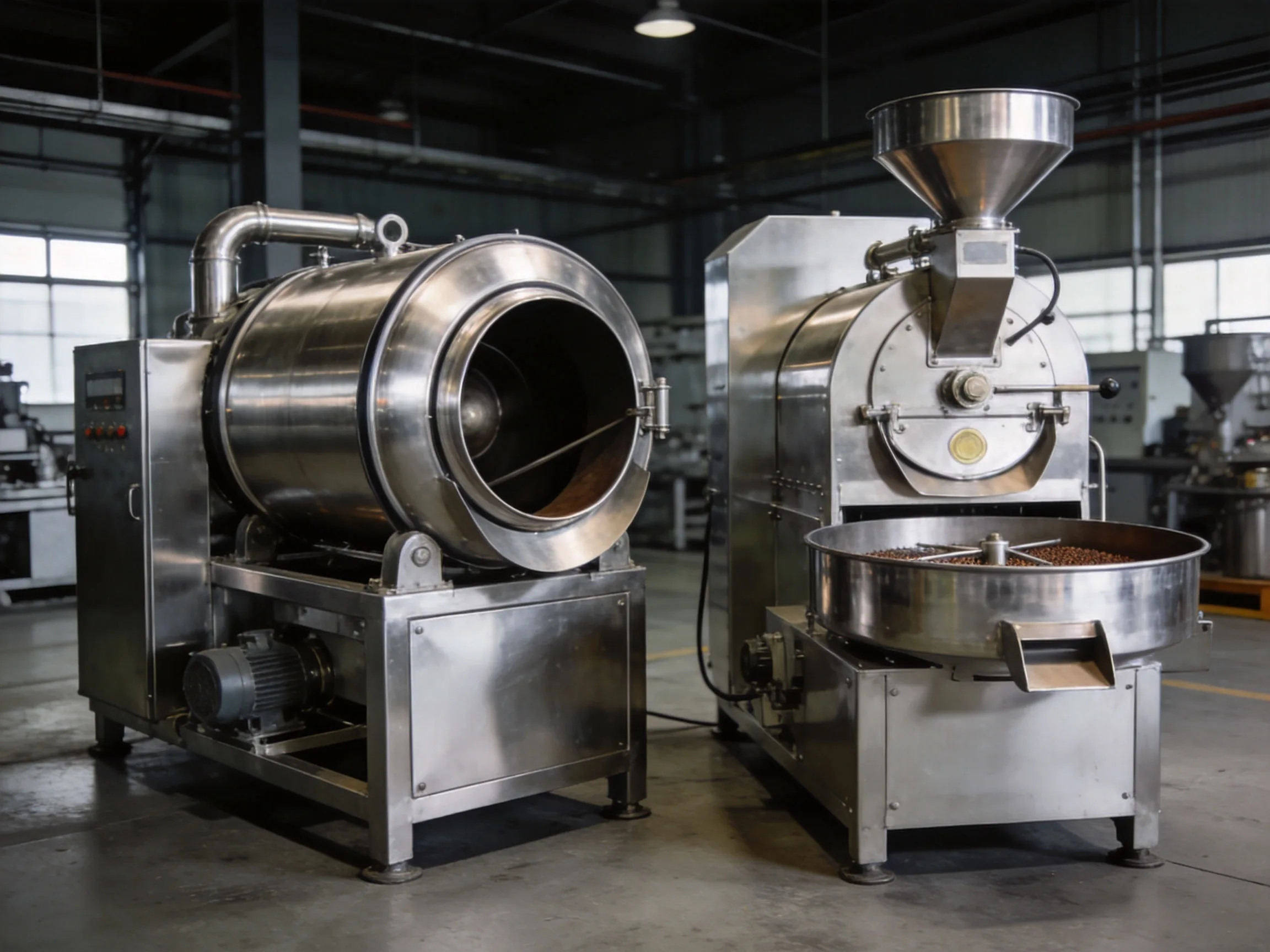
Drum roasters also offer the widest fuel flexibility. Common versions include electric drum, open-fire drum, closed-fire drum, and electromagnetic induction drum models. Open-fire and closed-fire types suit regions where wood, coal, or biomass is cheaper than electricity, while electric and induction drums give tighter temperature control for operators chasing consistent oil color and flavor.
A flat-bottom roaster is essentially a large heated pan with rotating stirring arms or scrapers that turn the seeds across the bottom. The seed bed stays visible during roasting, so the operator can judge color and aroma in real time — useful for peanuts and other larger kernels where over-roasting is easy to spot but costly to miss.
Heating options here are electromagnetic induction, electric thermal-oil, and fired thermal-oil. In thermal-oil versions, a heated oil jacket spreads heat across the entire pan bottom rather than concentrating it at one flame point, which protects against local hot spots and keeps larger kernels from burning on the skin while staying raw inside.
The comparison table above summarizes the trade-offs. In practice, the decision usually comes down to three questions. First, what seed dominates your line? Small, round seeds flow well in a drum; peanuts and large kernels are typically gentler to handle in a stirred pan. Second, what energy is cheap and reliable at your site? Fire-heated drums favor low-cost solid fuel; induction and thermal-oil favor stable grid power and tighter control. Third, batch or continuous? Flat-bottom roasters are natural batch machines, while drums fit more easily into higher-throughput continuous preparation lines.
On price logic, fire-heated drum models are typically the lowest-capex entry point, while induction and thermal-oil machines cost more upfront but repay it through precise temperature control, less scorching loss, and cleaner working conditions. Whichever you choose, roasting performs best on clean, properly prepared seed — see the full seed preparation equipment range, including seed cleaning machines, for the upstream steps.
SinoOil Machinery has manufactured factory-direct oilseed processing equipment since 2009, supplying mills in more than 80 countries with ISO9001, CE, and SGS certification. Our lineup covers seven roaster models — four drum types (electric, open-fire, closed-fire, induction) and three flat-bottom types (induction, electric thermal-oil, fired thermal-oil) — all detailed on the seed roasting machine page. Tell us your seed type, daily capacity, and local fuel situation via our contact page, and our engineers will recommend the right roaster for your line.
| Factor | Drum Roaster | Flat-Bottom Roaster |
|---|---|---|
| Structure | Rotating horizontal cylinder; seeds tumble continuously over the heated wall | Stationary round pan with rotating stirring arms; seeds turned across a heated bottom |
| Heat evenness | Very even — constant tumbling keeps every seed in motion, low scorch risk | Even with thermal-oil or induction heating; stirring speed matters more for uniformity |
| Capacity | Typically suited to continuous or larger-batch roasting in higher-throughput lines | Batch operation; capacity set by pan diameter, easy to match small and mid-size mills |
| Seeds suited | Sesame, rapeseed and other small, round, free-flowing seeds | Peanuts, soybeans and larger kernels that benefit from gentler, visible stirring |
| Fuel options | Electric, open fire, closed fire, or electromagnetic induction | Electromagnetic induction, electric thermal-oil, or fired thermal-oil |
| Price logic | Fire-heated drums typically lowest upfront cost; induction costs more but offers precise control | Thermal-oil models typically cost more upfront but spread heat gently and reduce scorching losses |
Both designs can roast peanuts. Flat-bottom roasters are often preferred because the stirred, visible bed is gentler on large kernels and easier to monitor, but a closed-fire or electric drum works well where continuous throughput matters more than batch control.
Sesame is typically roasted at approximately 170°C for around 15 minutes. Across different oilseeds, roasting temperatures range from roughly 90°C to 260°C, so always match the profile to the seed and verify by oil color and aroma.
Yes. Heat denatures seed protein and opens pores in cell walls, releasing bound oil. Published research on sesame recorded oil yield rising from 33.5% to 62.6% with roasting — a larger gain than most other single process improvements.
It depends on local energy prices. Open-fire and closed-fire drums typically have the lowest fuel cost where biomass or coal is cheap, while induction and thermal-oil machines usually cost more upfront but waste less seed through scorching and need less operator attention.
SinoOil engineers size the right pretreatment equipment for your capacity — free plant design included.