
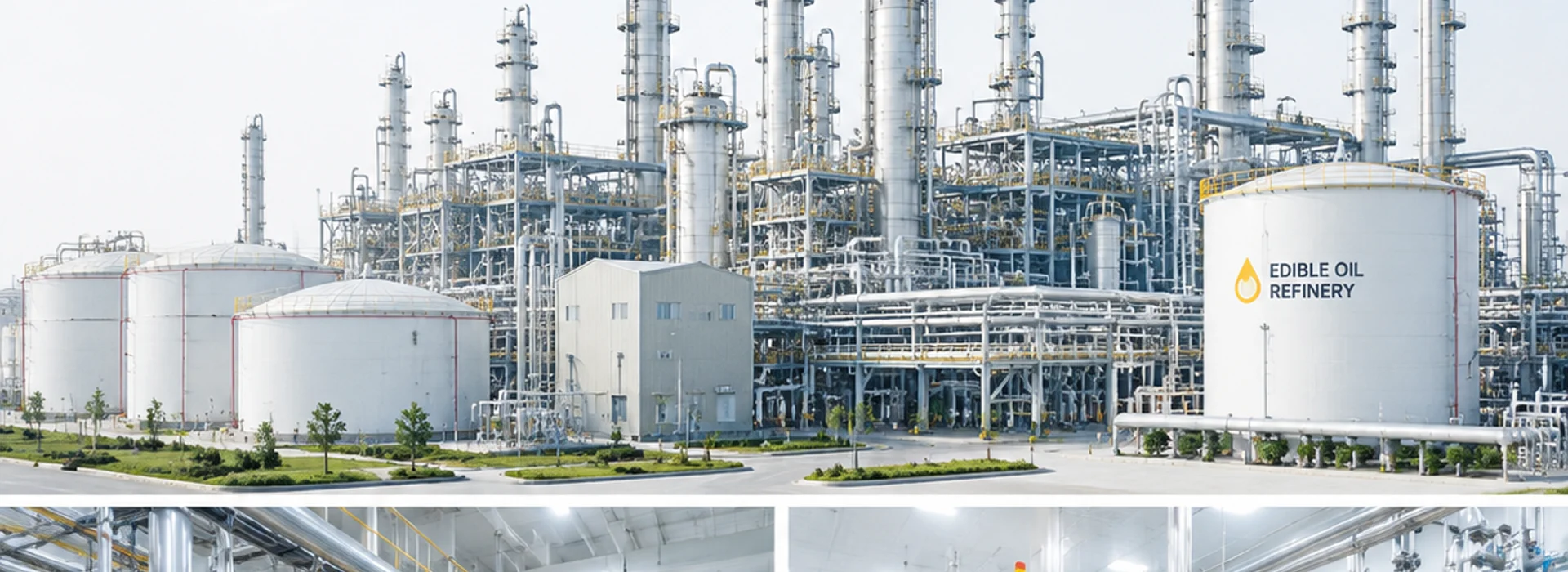
Professional Oil Refinery Plant — From Crude to Premium Oil
Complete edible oil refinery solutions — degumming, neutralization, bleaching, deodorization and winterization for food-grade refined oil at any scale.
Why Invest in an Oil Refinery?
Refining transforms crude oil into premium edible oil — unlocking higher margins, broader markets and long-term competitive advantage
Higher Value Products
Refined edible oil commands 20–40% higher selling prices than crude oil — supermarket brands, food manufacturers and institutional buyers pay premium for clarity, stability and neutral taste.
Export Quality
Meet international acidity, peroxide, color and clarity standards — access export markets, multinational supply chains and food industry certification requirements worldwide.
Multiple Oil Types
One refinery line processes soybean, sunflower, palm, rapeseed, cottonseed and peanut crude oil — flexible configuration for seasonal crops and diversified product portfolios.
Long-Term ROI
Refinery plants deliver stable cash flow over 15–20 years — scalable from batch to continuous operation, with expansion paths as your market and crude supply grow.
Complete Refining Process
Six core refining stages transform crude oil into clear, neutral-tasting premium edible oil — each step engineered for consistent food-grade quality
Refinery Equipment Configuration
Integrated refining equipment from batch modules to full continuous refinery lines — matched to your capacity, oil type and automation requirements
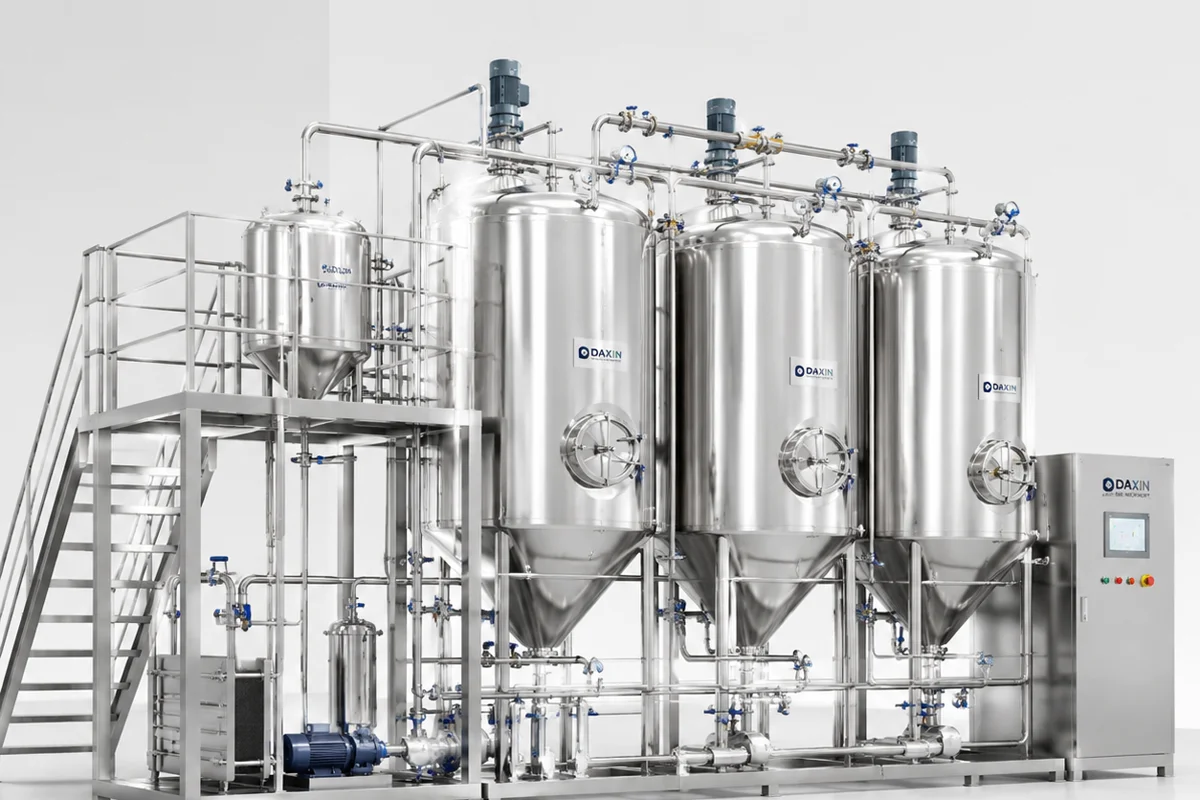
Batch Oil Refinery
Compact batch refining for 1–10 TPD — degumming, neutralization, bleaching and deodorization in integrated tanks for startups and regional brands.
View Equipment →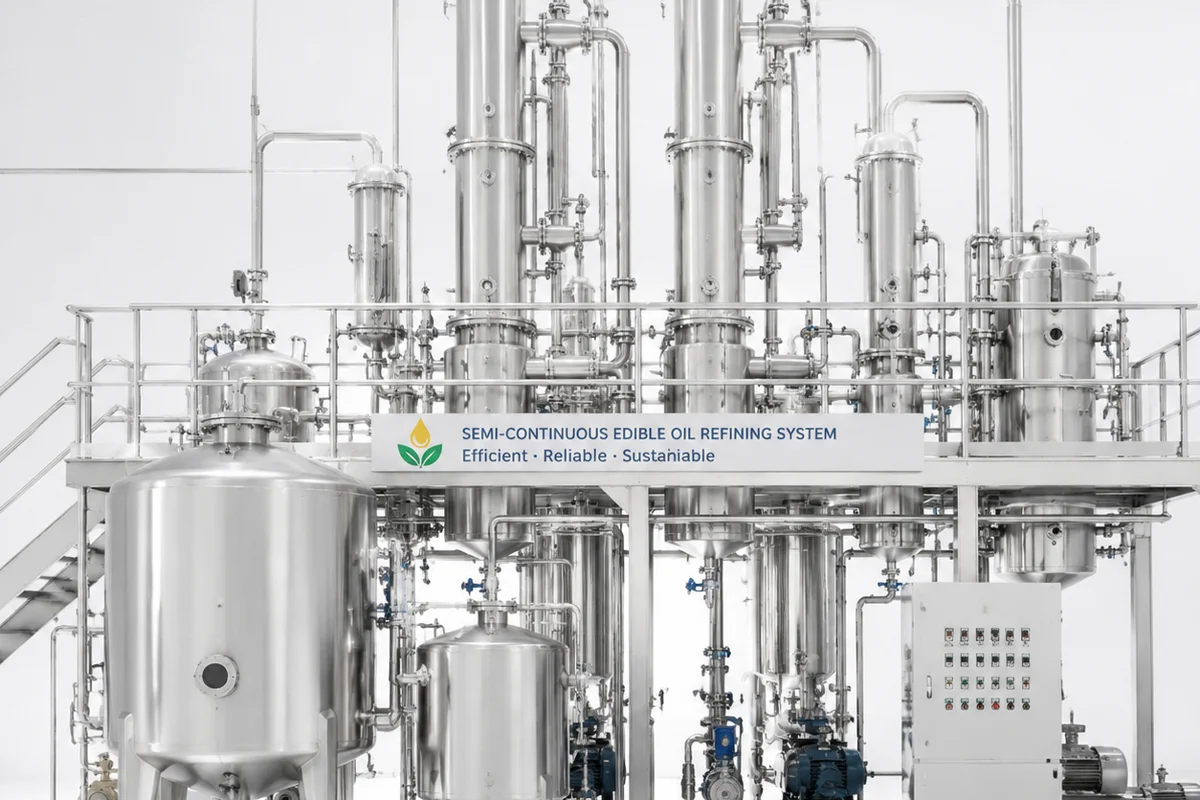
Semi-Continuous Refinery
Hybrid refining for 10–50 TPD — linked reactors with semi-automated operation, ideal for growing commercial producers entering refined oil markets.
View Equipment →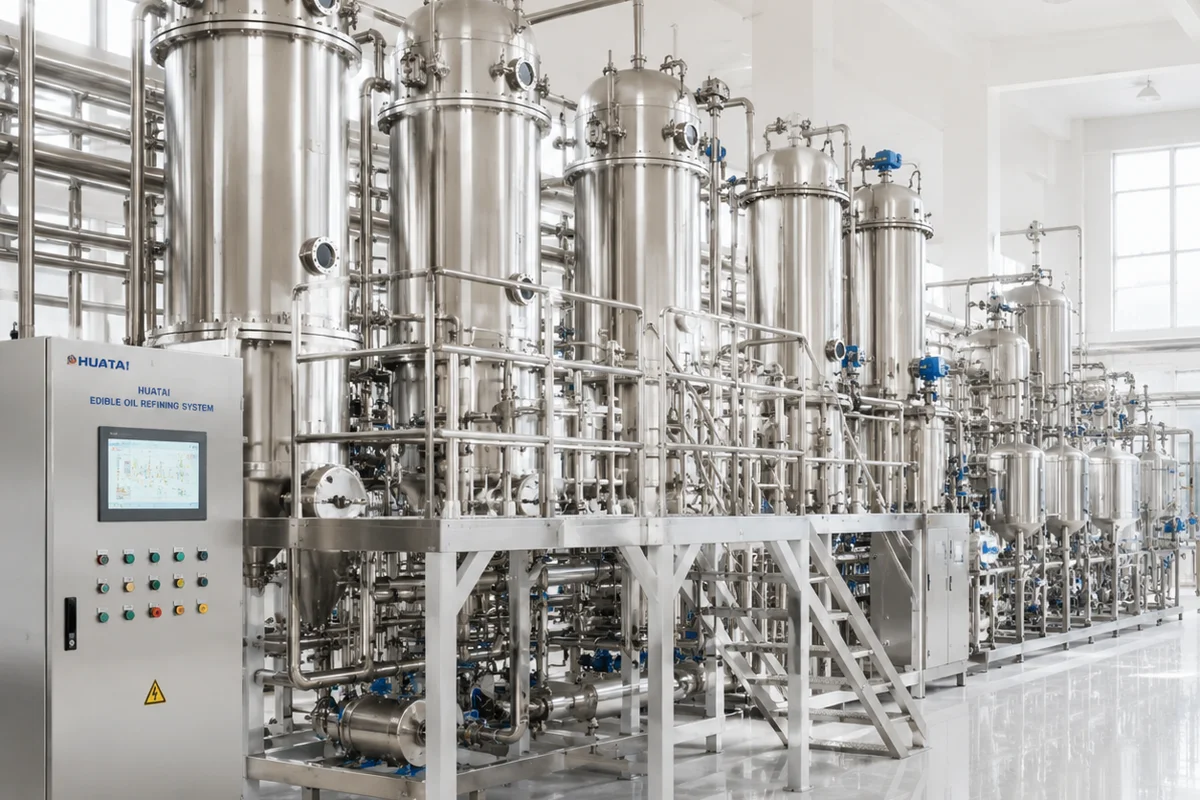
Continuous Oil Refinery
Full continuous refining line for 50–1000+ TPD — degumming, neutralization, bleaching and deodorization towers for 24/7 industrial operation.
View Equipment →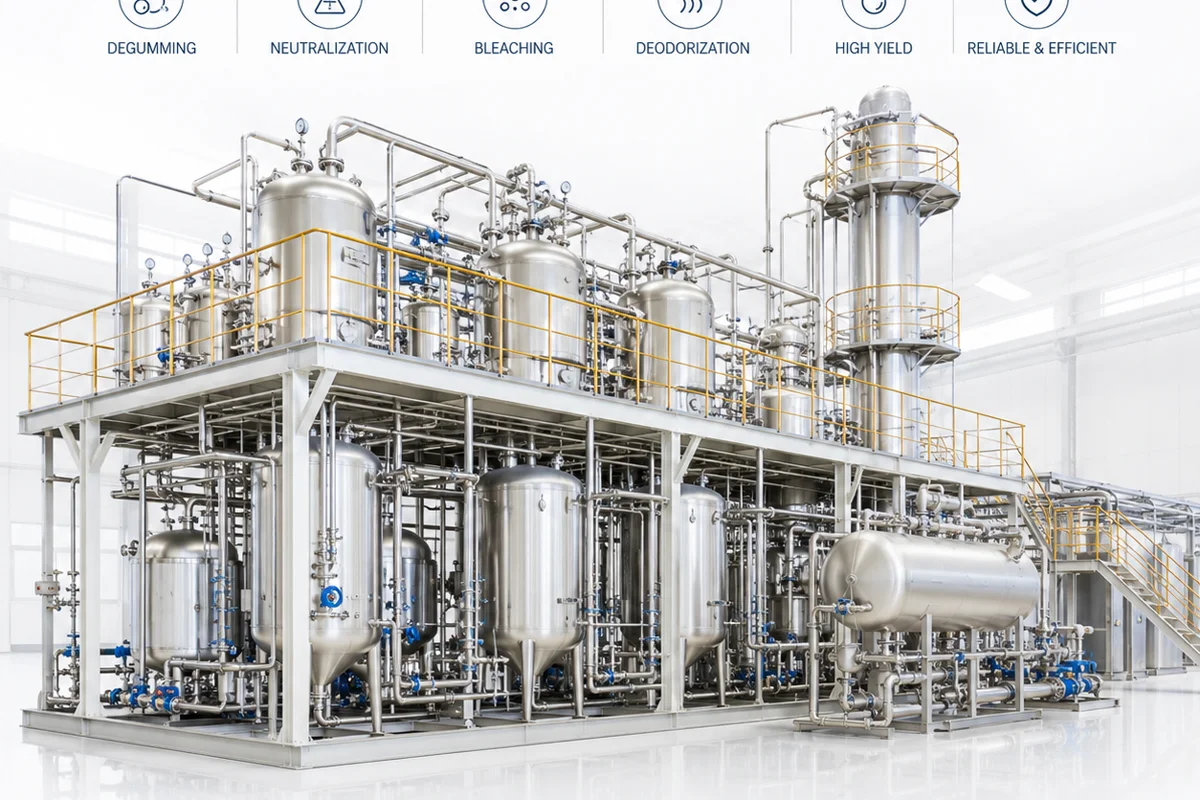
Complete Refinery Plant
Turnkey refinery package with all sections, tank farm, utilities interface and centralized control — ready for EPC and government tender projects.
View Equipment →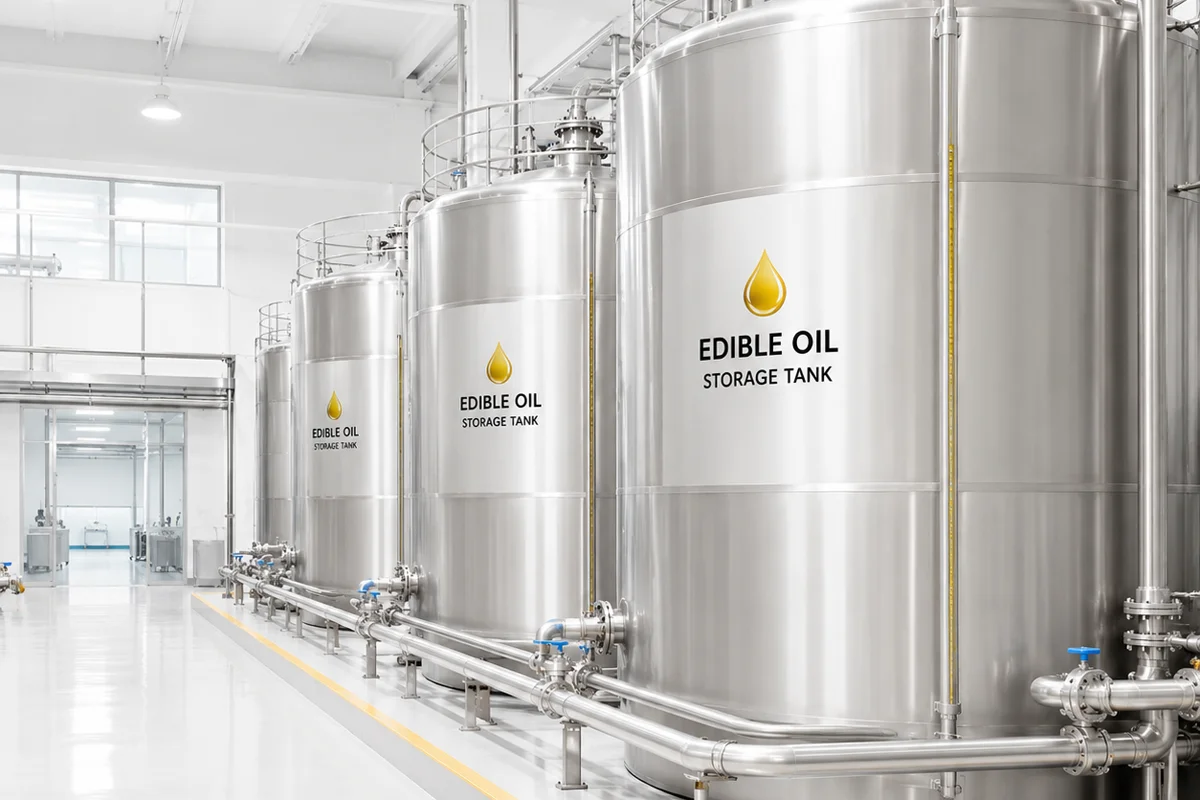
Oil Storage Tanks
Crude and refined oil tank farms sized for daily refinery throughput — stainless or carbon steel with heating and level monitoring.
View Equipment →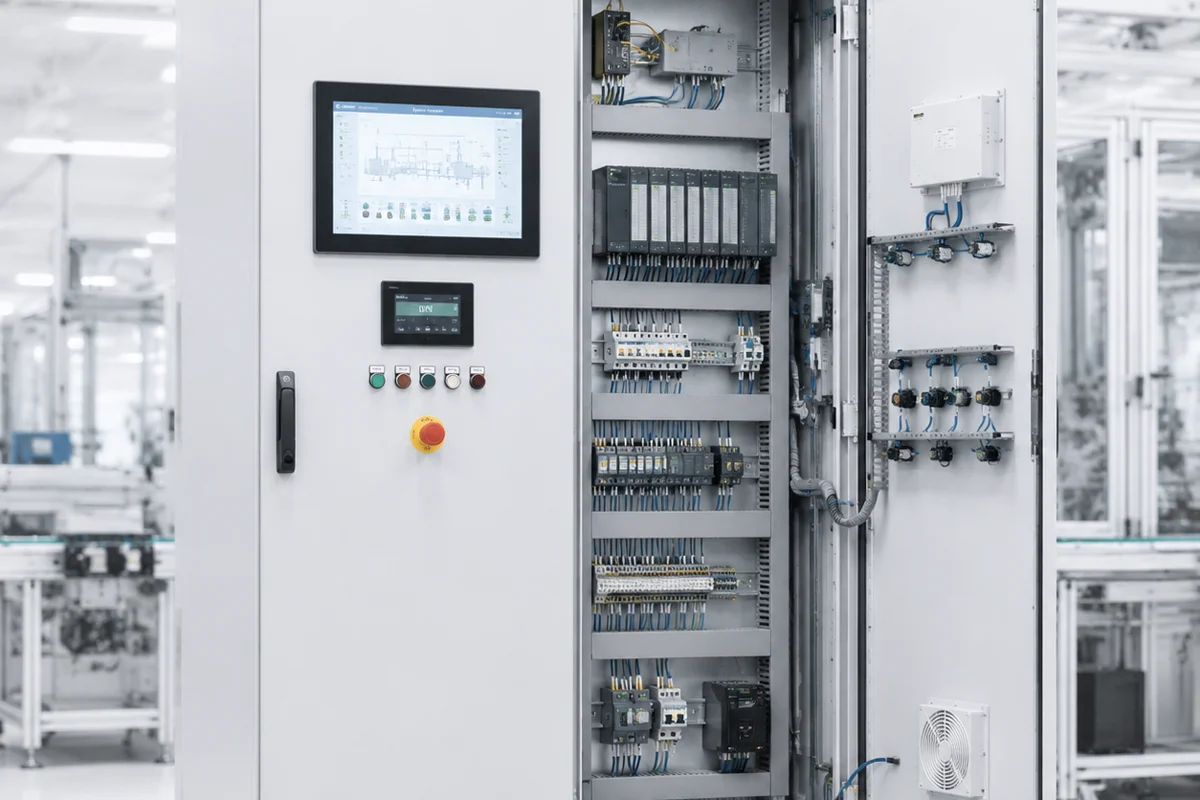
PLC Control System
Process automation for temperature, vacuum, flow and alarm monitoring — optional SCADA for continuous refinery central control rooms.
View Equipment →Available Refinery Capacities
From batch refining for new brands to continuous industrial plants — select the technology and capacity that matches your market and investment level
Small Batch Refinery
- Technology: Integrated batch tanks
- Workshop: 150–300 m²
- Best for: New refined oil brands
Commercial Batch Refinery
- Technology: Multi-tank batch line
- Workshop: 400–600 m²
- Best for: Regional supermarket supply
Semi-Continuous Refinery
- Technology: Linked semi-continuous
- Workshop: 800–1,200 m²
- Best for: Growing commercial brands
Continuous Refinery
- Technology: Full continuous line
- Site: 2,000–4,000 m²
- Best for: National distribution
Industrial Refinery
- Technology: Multi-section continuous
- Site: 4,000–30,000+ m²
- Best for: Export & EPC projects
Quality Standards & Certifications
Refined oil quality parameters, international standards and equipment certification for supermarket, export and food industry buyers
Acid value, peroxide value, color (Lovibond), moisture, impurities and soap content controlled within Codex Alimentarius and buyer specifications — laboratory QC protocols at commissioning.
Refinery equipment manufactured under ISO9001 quality management with CE marking and SGS third-party inspection available for international projects and government tenders.
Food-grade stainless contact surfaces, traceability documentation and hygienic layout design — supporting local food authority registration and buyer quality audits.
Performance test runs, oil sample analysis, operating manuals and QC procedures provided at handover — ensuring your refinery meets design specifications from day one.
Project Examples
Edible oil refinery plants delivered worldwide — batch, semi-continuous and continuous refining for soybean, palm, sunflower and rapeseed oil
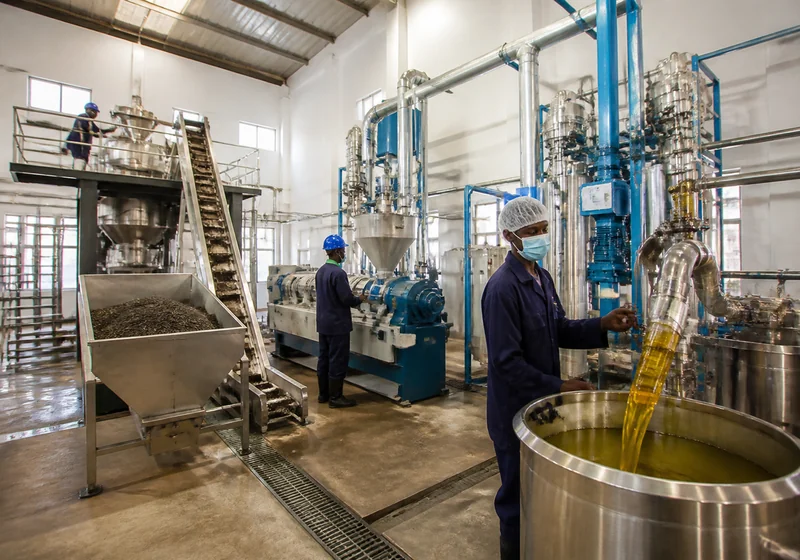
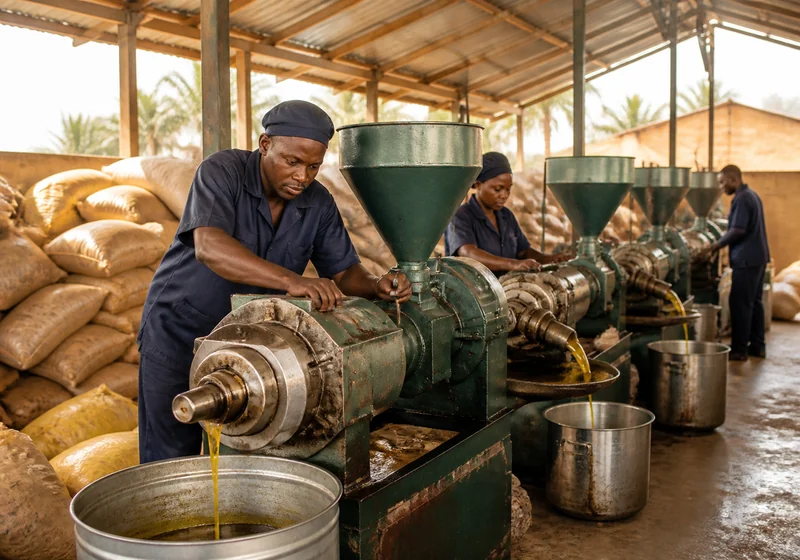
Kenya · Nairobi
15 TPD Batch Refinery
- Integrated batch refining line
- Sunflower & soybean oil
- Supermarket brand supply
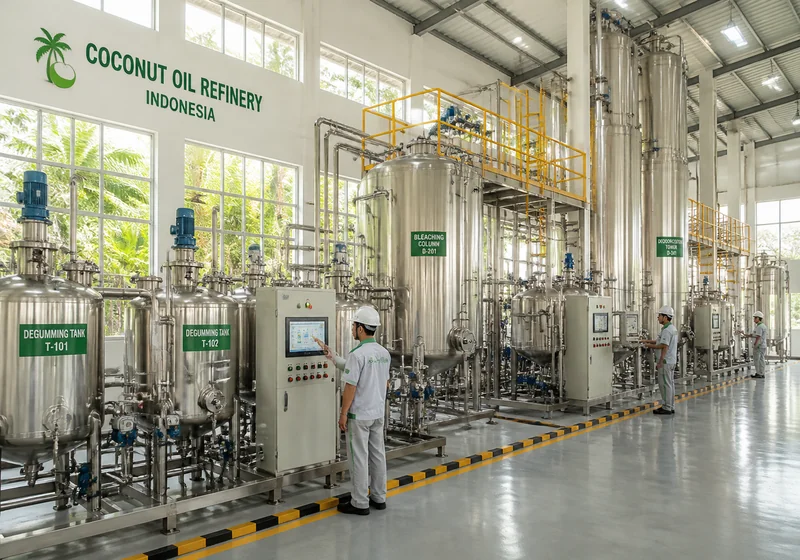
Nigeria · Lagos
30 TPD Semi-Continuous Refinery
- Degumming & deodorizing
- Soybean crude processing
- Regional distribution network
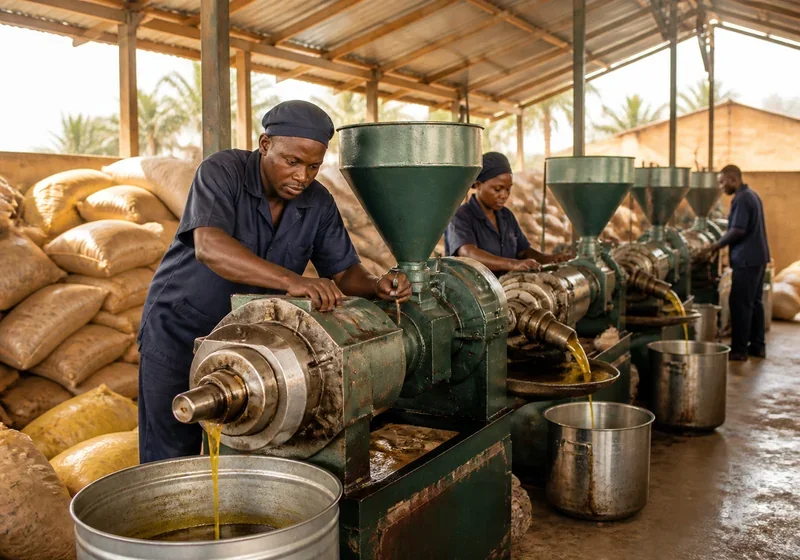
Indonesia · Sumatra
100 TPD Palm Oil Refinery
- Continuous physical refining
- PLC central control
- Export-oriented production
Ethiopia · Addis Ababa
200 TPD Soybean Refinery
- Full continuous refinery
- Tank farm & utilities
- National food program
Frequently Asked Questions
Batch refining processes oil in discrete tanks — ideal for 1–20 TPD, lower investment and flexible oil changeover. Continuous refining runs 24/7 through linked reactors and towers — essential at 50+ TPD for lower cost per ton and stable quality. We help you choose based on capacity, budget and market requirements.
A 5 TPD batch refinery typically ranges from USD 50,000–120,000 (equipment). A 30 TPD semi-continuous plant is higher; a 100 TPD continuous refinery ranges from USD 1.2–2.5 million depending on automation and utilities. Civil works, boiler plant and installation are additional. We provide itemized quotations based on your oil type and capacity.
Yes. Many clients operate integrated pressing + refining plants — crude oil from your screw press line feeds directly into the refinery. We design combined layouts with shared tank farm, utilities and control systems for maximum efficiency and lower logistics cost.
Winterization (dewaxing) is typically required for sunflower oil, cottonseed oil and rice bran oil to prevent cloudiness at low temperatures. Soybean, palm and rapeseed refineries often omit winterization unless targeting cold-climate retail markets. We configure the refinery line based on your target oil type.
Batch refineries need steam or electric heating, process water and power (15–50 kW for small plants). Continuous refineries require steam boiler (3–20+ t/h), cooling water, electrical substation, compressed air and vacuum systems for deodorizers. Utility load tables are included in our engineering proposal.
Yes. We supply complete refinery equipment with process engineering, layout design, installation supervision, commissioning and operator training. Turnkey scope can include utility specification and project management for plants from 1 TPD batch to 1000+ TPD continuous. Contact us with oil type, capacity and country for a refinery proposal.
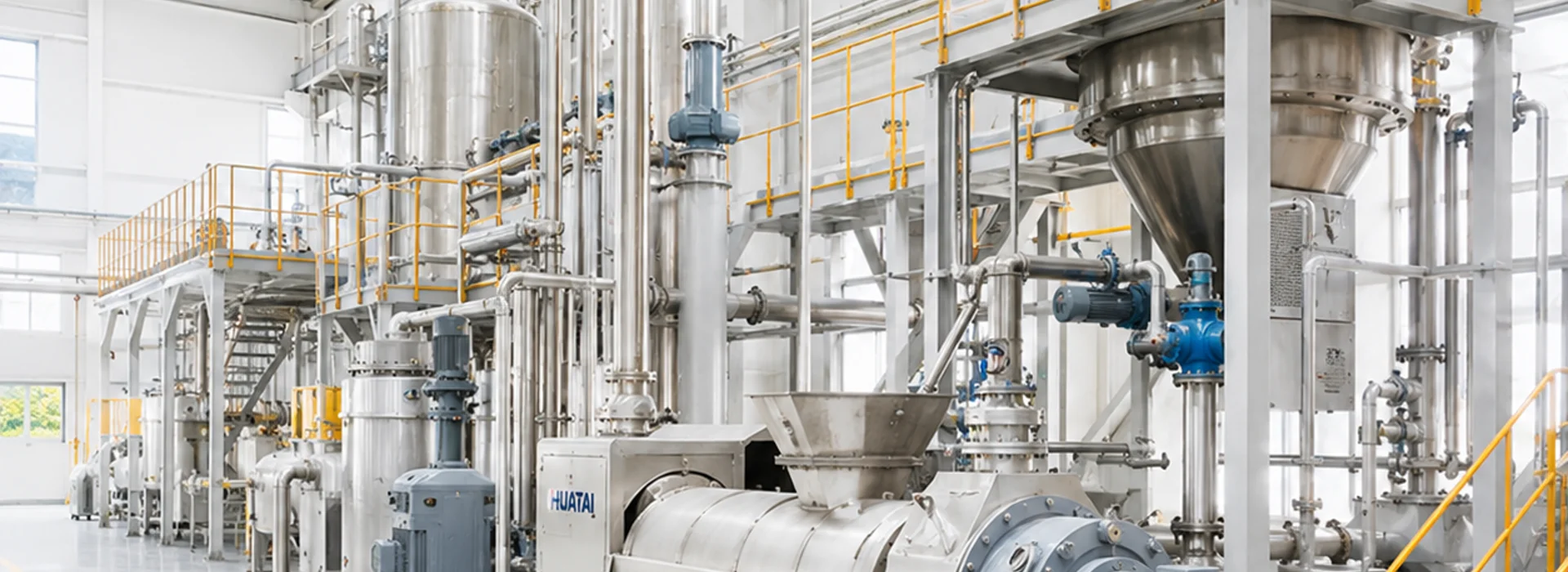
Ready to Build Your Oil Refinery Plant?
Tell us your oil type, refining capacity and country — our engineers will prepare a free refinery proposal and process flow diagram.