
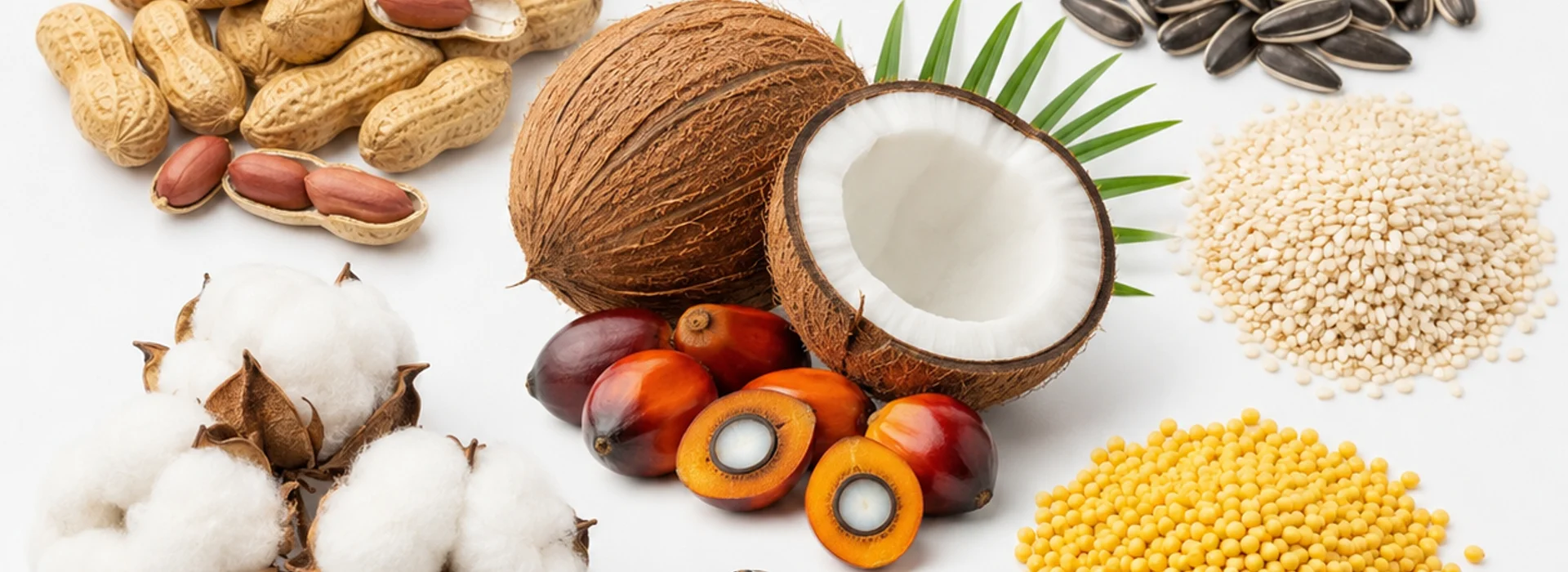
Processing Solutions for Every Oil Type
Each oilseed has unique processing requirements. We design tailored solutions for optimal yield and quality.
Why Oil Type Matters in Plant Design
The right process flow and equipment configuration depend on your raw material — not every oilseed can be processed the same way.
Soybean needs dehulling and conditioning; peanut benefits from roasting before pressing; palm requires sterilization and digestion; coconut uses drying and pressing — each oil type follows a distinct route.
Oil content ranges from 15% in soybean to over 60% in coconut. Plant design must match extraction method, press type and throughput to maximize recovery per ton of raw material.
Palm and cottonseed oils need deeper degumming; sesame and peanut oils may sell as cold-pressed crude; soybean and rapeseed often require full refining for retail-grade edible oil standards.
Screw press vs. hydraulic press, batch vs. continuous refinery, and auxiliary systems all vary by oil type. We specify equipment proven for your target oilseed and capacity.
Oil Processing Solutions Overview
Explore dedicated processing lines for each major edible oil — with typical oil content, process highlights and detailed solution pages.
Roasting and pressing for aromatic crude peanut oil — popular in Africa and Asia.
Soybean Oil 15–20% oil contentDehulling, conditioning and extraction for high-volume vegetable oil production.
Sunflower Oil 35–45% oil contentEfficient screw pressing for light, clear sunflower oil with strong global demand.
Sesame Oil 45–55% oil contentCold or hot press lines for premium aromatic sesame oil with high margins.
Rapeseed Oil 38–44% oil contentCanola-grade processing with pre-press and refining for temperate-climate markets.
Cottonseed Oil 15–20% oil contentDelinting and specialized refining for industrial and edible cottonseed oil.
Palm Oil 45–55% oil contentSterilization, digestion and pressing for tropical palm fruit processing mills.
Coconut Oil 60–68% oil contentCopra or fresh kernel pressing for virgin and refined coconut oil products.
Oilseed Comparison Guide
Compare oil content, processing complexity, market demand and typical investment levels across major oilseeds.
| Oilseed | Oil Content | Processing Difficulty | Market Demand | Investment Level |
|---|---|---|---|---|
| Peanut | 40–50% | Low–Medium | High (Africa, Asia) | Low–Medium |
| Soybean | 15–20% | Medium | Very High (Global) | Medium–High |
| Sunflower | 35–45% | Low–Medium | High (Europe, Africa) | Low–Medium |
| Sesame | 45–55% | Low | Medium (Premium niche) | Low |
| Rapeseed | 38–44% | Medium | High (Asia, Europe) | Medium |
| Cottonseed | 15–20% | High | Medium (Industrial) | Medium–High |
| Palm | 45–55% (FFB) | High | Very High (Tropical) | High |
| Coconut | 60–68% | Low–Medium | High (Asia-Pacific) | Low–Medium |
Oil Content Comparison
Higher oil content generally means lower raw material consumption per liter of finished oil. Coconut and sesame offer the highest yields per ton; soybean and cottonseed require more feedstock but benefit from abundant global supply.
Processing Difficulty
Peanut, sunflower and coconut lines are relatively straightforward for new investors. Palm and cottonseed projects involve more specialized steps — sterilization, digestion, delinting and deeper refining — and typically need experienced engineering support.
Market Demand
Soybean and palm oils dominate global volume. Peanut and sunflower oils are strong in regional retail markets. Sesame and coconut oils command premium prices in health-food and cosmetic segments.
Investment Considerations
Match plant scale to local raw material supply and sales channels. A 5–20 TPD peanut or sunflower mill suits many startups; soybean and palm projects often start at 20 TPD or above. We provide free feasibility guidance based on your oil type and budget.
Complete Oil Processing Workflow
From raw oilseed to packaged edible oil — five core stages integrated into every turnkey solution we deliver.
Need Help Choosing the Right Solution for Your Oil Type?
Tell us your oilseed, target capacity and market — our engineers will recommend the optimal process and prepare a free plant layout proposal.