
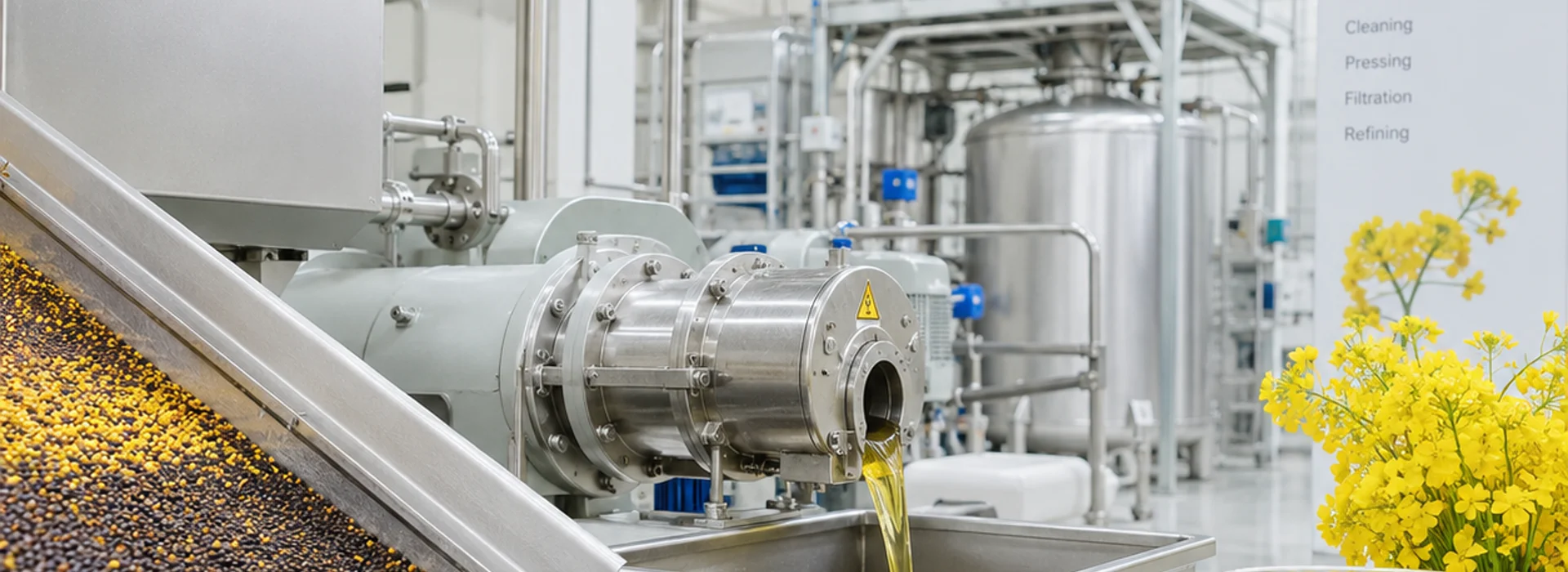
Complete Rapeseed Oil Processing Plant Solution
Tailored 🌿 oil processing solutions from small mills to industrial plants
Why Invest in Rapeseed Oil Processing Plant Solution?
Rapeseed (canola) is a major global oilseed — with strong edible oil demand, high oil content and valuable meal by-products for feed and export markets
Market Demand
Canola and rapeseed oil are staples across Europe, Canada, China and Central Asia. Retail cooking oil, food manufacturing and biodiesel sectors drive steady demand for refined and crude grades year-round.
Oil Content Advantage
Commercial rapeseed varieties contain 38–44% oil — among the highest-yielding temperate oilseeds. Careful conditioning before pressing maximizes recovery; solvent extraction suits industrial plants above 50 TPD.
Application Diversity
Supply refined bottled cooking oil, salad dressings, margarine bases, industrial frying oil and biodiesel feedstock. Low-erucic canola oil is positioned as a healthy vegetable oil in premium markets.
Profit Potential
Rapeseed meal (34–38% protein) sells to livestock and aquaculture feed mills — creating a second revenue stream alongside oil. Combined oil and meal income supports fast payback in major growing regions.
Canola/rapeseed is a major global oilseed cultivated from Canada to Europe and China. The process requires careful conditioning for pressing to optimize moisture and temperature. Full refining is needed for edible quality — degumming, neutralization, bleaching and deodorization remove glucosinolates, free fatty acids and color for food-grade standards.
Rapeseed Oil Processing Plant Solution — Production Process
Six essential steps from raw rapeseed to refined edible oil — optimized for yield, low erucic content and food-grade quality
Recommended Equipment for Rapeseed Oil Processing Plant Solution
Integrated equipment from seed preparation through pressing, filtration, refining and storage — configured for your capacity and process route
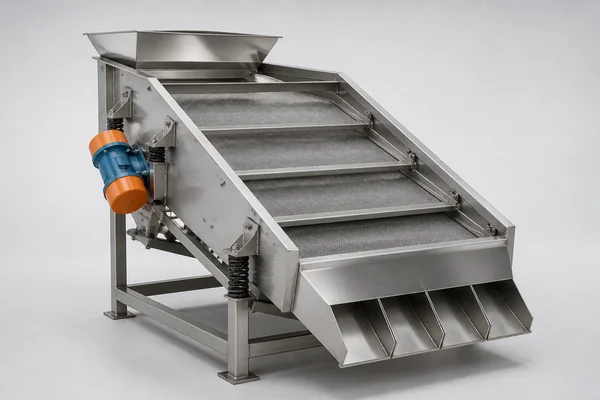
Seed Cleaning Machine
Vibrating screen, destoner and magnetic separator remove impurities before conditioning — protecting roasters and improving press efficiency.
View Equipment →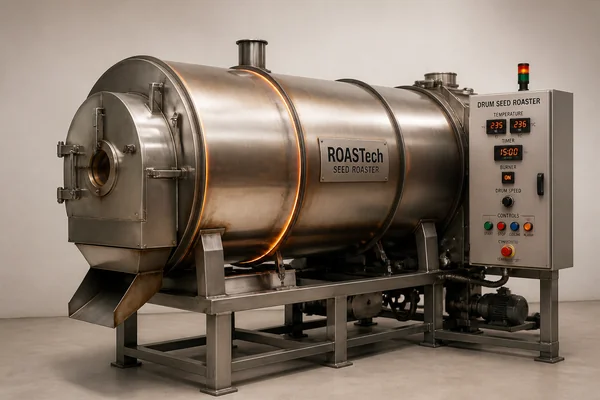
Seed Conditioning
Drum or layer conditioner adjusts rapeseed moisture and temperature — essential preparation before roasting and screw pressing for maximum oil yield.
View Equipment →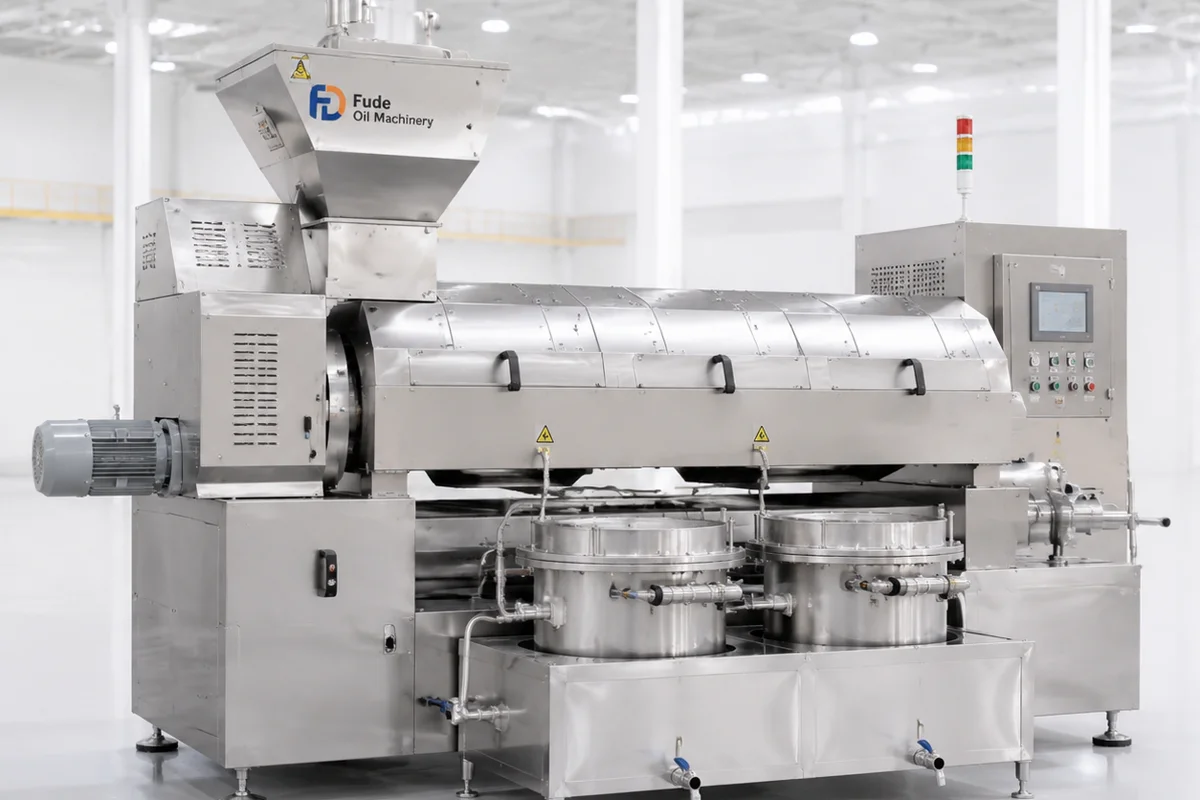
Screw Oil Press
Heavy-duty screw press for 5–50 TPD plants; engineered for oil-rich rapeseed with high recovery, stable cake thickness and low residual oil.
View Equipment →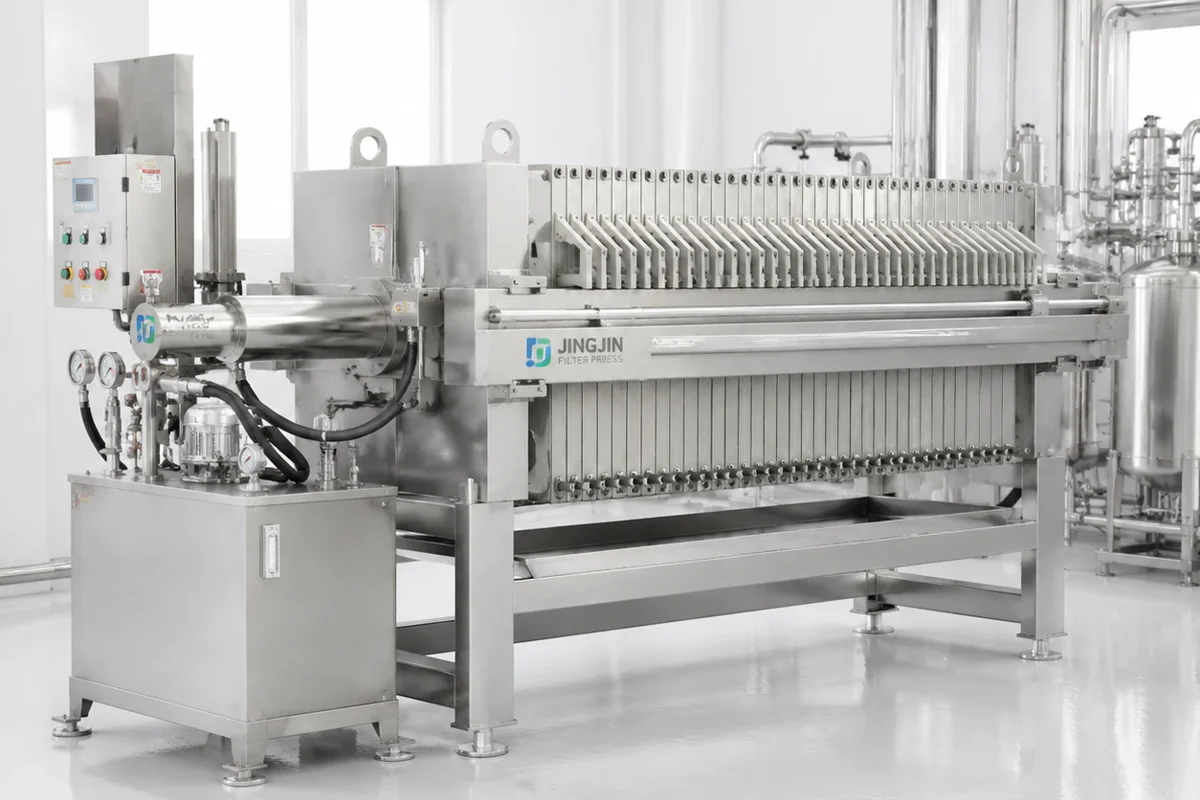
Oil Filter
Plate-and-frame filtration removes meal fines and suspended solids from crude rapeseed oil before storage or continuous refinery intake.
View Equipment →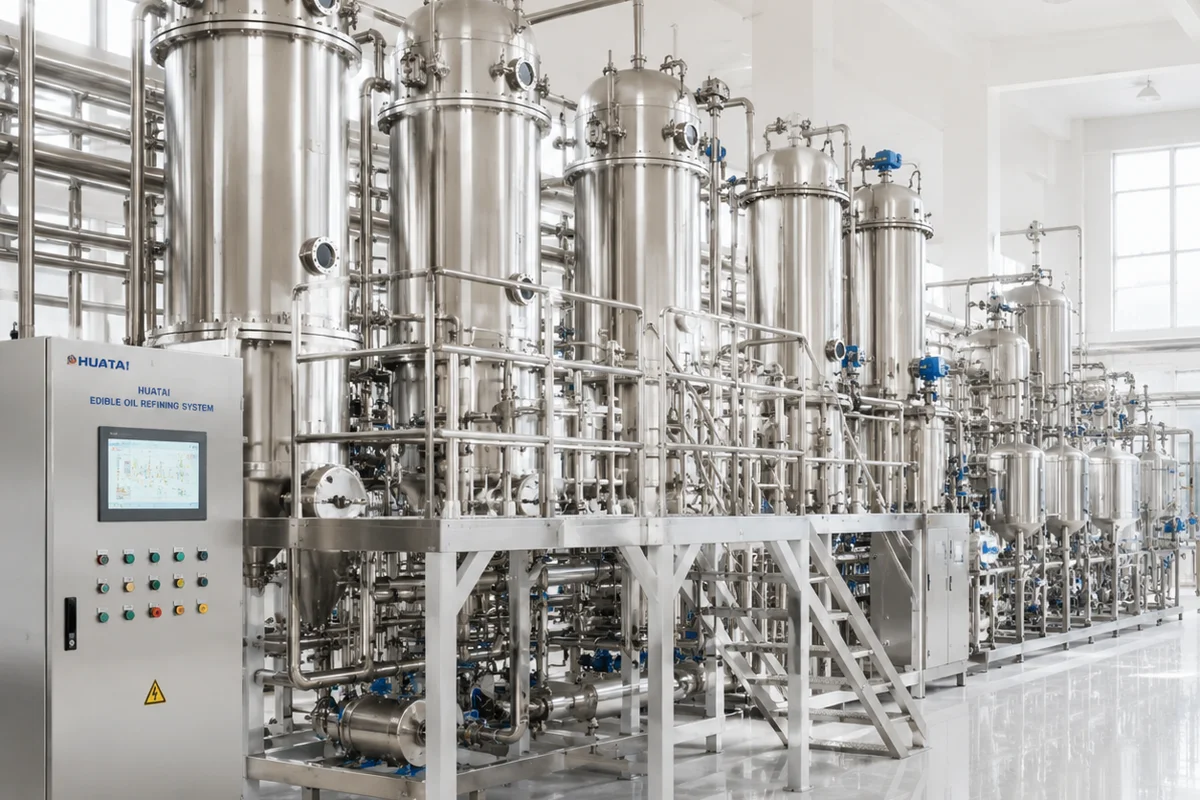
Continuous Refinery
Full continuous refining line — degumming, neutralization, bleaching and deodorization for supermarket, export and food-manufacturing grades.
View Equipment →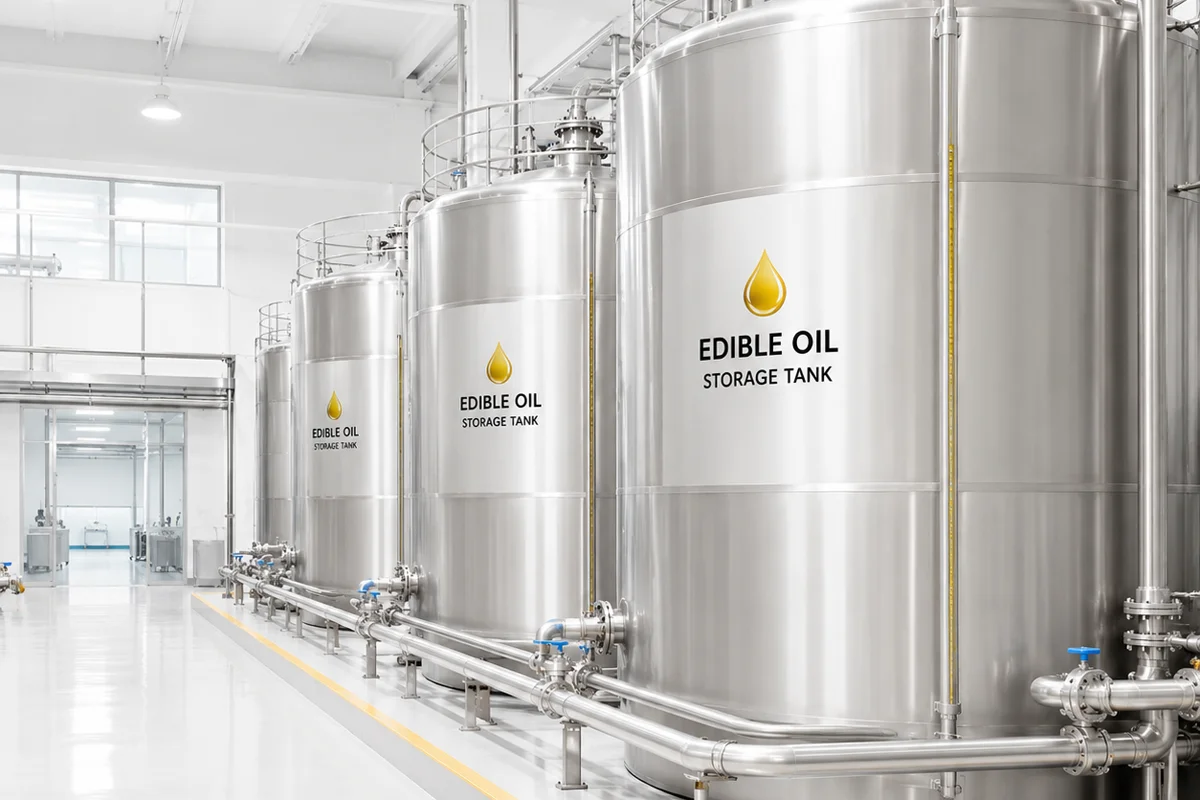
Oil Storage Tank
Stainless steel tanks for crude and refined rapeseed oil — with level monitoring, nitrogen blanketing option and hygienic design for edible oil.
View Equipment →Available Plant Capacities
Rapeseed (canola) oil plants from pilot mills to 100+ TPD refinery complexes — matched to your seed supply and market scale
Small Mill
- Cleaner, conditioner and single screw press
- Plate filter; optional small batch refinery
- Workshop: 100–300 m²
- ~5–25 tons rapeseed/day input
Commercial Plant
- Full prep: cleaning, conditioning, roasting
- Multi-press line with filtration and tanks
- Workshop: 400–1,000 m²
- Regional wholesale and branded retail
Mid-Scale Factory
- Automated conveying and meal handling
- Semi-continuous or batch refinery option
- Workshop: 1,000–2,500 m²
- Power: 200–450 kW typical
Large Processing Plant
- Pre-press plus solvent extraction option
- Continuous refinery and tank farm
- Workshop: 2,500–5,000 m²
- Export-oriented production capability
Industrial Refinery Complex
- Full solvent extraction + continuous refining
- Meal drying, bagging and utility block
- Site area: 10,000 m² and above
- National distributor and export supply
Typical Plant Layout Examples
Three reference layouts for rapeseed (canola) oil plants — customized to land plot, capacity and local building codes
Small Mill Layout
Capacity: 1–5 TPD
Area: 100–300 m² single hall — raw seed bay, cleaning, conditioning, roasting, press zone, filtration and crude oil storage.
Staff: 3–8 operators per shift. Linear flow suits startup investors in rapeseed-growing regions.
Commercial Plant Layout
Capacity: 5–20 TPD
Area: 400–1,000 m² with separated prep, pressing, meal storage and refinery wing — plus rapeseed seed warehouse.
Staff: 10–25 workers across two shifts with QC lab sampling point.
Industrial Factory Layout
Capacity: 20–100+ TPD
Area: 1,000–5,000 m²+ with extraction building, continuous refinery block, meal drying, tank farm, loading bay and administration.
Staff: 30–80+ personnel — structured for continuous production and export documentation.
We provide 2D layout drawings, equipment foundation plans and material flow diagrams. Request rapeseed plant layout design →
Global Rapeseed Oil Processing Plant Projects
Rapeseed and canola oil plants delivered across Europe, Canada, Asia and Central Asia — from commercial mills to industrial refinery complexes
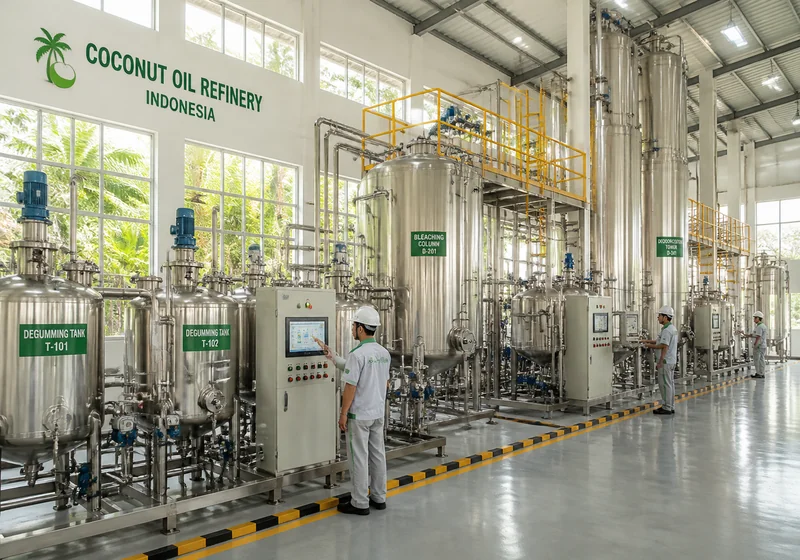
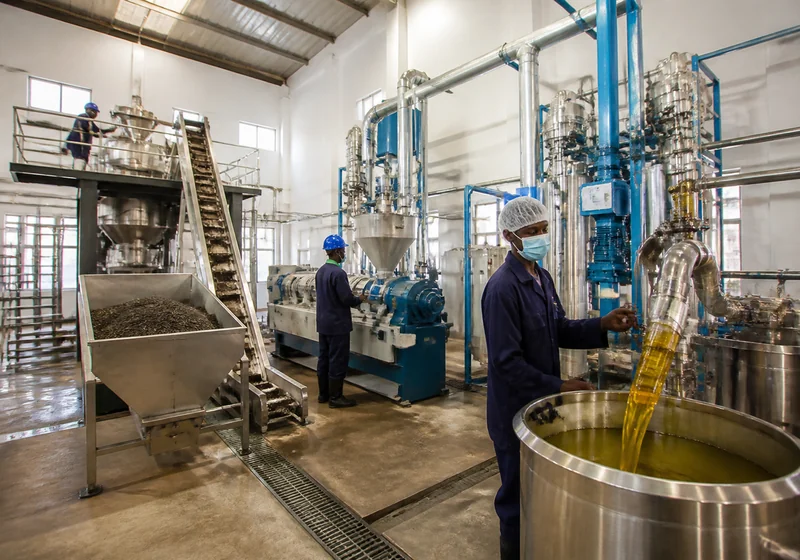
Germany · Hamburg
100 TPD Rapeseed Oil Plant
- Fully integrated factory layout
- Multi-stage continuous refinery
- EU food safety compliance
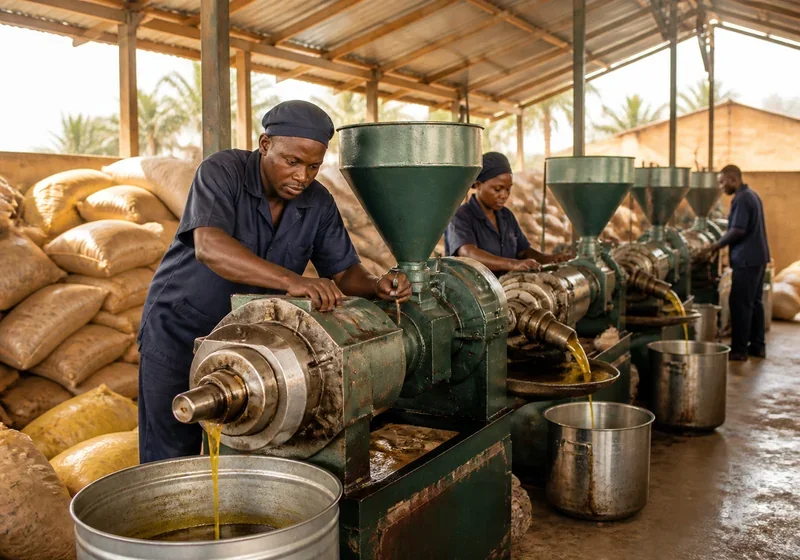
Canada · Saskatchewan
50 TPD Canola Oil Plant
- Cleaning, conditioning and press line
- Continuous refinery module
- North American retail supply
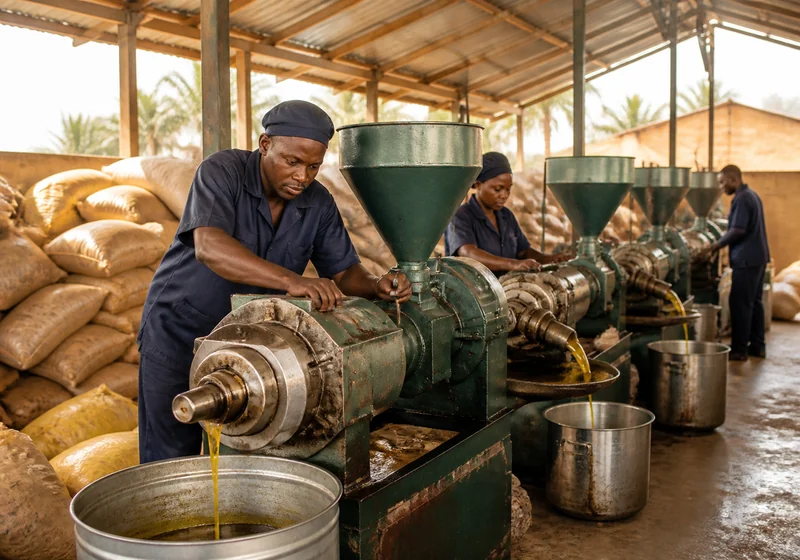
China · Hubei
30 TPD Rapeseed Oil Plant
- Commercial prep and pressing line
- On-site installation and training
- Dual revenue: oil and rapeseed meal
Kazakhstan · Almaty
20 TPD Rapeseed Oil Mill
- Small commercial prep and press line
- Batch refinery for retail packaging
- Local rapeseed supply chain
Frequently Asked Questions
Canola is a type of rapeseed bred for low erucic acid and low glucosinolate content — making it suitable for human consumption. Traditional rapeseed may have higher erucic acid. Most modern edible oil plants process low-erucic canola varieties. Our refining lines are configured for food-grade canola/rapeseed oil regardless of local naming conventions.
Commercial rapeseed and canola varieties typically contain 38–44% oil depending on variety, climate and harvest conditions. Screw pressing recovers roughly 32–38% from well-conditioned seed. Solvent extraction lines achieve maximum recovery for plants above 50 TPD.
Investment depends on daily capacity, extraction method and refining scope. A 10 TPD commercial plant with prep, pressing and filtration typically ranges from USD 100,000–200,000 (equipment only). A 50 TPD plant with continuous refinery may range from USD 400,000–800,000. Solvent extraction lines above 100 TPD are quoted as turnkey engineering projects.
Yes — rapeseed meal is a major profit driver alongside oil. Press cake typically contains 34–38% protein and is sold to cattle, poultry and aquaculture feed mills. In Europe, Canada and China, meal demand is strong year-round. Proper conditioning and pressing maximize both oil yield and meal quality for premium feed pricing.
Crude rapeseed oil contains free fatty acids, phospholipids, pigments and odor compounds that must be removed for edible quality. Degumming, neutralization, bleaching and deodorization produce light-colored, neutral-flavored oil suitable for retail bottles and food manufacturing. We configure batch, semi-continuous or full continuous refining based on your target market and capacity.
Yes. We supply engineering design, equipment manufacturing, shipping, installation supervision, commissioning and operator training. Turnkey scope can include civil works guidance, utility planning and refinery process optimization. Share your capacity, country and raw material source for a detailed proposal within 48 hours.
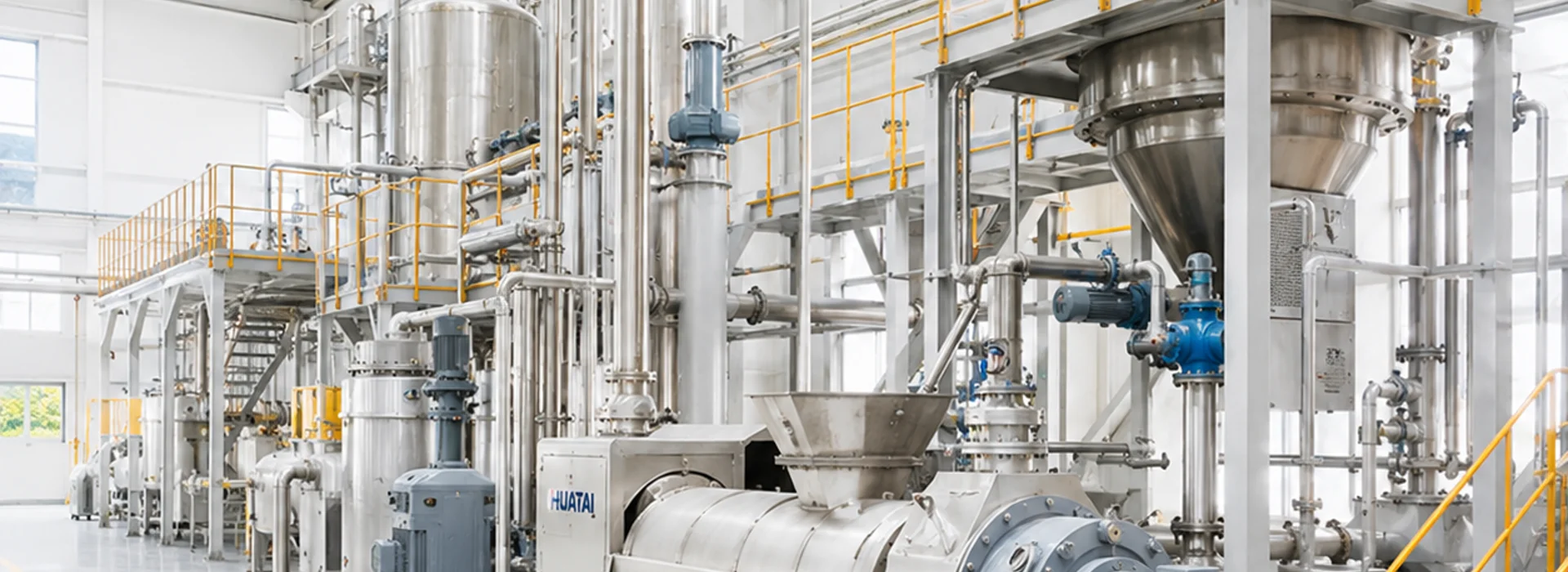
Ready to Build Your Rapeseed Oil Processing Plant Solution?
Share your daily capacity, rapeseed/canola seed supply source and target market — our engineers will prepare a free plant proposal and layout design within 48 hours.