
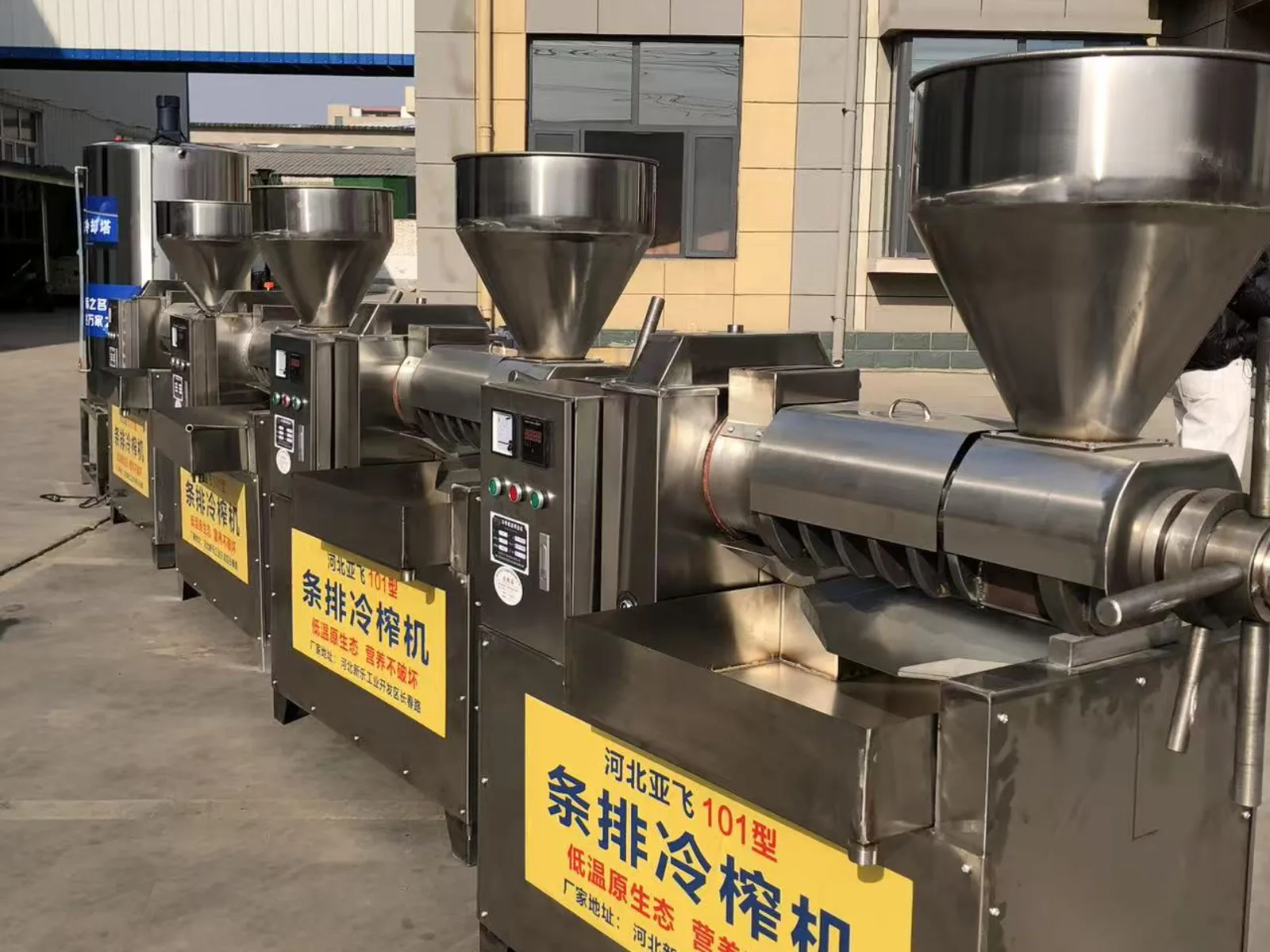
101-Type Strip-Bar Cold Oil Press
A compact single-screw press for small-batch specialty oil production, with approximately 90 kg/h raw-material throughput and optional screw feeding and pneumatic filtration.
Confirmed reference throughput for raw material; actual output varies by seed and preparation.
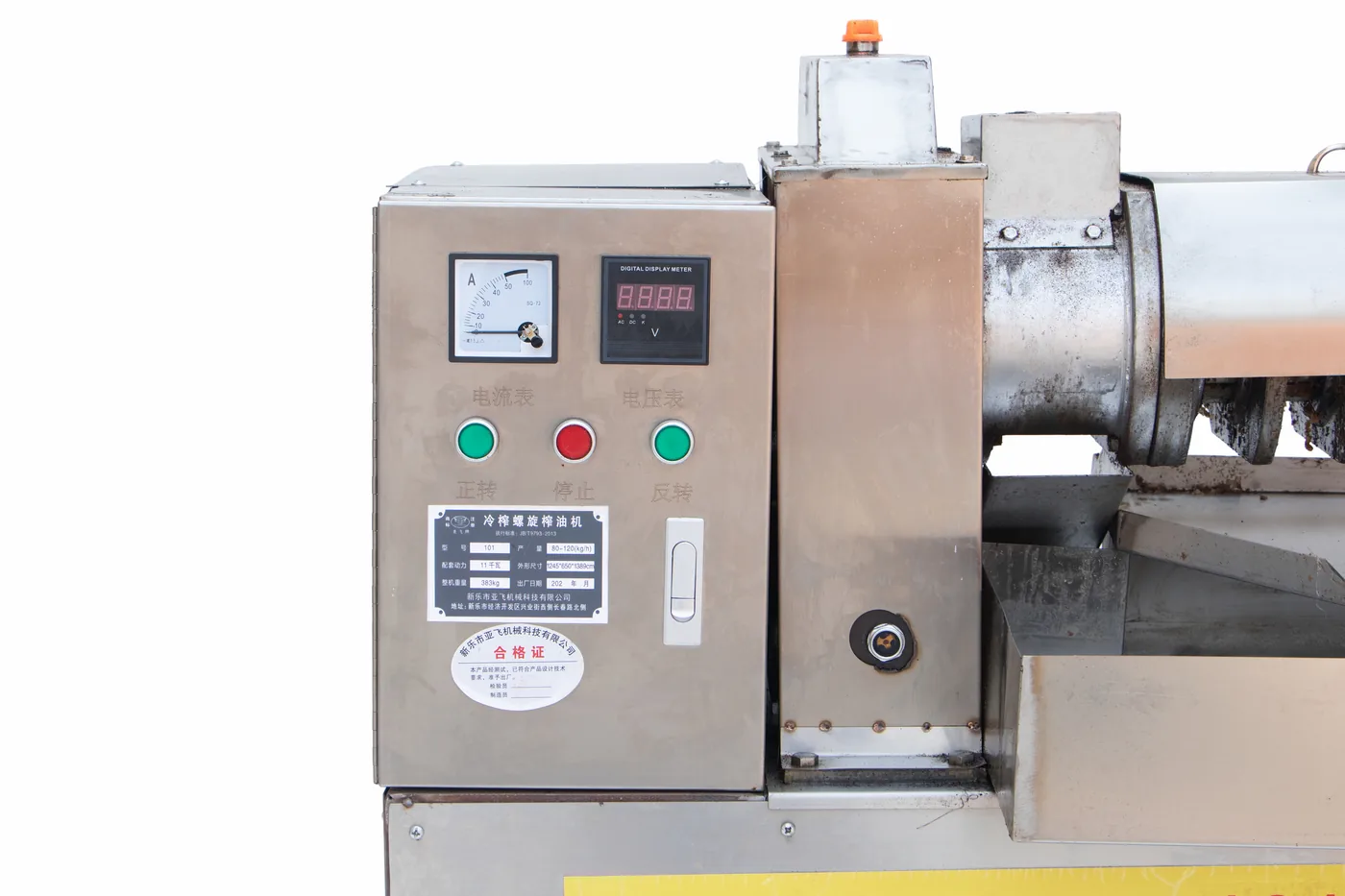
Main-motor rating recorded on the machine nameplate.
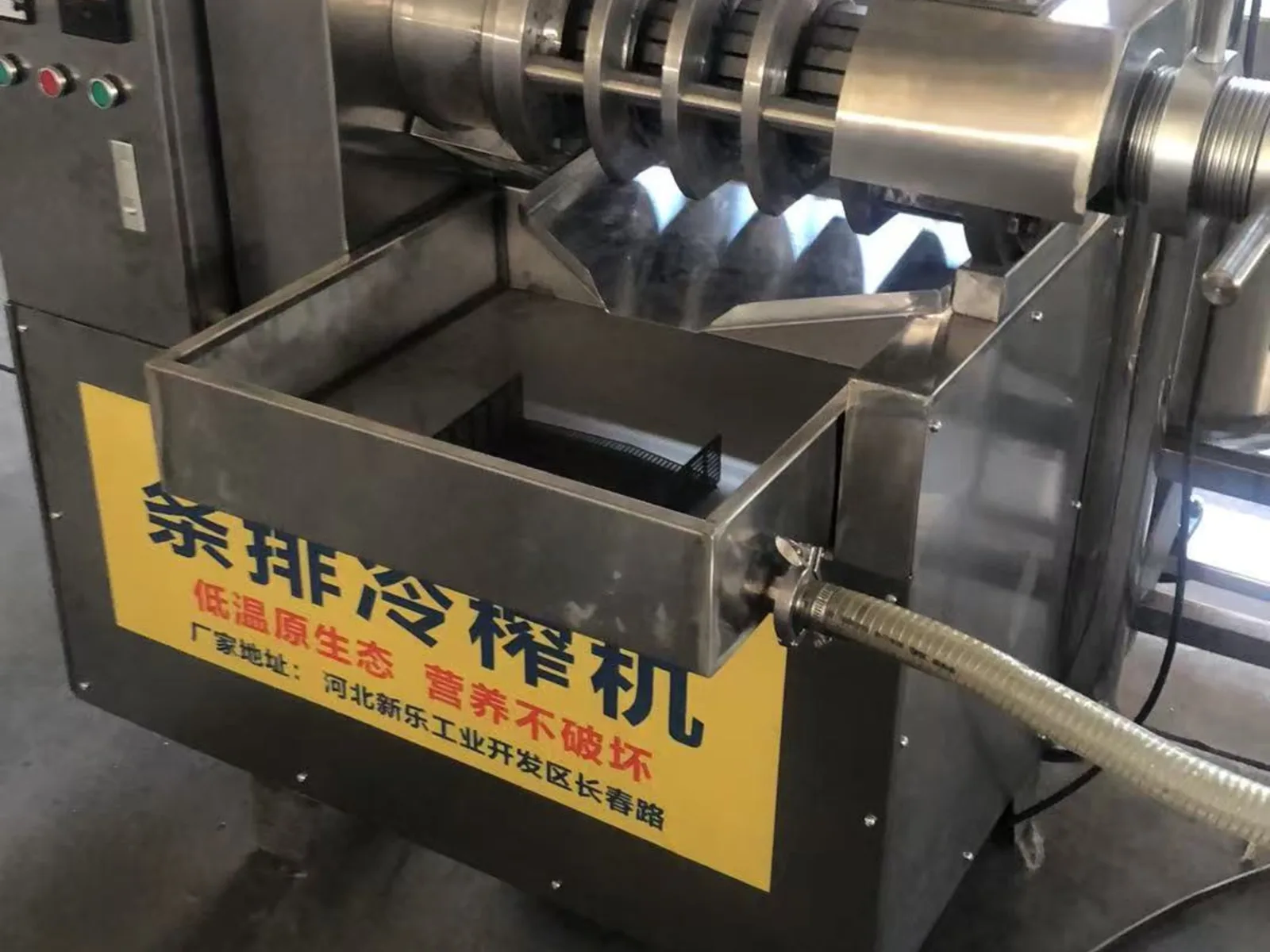
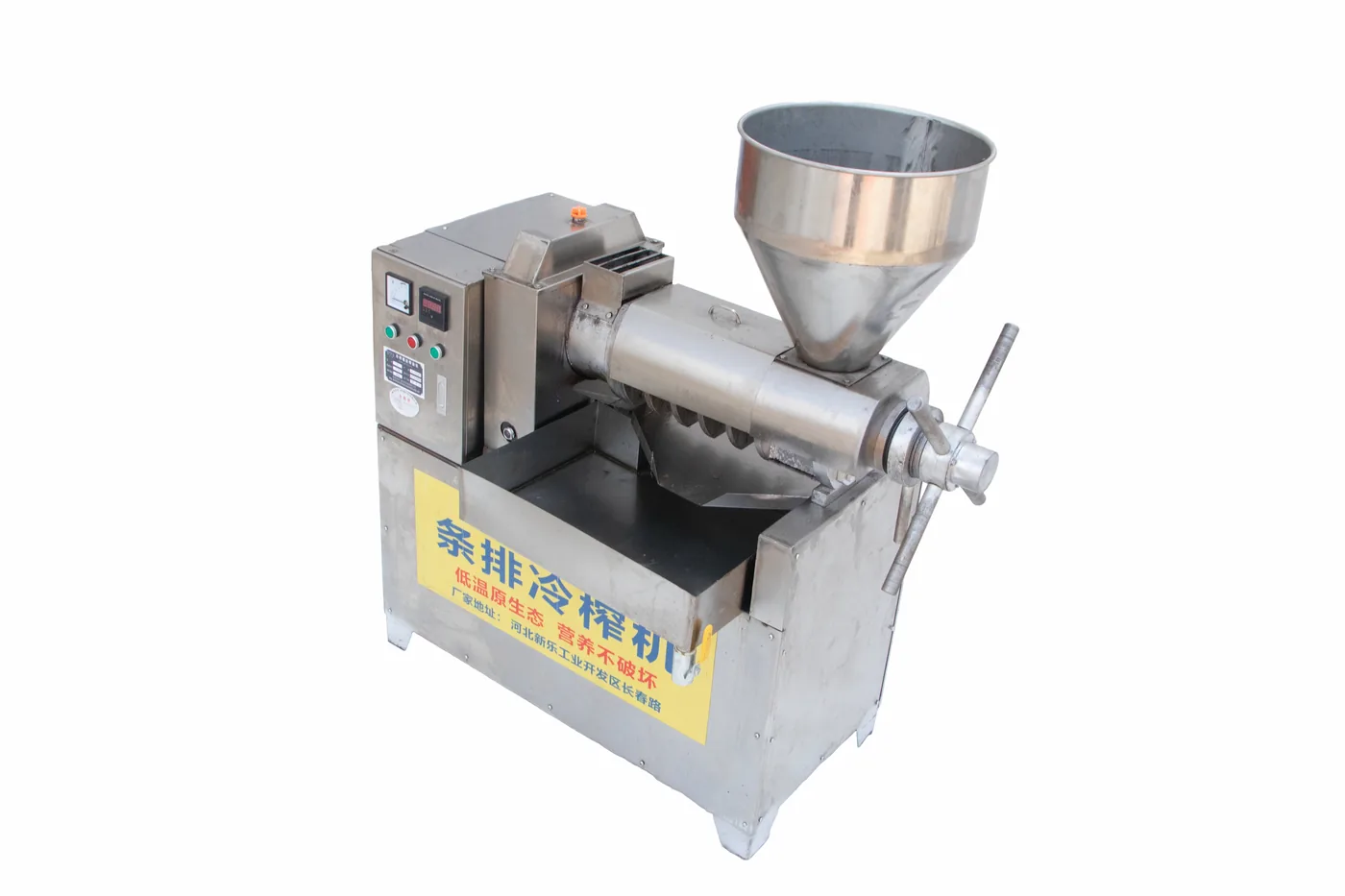
Oil drains through the open strip-bar cage into the stainless collection tray.
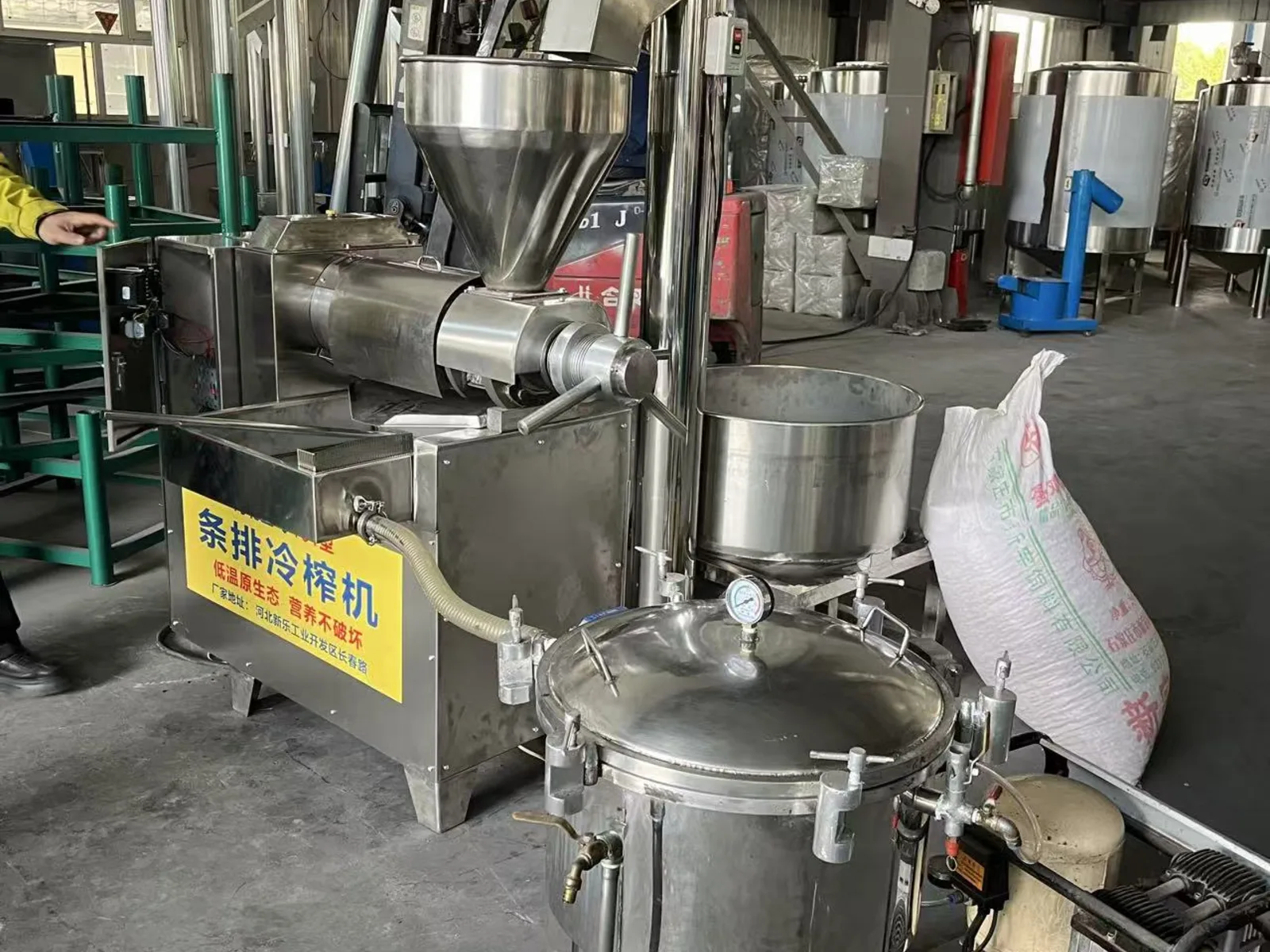
Optional screw feeding elevator and pneumatic oil filter connect the main operating steps.
Technical Specifications
| Model | 101 |
| Machine type | Single-screw strip-bar cold oil press |
| Approximate raw-material throughput | 90 kg/h |
| Main motor | 11 kW |
| Machine weight | 383 kg |
| Pressing chamber | Open strip-bar cage with adjustable press head |
| Visible construction | Stainless-steel exterior, hopper and oil-collection components |
| Control | Start/stop controls, ammeter and digital temperature display |
| Applicable standard | JB/T 9793-2013 |
| Optional line equipment | Screw feeding elevator and single-vessel pneumatic oil filter |
| Voltage / frequency | Confirmed for the destination country before production |
Function & Working Principle
The visible strip-bar cage provides multiple drainage paths for expressed oil.
A digital display helps the operator monitor the machine; the required product temperature is confirmed for each material and market standard.
The real machine photos show a stainless exterior, feed hopper and oil-collection components for easier cleaning.
Integrated ammeter and digital temperature display with start/stop control.
Hand-wheel adjustment sets cake thickness and pressing pressure.
Expressed oil drains into the lower tray while press cake exits through the adjustable head.
Working principle
Cleaned oilseeds enter through the top hopper into the pressing chamber.
The rotating screw advances and compresses the prepared seed inside the strip-bar chamber.
Oil passes through the strip-bar gaps and flows into the stainless collection tray.
The de-oiled cake exits the adjustable press head; head spacing controls pressure.
Product Photos
From Seed Feeding to Clarified Oil
The 101 can run as a stand-alone press or as the center of a compact three-stage line. The photographed configuration connects mechanical feeding, pressing and first-stage oil clarification.
Lifts prepared seed from a low loading point to the press hopper, reducing manual lifting and helping maintain steadier feeding. The exact feeder arrangement is confirmed to the material and layout.
The screw compresses the seed, oil drains through the strip-bar cage, and press cake exits through the adjustable head.
Controlled air pressure pushes fresh crude oil through filter media to retain seed fines and cake particles. This is clarification, not complete edible-oil refining.
Demonstration Video
Watch the 101-Type Bar-Cage Cold Press running — see the machine in operation. More on our Product Videos page.
Applications & Suitable Materials
The machine is intended for small-batch oilseed pressing, but one throughput figure cannot apply to every seed. We confirm the material condition, preprocessing and target oil specification before recommending the 101.
Sesame, sunflower seed, rapeseed and peanut are common screw-press candidates. Actual output and temperature still require confirmation.
Flaxseed, hemp, pumpkin seed and black seed require a check of moisture, particle size, preparation and target product.
Coconut material, almond, grape seed, castor, neem and onion seed may need drying, size reduction or a sample pressing test before model confirmation.
What Changes the Actual Throughput?
Approximately 90 kg/h is the confirmed reference for raw material. Your real result depends on the complete operating condition:
Seed variety, oil content, moisture, cleanliness, kernel size and whether hulls are present.
Drying, cleaning, dehulling, crushing or conditioning may be needed depending on the material.
Feed rate, press-head gap, cake thickness, operating stability and target product temperature.
Quality Assurance
Food-contact surfaces in stainless steel; components selected for the duty.
Machines are test-run before dispatch to confirm they operate correctly.
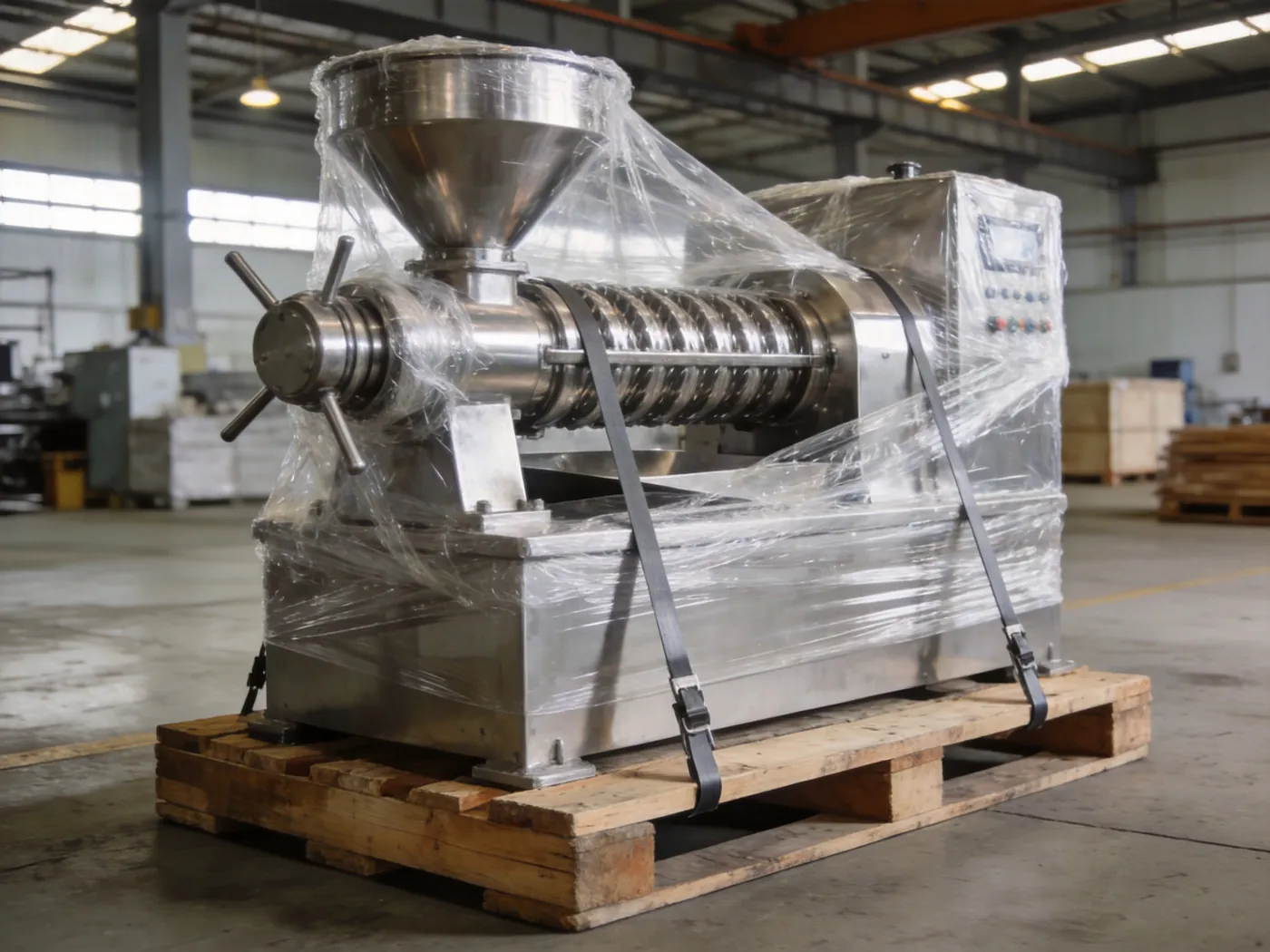
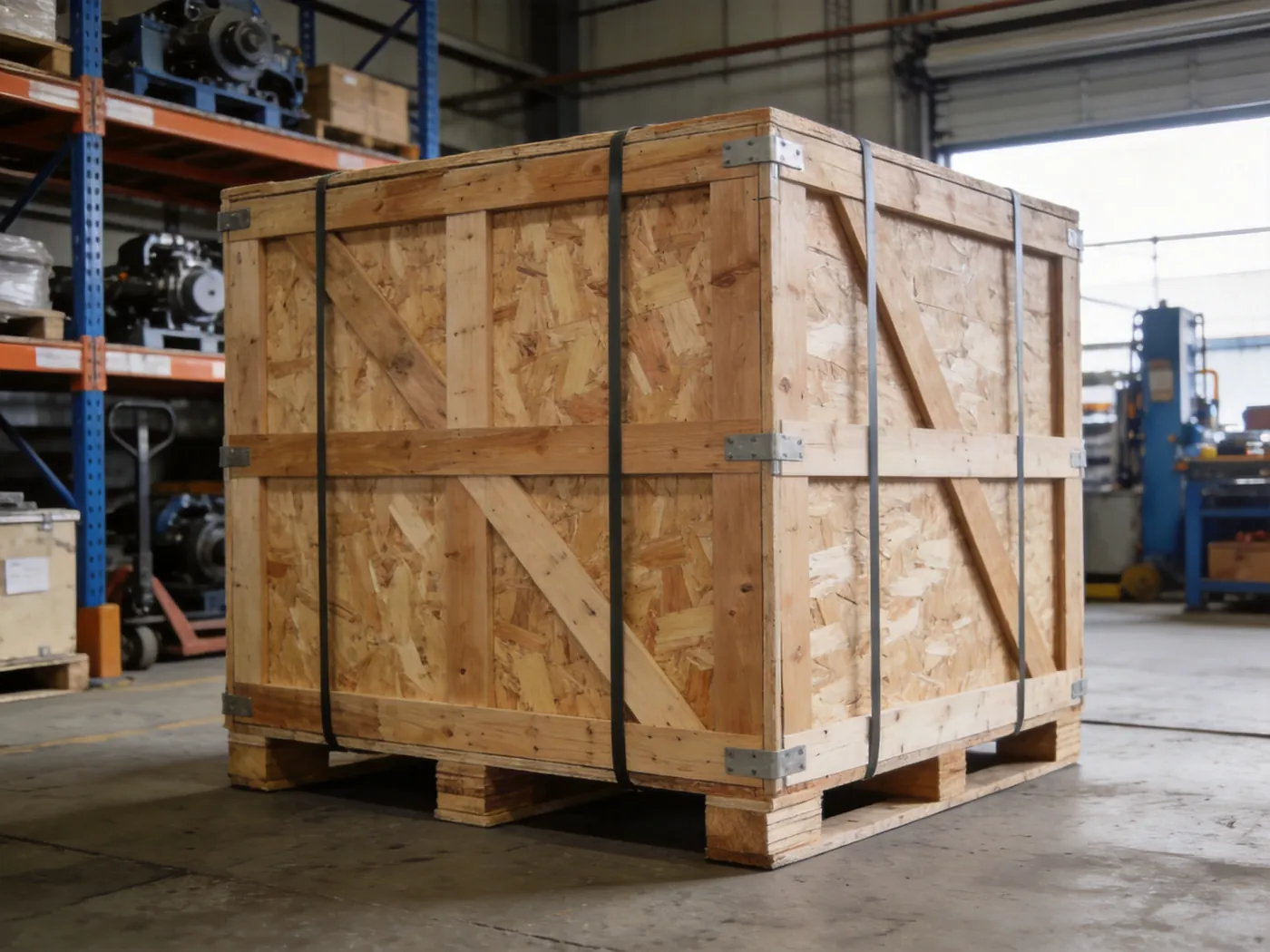
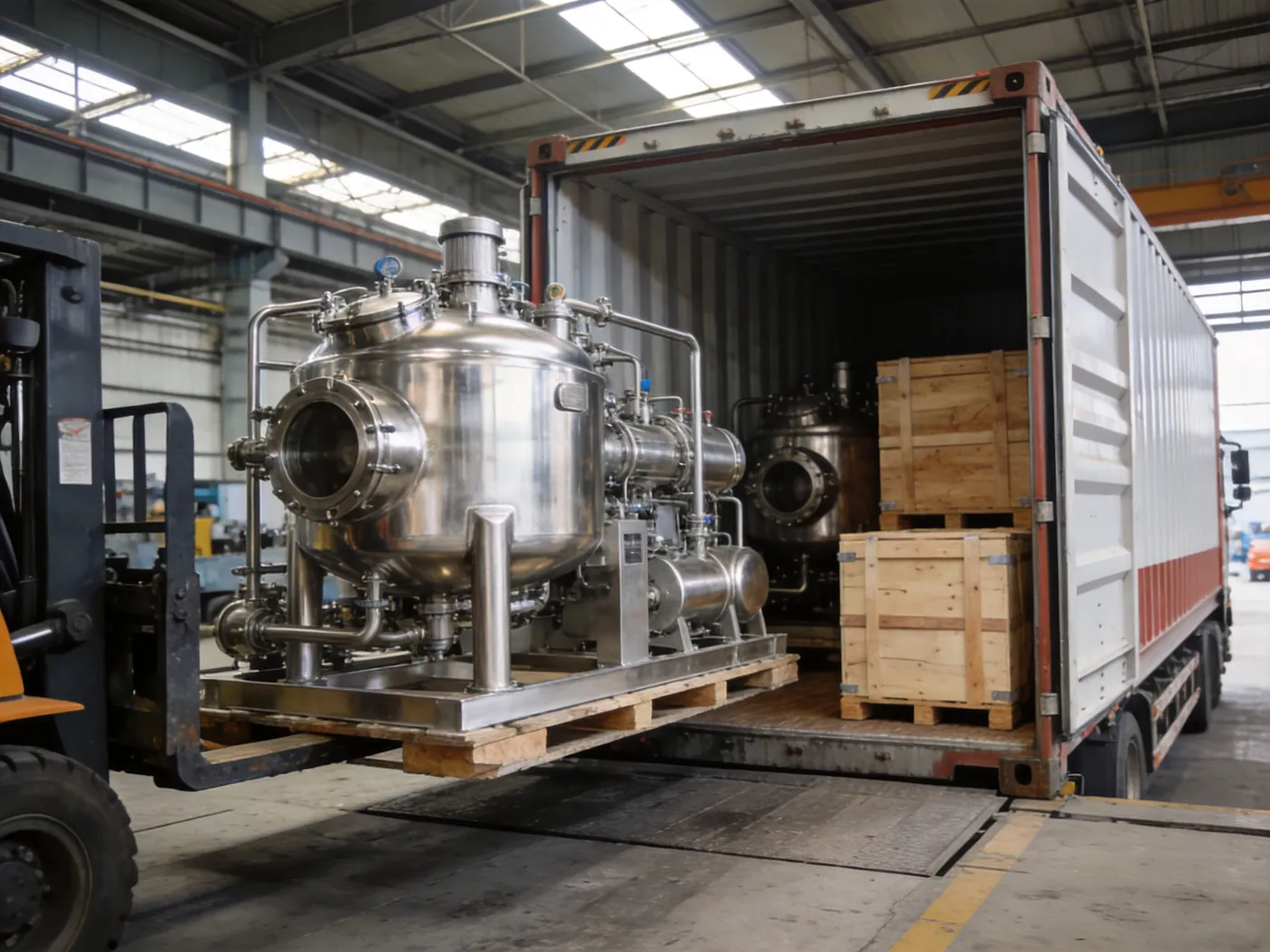
Checked and packed for export so it arrives in working order.
Documents & Downloads
Full product range & specifications — download
Model 101, approximately 90 kg/h raw-material throughput, 11 kW main motor, 383 kg machine weight and JB/T 9793-2013 reference. Dimensions remain subject to unit confirmation.
Export Packaging
After-Sales Service
Guidance to get the machine installed and running.
Clear instructions for safe, correct operation.
Spare-parts supply and engineer support when you need it.
What We Need to Confirm Your 101 Configuration
Send the operating details below so the recommendation is based on your real material rather than a generic capacity claim.
List every seed or nut, its moisture, cleaned/dehulled/crushed condition and whether you can send a sample for testing.
Required kg/h or kg/day, expected operating hours, edible or cosmetic end use and target pressing temperature.
Destination country, voltage, frequency, phase and whether the pneumatic filter needs a supplied air compressor.
Available floor area, door size, preferred layout and how often you change between materials.
Frequently Asked Questions
What is the throughput of the 101-Type cold oil press?
Its confirmed reference is approximately 90 kg of raw material per hour. Actual throughput varies with seed type, moisture, cleanliness, preprocessing, press settings and target temperature.
Which oilseeds can the 101-Type press process?
Sesame, sunflower seed, rapeseed and peanut are common candidates. Flaxseed, hemp, pumpkin seed, black seed, coconut material, almond, grape seed, castor, neem and onion seed require material-condition review or a sample pressing test before we confirm suitability.
What does the optional screw feeding elevator do?
It lifts prepared seed from a low loading point to the press hopper, reducing manual lifting and supporting steadier feeding. We confirm the feeder arrangement to the material and workshop layout; mixing performance is not assumed unless specified.
What does the optional pneumatic oil filter do?
It uses controlled air pressure to push fresh crude oil through filter media, retaining seed fines and cake particles. It clarifies freshly pressed oil but does not perform complete degumming, deacidification, bleaching or deodorization.
Can one machine alternate between edible and cosmetic oils?
It may be possible, but the cleaning method, allergen risk and cross-contamination controls must be reviewed. Non-food materials should not share an edible-oil line without a validated segregation and cleaning plan.
What should I send for model confirmation?
Send every raw material, moisture and preparation condition, required hourly or daily output, edible or cosmetic end use, target temperature, destination voltage, workshop space and whether you need automatic feeding and pneumatic filtration.
Is the 101 the right press for your materials?
Send your seed list, preparation condition, target output, end use, voltage and workshop space. We will confirm the press, feeder and filtration configuration without publishing a price on this page.
Request a Material Check →