Groundnut shellers in three sizes — 300 to 1,000 kg per hour. About 95% single-pass shelling rate, low kernel breakage, built-in shell/kernel separation. The first step of every peanut oil line.
Peanut shells add bulk but no oil. Removing them before roasting and pressing raises press throughput, protects the screw press from abrasive shell wear, improves cake quality, and lifts practical oil yield. A dedicated sheller pays for itself quickly in any peanut oil production line — from small workshops to full plants.
These machines crack the shells between roller and concave screen, then use an adjustable air blower to carry the light shells out of a rotatable outlet while heavier kernels drop through to the kernel discharge — clean kernels in one pass, no hand sorting.
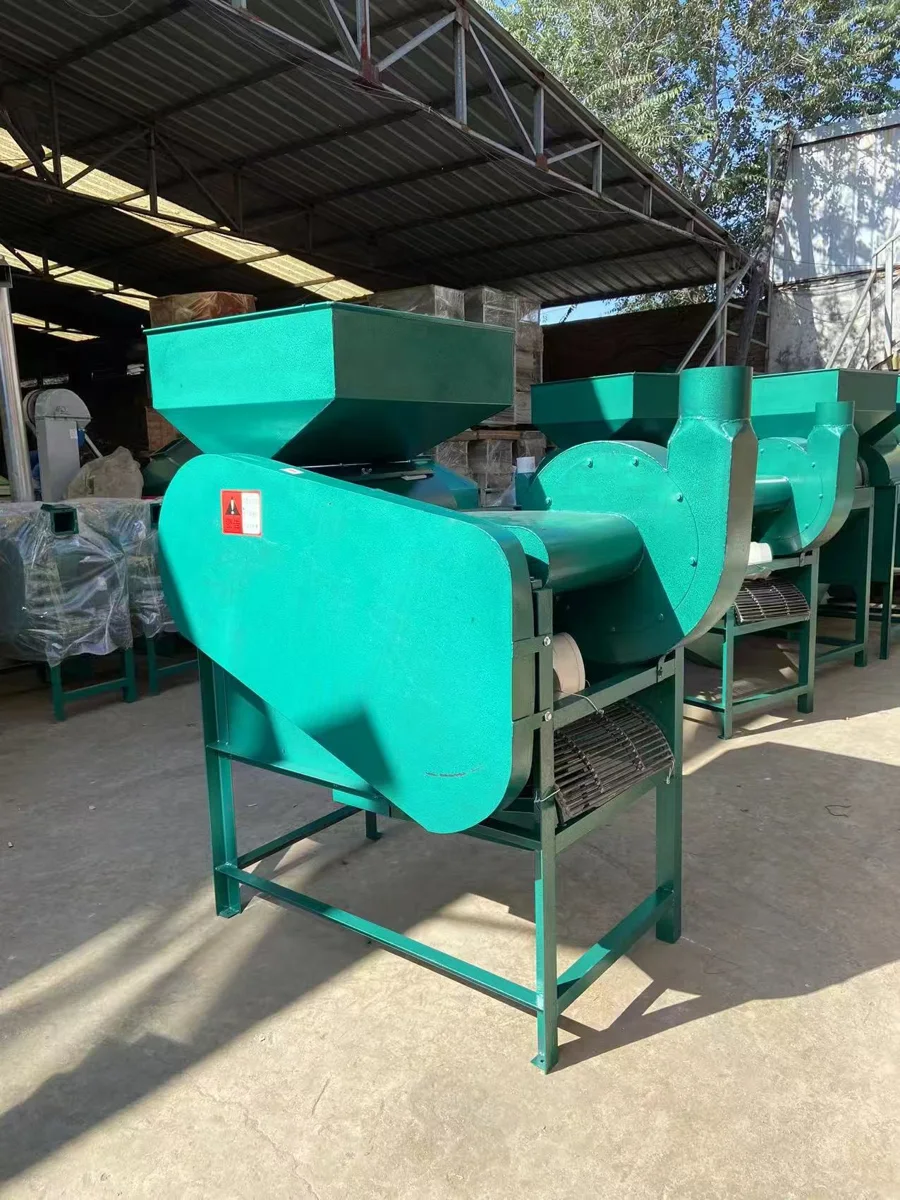
| Model | Capacity | Shelling Rate | Breakage Rate | Drive |
|---|---|---|---|---|
| 60 Type | 300–400 kg/h | ≈95% (single pass) | ≤5% | Electric motor (single/three-phase) |
| 80 Type | 400–600 kg/h | ≈95% (single pass) | ≤5% | Electric motor (single/three-phase) |
| 100 Type | 800–1,000 kg/h | ≈95% (single pass) | ≤5% | Electric motor; diesel option |
Roller-and-screen shelling chamber removes about 95% of hulls in one pass with breakage held around 5% or less on graded nuts.
An adjustable fan blows shells out of a 360°-rotatable outlet — point the waste stream anywhere; kernels exit clean below.
Pure copper windings for cooler running and longer service life; cast shelling parts for durability.
Interchangeable screens and air-flow adjustment handle different peanut varieties and sizes.
Enclosed shelling chamber with directed shell discharge keeps the workspace cleaner.
Feed hopper, two outlets, one switch — minimal training, easy cleaning and maintenance.
Watch the sheller in operation — whole peanuts in, clean kernels and separated shells out.
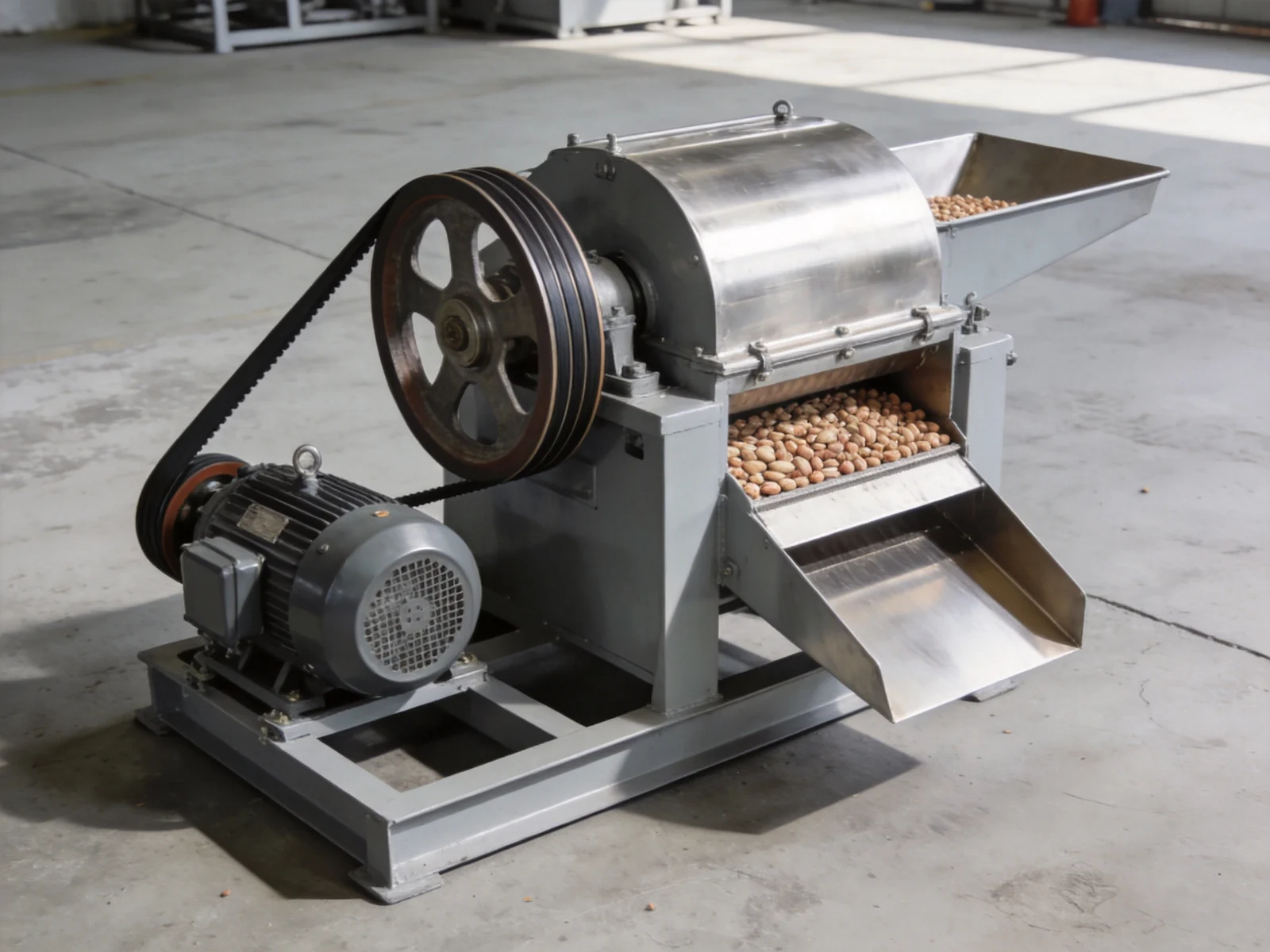
With evenly sized peanuts, the shelling (hull removal) rate typically reaches about 95% in a single pass, with a breakage rate around 5% or lower. Mixed large-and-small batches may need screen adjustment — large kernels can see slightly more breakage if the screen is not matched.
Choose by hourly throughput: the 60 type handles roughly 300–400 kg/h, the 80 type 400–600 kg/h, and the 100 type 800–1,000 kg/h. For small workshops the 60 type is usually enough; oil mills running continuous pressing lines typically pair the 100 type with their press capacity.
Yes. The discharge screen and air-blower settings are adjustable for different kernel sizes. For best results, grade peanuts roughly by size first — uniform batches shell cleaner and with less breakage.
Yes. A built-in fan blows the lighter shells out through the shell outlet (rotatable 360° to point waste where you want it), while clean kernels exit from the kernel outlet — no manual separation needed.
Standard configuration uses a copper-wound electric motor; single-phase 220V or three-phase 380V can be configured by model and destination market, and diesel-drive options are available for off-grid sites. Confirm voltage/frequency for your country when requesting a quote.
Pair the right sheller with your roaster and press capacity. Send us your daily throughput and raw material — our engineers reply within 24 hours.
Get Engineering Support →