Kernel breakage happens when the impact and rubbing forces inside the shelling chamber exceed what the kernel can absorb. The usual culprits are a screen gap that is too tight for the pod size, pods that are too dry and brittle, surging feed rates, and rotor speeds set higher than necessary. Industry benchmarks put a well-run operation at 95–98% shelling rate with only 2–5% breakage — if your broken-kernel ratio is climbing past that range, one of the five factors below is usually off.
Breakage matters commercially as well as mechanically. Broken kernels fetch lower prices in the edible trade, oxidize faster in storage, and — if you press for oil — shelling cleanly before pressing still pays: shells absorb oil during extraction and their abrasive grit accelerates wear on screw press parts, which is why a dedicated seed dehulling stage sits ahead of the press in virtually every modern line.
A single screen cannot suit both large and small pods: a gap sized for big pods lets small ones pass unshelled, while a gap sized for small pods crushes the large ones. Grade your raw peanuts into two or three size classes first — a vibrating screen handles this quickly — then shell each grade with the matching concave screen. Most quality shellers ship with interchangeable screens precisely for this reason; swapping takes minutes and typically cuts breakage more than any other single adjustment.
Pod moisture of approximately 8–13% is ideal for shelling. Too dry, and brittle kernels shatter on impact; too wet, and shells turn leathery, shelling efficiency drops, and pods recirculate until kernels get scuffed. In dry winter conditions, a proven field method is to spray about 10 kg of warm water over each 50 kg of peanuts, cover the pile with plastic film for roughly 10 hours so moisture equalizes, then sun-dry for about 1 hour before feeding the sheller. The shells regain flexibility while kernels stay firm.
Feed evenly and continuously. Dumping a sack in at once overloads the chamber, jams pods against the rotor, and spikes breakage; starving the machine lets individual pods bounce and take repeated hits. Aim for a steady stream that keeps the chamber comfortably full at the machine's rated capacity.
Rotor speed should be the lowest setting that still achieves a clean single-pass shell. Higher speed means harder impacts, and beyond the point of complete shelling it only adds splits. After any screen change or a new peanut lot, run a small trial batch, inspect the output, and adjust speed downward until unshelled pods just begin to appear — then step back up slightly. Pre-cleaning with a seed cleaning machine also helps, since stones and metal in the feed cause localized crushing and damage screens.
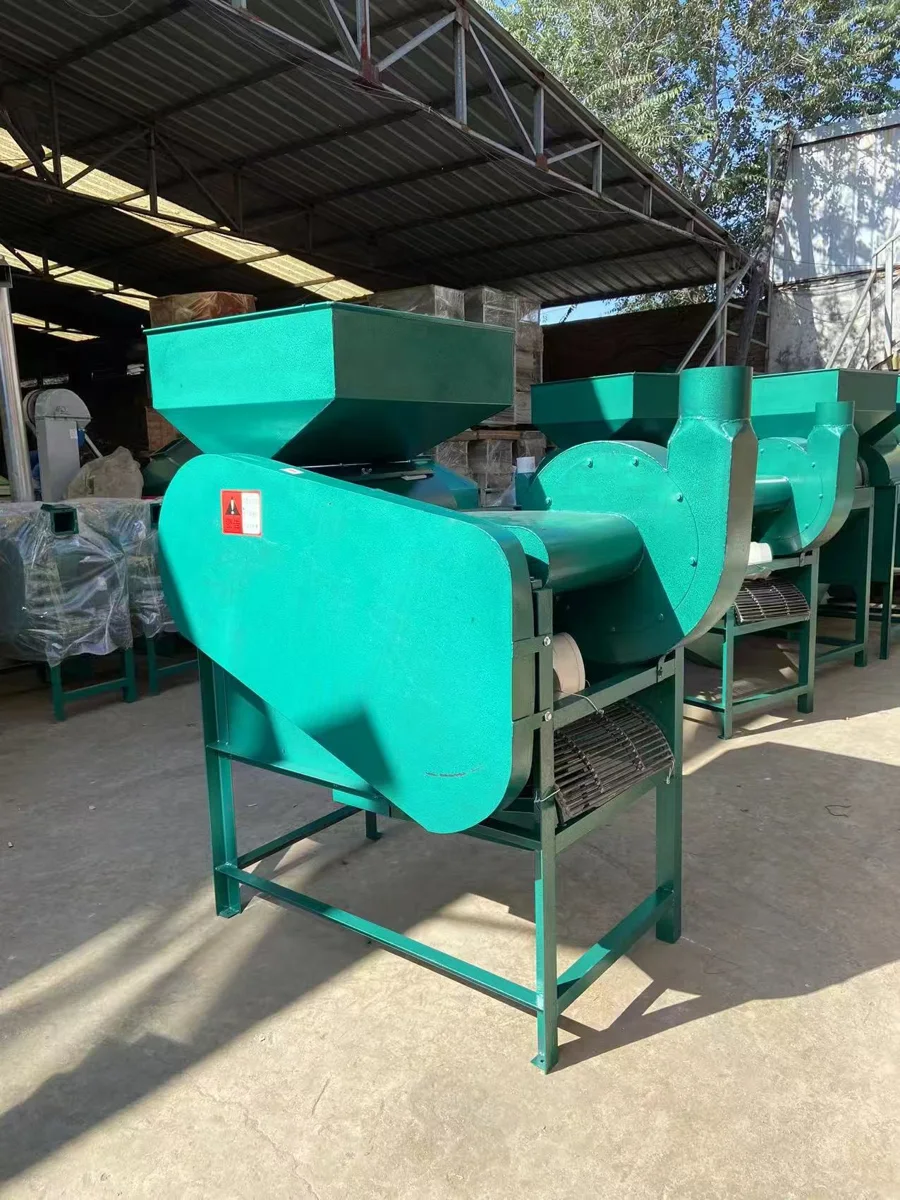 Quick recap before each run: grade pods by size, fit the matching screen, confirm 8–13% moisture, feed steadily, and run the slowest rotor speed that shells in one pass.
If your current machine cannot hold these numbers even when well-tuned, the hardware itself may be the limit. SinoOil Machinery's peanut shelling machines achieve approximately 95% single-pass shelling with breakage at or below 5%, with copper-wound motors and a 360-degree shell outlet, in capacities from 300–400 kg/h (60 type) up to 800–1000 kg/h (100 type). Browse the full seed preparation equipment range, or contact our engineers for a screen and capacity recommendation matched to your peanut variety.
Industry practice considers 2–5% breakage acceptable alongside a 95–98% shelling rate. If breakage exceeds 5%, check screen-to-pod size match, pod moisture (target approximately 8–13%), feed evenness, and rotor speed before blaming the machine.
Re-moisturize them: spray roughly 10 kg of warm water per 50 kg of peanuts, cover with plastic film for about 10 hours so moisture distributes evenly, then sun-dry for around 1 hour. The shells become flexible again while kernels stay intact during shelling.
Yes. Shells absorb oil during pressing, so removing them raises recoverable yield, and their abrasive grit otherwise wears the screw press prematurely. That is why a dehulling or shelling step is standard ahead of the press in modern oil mill lines.
That pattern almost always means mixed pod sizes running through one screen gap. Grade the peanuts into size classes with a vibrating screen first, then shell each class with the matching concave screen — both unshelled pods and broken kernels typically drop sharply.
SinoOil engineers size the right pretreatment equipment for your capacity — free plant design included.
Get Engineering Support →