Roasting is not just pre-heating. Controlled heat denatures seed protein and opens microscopic pores in the cell walls, which is what lets oil flow out during pressing. Published research on sesame shows oil yield improving from 33.5% to 62.6% with proper roasting — a bigger gain than almost any press upgrade can deliver.
Because the temperature window is narrow — sesame is typically roasted at approximately 170°C for around 15 minutes, while other seeds fall anywhere in the 90–260°C range — the real question when choosing a seed roasting machine is not only fuel price, but how tightly each energy source can hold that window.
The economics flip depending on where your mill operates. In much of Africa and South Asia, grid electricity is expensive or unreliable, so open-fire and closed-fire drum roasters burning wood, briquettes, LPG, or diesel typically win on running cost — and keep working through power cuts. In the Middle East and gas-producing regions, natural gas or LPG is usually the cheapest heat available, making fired and fired-thermal-oil roasters the default choice for high-throughput plants.
Where grid power is stable and reasonably priced — parts of Latin America, Southeast Asia, or mills running on solar/hydro tariffs — electric and induction roasters become competitive, because their higher energy price is offset by less wasted heat, no fuel handling labor, and no chimney or fuel storage infrastructure.
Electric and induction heating hold a set temperature with thermostat-level precision, which matters when an over-roasted batch means darkened, off-flavor oil. Open-fire roasters are the cheapest to run but depend heavily on operator skill; closed-fire and thermal-oil designs sit in between, smoothing out flame fluctuations. Induction is the premium electric option: it heats the drum or pan directly rather than the air around it, so more of every kilowatt reaches the seed — partially closing the cost gap with fuel while keeping precise control.
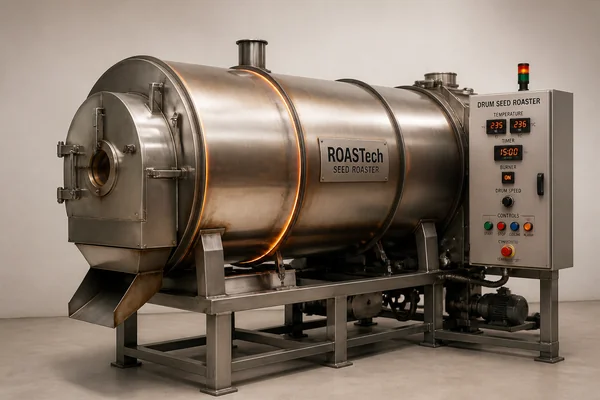 Modern lineups cover both philosophies: drum roasters in electric, open-fire, closed-fire, and induction versions, plus flat-bottom roasters in induction, electric-thermal-oil, and fired-thermal-oil configurations — seven models in total on the seed roasting machine page, so you can match the heat source to your local fuel reality rather than the other way around.
SinoOil Machinery has supplied factory-direct oil processing equipment to mills in 80+ countries since 2009, with ISO9001, CE, and SGS certification. Tell us your seed type, daily capacity, and local fuel and electricity prices, and our engineers will recommend the right roaster — and the matching seed preparation equipment line — for your plant. Contact us for a quote.
Usually not per unit of heat — electricity typically costs more than gas, diesel, or biomass in most regions. But electric roasters waste less energy, need no fuel handling, and prevent over-roasted batches, so total cost per ton of good oil can be comparable where grid power is stable.
Induction heats the roasting drum or pan directly instead of heating air or flame gases first, so a larger share of the electricity becomes useful heat in the seed. Combined with precise temperature control, it narrows the running-cost gap with fired roasters while protecting oil color and flavor.
Yes. Roasting denatures protein and creates pores in seed cell walls that release oil. Published research shows sesame oil yield improving from 33.5% to 62.6% with roasting. Typical roasting temperatures range from 90°C to 260°C depending on the seed; sesame is commonly roasted at approximately 170°C for about 15 minutes.
Open-fire or closed-fire drum roasters and fired-thermal-oil flat-bottom roasters run on wood, briquettes, LPG, or diesel, so they keep producing through power outages. They are typically the lowest running-cost option wherever local fuel is cheap and grid electricity is expensive or unreliable.
SinoOil engineers size the right pretreatment equipment for your capacity — free plant design included.
Get Engineering Support →