A peanut shelling machine works by rubbing pods between a rotating drum and a screen until the shell cracks and releases the kernel. That action only works cleanly inside a fairly narrow moisture window — typically 8–13% pod moisture. Within this range, the shell is brittle enough to crack open while the kernel stays resilient enough to survive impact. Well-conditioned peanuts allow modern shellers to reach industry-standard results of roughly 95–98% shelling rate with only 2–5% kernel breakage.
Outside that window, performance degrades in two opposite directions: wet pods resist cracking, and over-dry pods shatter kernels along with shells. Moisture conditioning is therefore the single cheapest way to improve sheller output — no machine adjustment compensates for poorly conditioned raw material.
When pod moisture climbs above approximately 13%, the shell becomes leathery and elastic. Instead of fracturing on impact, it deforms, so pods recirculate through the drum, throughput drops, and the screen can clog with damp shell fragments. You also get more unshelled pods in the kernel stream, which means extra passes over a vibrating screen and re-shelling — wasted time and power.
The fix is simple: sun-dry freshly harvested or rain-exposed peanuts until they reach the 8–13% band. A practical field check is the rattle test — properly dried pods rattle clearly when shaken, and shells snap rather than bend when squeezed.
The opposite problem is common in winter and in arid storage: pods drop below roughly 8% moisture, kernels turn brittle, and breakage spikes well above the normal 2–5%. Broken kernels lower the grade of food-market peanuts and oxidize faster in storage before pressing.
Experienced mill operators rehydrate before shelling. A proven winter method: spray approximately 10 kg of warm water evenly over each 50 kg of peanuts, cover the pile with plastic film for about 10 hours so moisture equalizes through the shell, then sun the pods for roughly 1 hour to dry the surface. The shell regains flexibility on the outside while the kernel softens slightly, restoring near-normal shelling rates with minimal breakage.
Moisture control works best alongside the rest of seed preparation: a seed cleaning machine removes stones and soil that accelerate drum wear, and shelling before pressing matters because shells absorb oil — removing them raises oil yield and protects the screw press from abrasive wear.
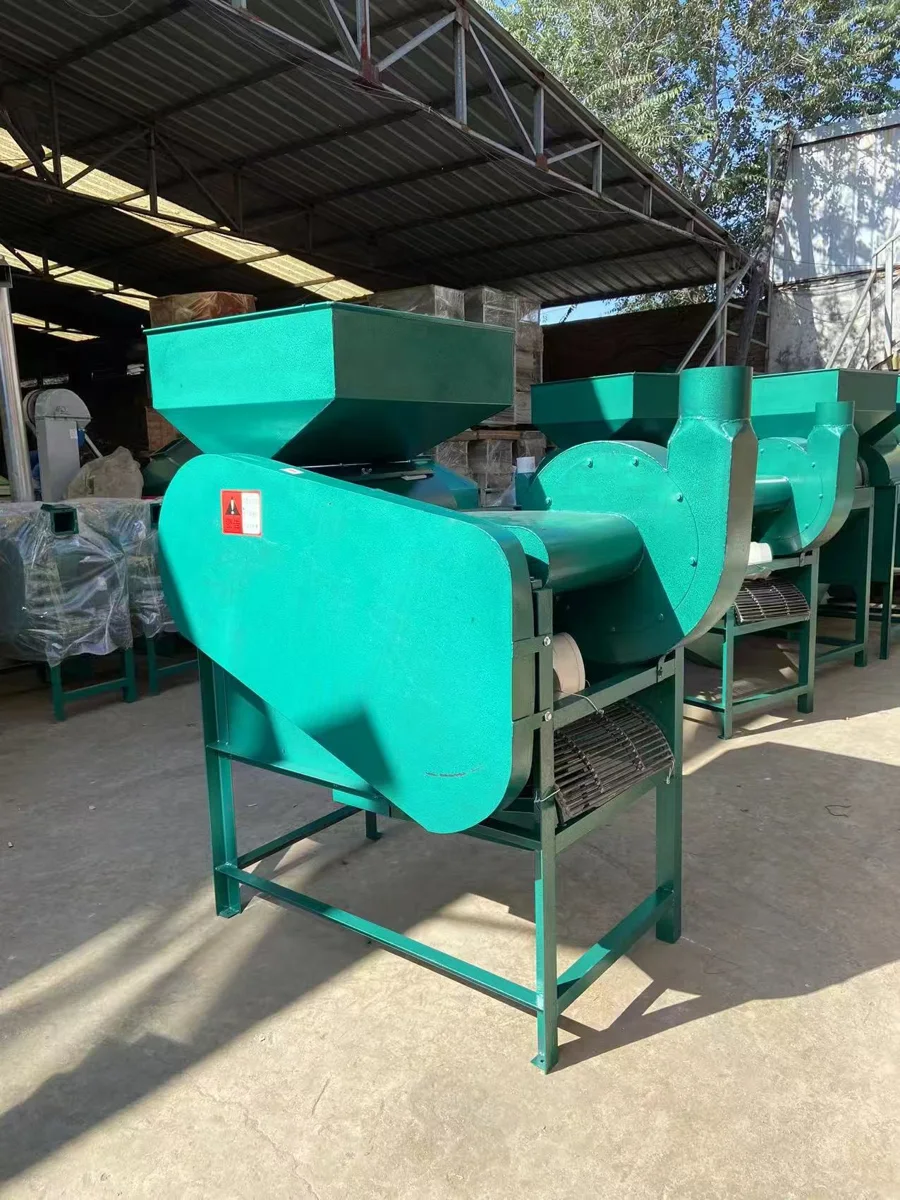
SinoOil Machinery has supplied factory-direct shelling and preparation equipment to oil mills in 80+ countries since 2009 (ISO9001, CE, SGS). Our peanut shellers run from approximately 300 kg/h (60 type) to 800–1,000 kg/h (100 type) with around 95% single-pass shelling. Contact our engineers for capacity matching and a factory-direct quote.
Approximately 8–13% pod moisture. In this range the shell cracks cleanly while the kernel resists breakage, allowing typical shelling rates of 95–98% with only 2–5% broken kernels.
Not recommended. Fresh or rain-wet pods are usually above 13% moisture, so shells flex instead of cracking, throughput drops, and screens clog. Sun-dry the pods first until they rattle clearly when shaken.
Rehydrate before shelling: spray about 10 kg of warm water per 50 kg of peanuts, cover with plastic film for around 10 hours, then sun-dry for about 1 hour. This softens brittle shells and kernels, cutting breakage back toward the normal 2–5%.
Yes. Shells absorb oil during pressing, so removing them raises recoverable yield. Shells are also abrasive, so shelling first reduces wear on the screw press.
SinoOil engineers size the right pretreatment equipment for your capacity — free plant design included.
Get Engineering Support →