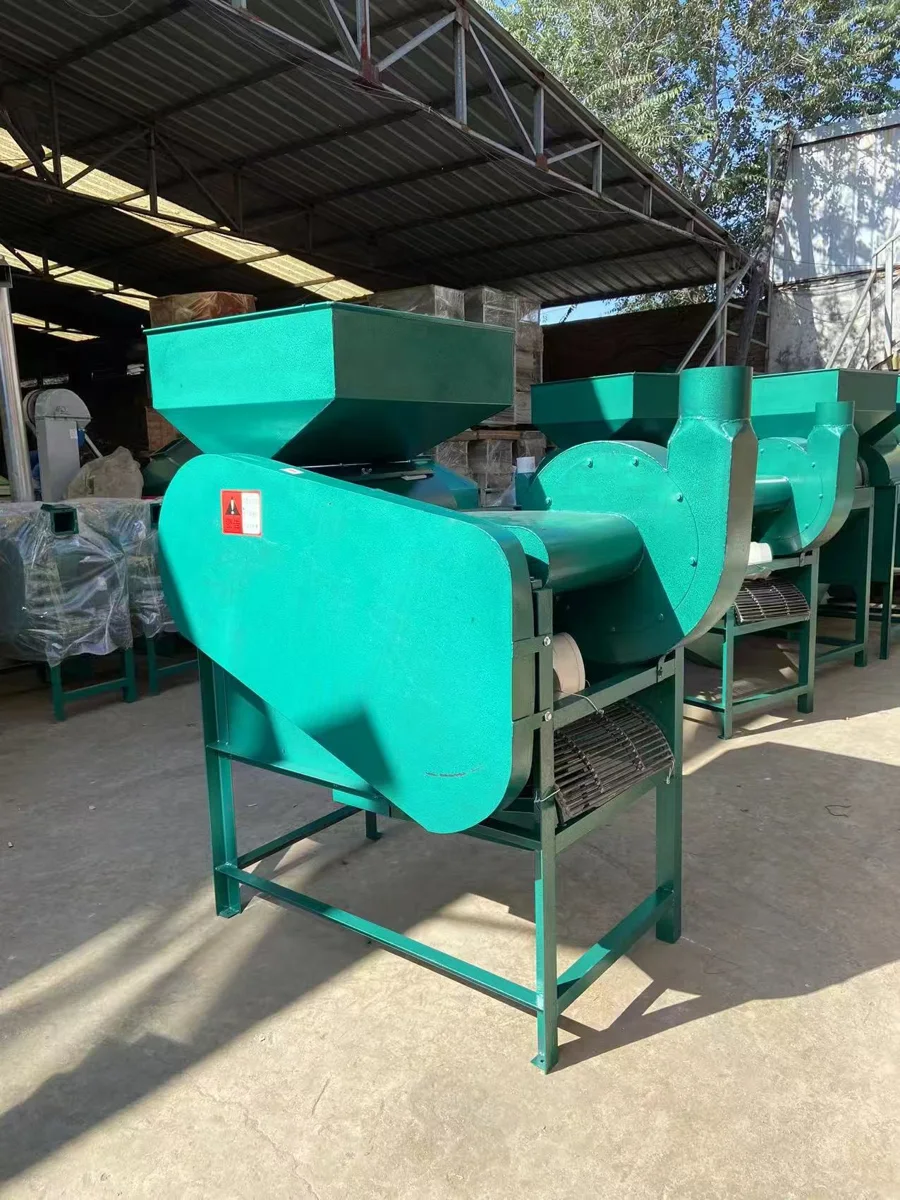
Two numbers define how well a peanut sheller is running: the shelling rate (the percentage of pods fully opened in one pass) and the breakage rate (the percentage of kernels split or damaged). Well-tuned machines typically achieve 95–98% shelling with 2–5% breakage. Falling short on either number costs money — unshelled pods recirculate or get pressed with the shell on, and broken kernels lose value for food-grade buyers.
Shelling before pressing matters more than many new mill owners expect. Peanut shells absorb oil during pressing, so every shell that enters the screw press carries extractable oil out with the cake. Shells are also abrasive and accelerate wear on press worms and cage bars. Removing them protects the press and raises net yield — which is why the dehulling stage sits at the heart of any well-designed seed preparation line.
Shelling is a mechanical compromise: enough impact and friction to crack the pod, but not so much that the kernel inside fractures. Five variables control where you land on that curve, and the single most influential one is moisture. Kernels at 8–13% moisture shell cleanly; below that range they become brittle and shatter, and above it the pods turn leathery and refuse to crack, dragging shelling efficiency down.
The table below summarizes the optimal setting for each factor and its effect on the two key metrics. Note that the factors interact — pre-grading only pays off if screen apertures are actually changed to match each grade, and rotor speed should always be the last variable you raise, never the first.
In dry seasons or cold climates, stored peanuts often fall below 8% moisture and breakage climbs no matter how the machine is adjusted. The fix is reconditioning, not machine tuning. A widely used method: spray approximately 10 kg of warm water per 50 kg of peanuts, mixing for even coverage, then cover the pile with plastic film for about 10 hours so moisture migrates into the kernels. Finally, sun-dry the surface for roughly 1 hour before feeding the sheller — the pod dries enough to crack cleanly while the kernel stays resilient.
The reverse problem — freshly harvested or rain-exposed pods above 13% — calls for additional sun drying or low-temperature drying before shelling. Wet pods deform instead of cracking, clog screens, and cut throughput well below the machine's rated capacity.
| Symptom | Likely Cause | Correction |
|---|---|---|
| High breakage, shelling rate normal | Kernels too dry (<8%); rotor speed too high | Recondition moisture; reduce rotor speed stepwise |
| Many unshelled pods in output | Pods too wet; screen aperture too tight; overfeeding | Sun-dry pods; fit larger screen; steady the feed rate |
| Both breakage and unshelled pods high | Mixed pod sizes running on one screen | Pre-grade into 2–3 sizes and shell each grade separately |
| Kernels split but shells cling | Worn screen or rotor bars | Inspect and replace wear parts |
| Throughput far below rated capacity | Surging or starved feed; clogged screen | Use a consistent feeding device; clear and clean screens |
Work through faults in this order: moisture first, grading and screen match second, feed rate third, rotor speed last. Adjusting speed to mask a moisture or screen problem typically trades one defect for another.
Shelling performance is partly decided before pods reach the machine. A seed cleaning machine removes stones, soil and metal that would otherwise damage the rotor and contaminate kernels, while a vibrating screen handles the size grading that lets each screen aperture run at its sweet spot. Mills that add these two steps typically see steadier shelling rates and noticeably less screen wear.
Downstream, clean shelled kernels also roast more evenly — relevant if your process includes a roasting step to boost press yield.
SinoOil Machinery, a factory-direct Chinese manufacturer serving 80+ countries since 2009 (ISO9001, CE, SGS), builds its peanut shelling machines in three sizes: the 60 type (300–400 kg/h), 80 type (400–600 kg/h) and 100 type (800–1,000 kg/h), all rated at approximately 95% single-pass shelling with breakage held at 5% or below, driven by pure copper motors with a 360-degree shell outlet for clean separation. For sizing advice matched to your daily intake and full seed preparation line design, contact our engineers for a free configuration and quote.
| Factor | Optimal Setting | Effect on Shelling Rate | Effect on Breakage |
|---|---|---|---|
| Kernel moisture | 8–13% | Above ~13%: pods turn pliable and resist cracking, rate drops | Below ~8%: brittle kernels shatter, breakage rises sharply |
| Pre-grading | Sort pods into 2–3 size grades before shelling | Uniform pods match the screen gap, fewer unshelled pods | Stops small pods slipping through gaps set for large ones and being crushed |
| Screen aperture | Matched to each pod size grade | Too tight: pods jam or pass unshelled | Too wide: kernels contact the rotor directly, more splits |
| Feed rate | Steady flow within rated capacity | Overfeeding pushes whole pods through unshelled | Moderate, even feeding cushions kernels; starving the chamber raises breakage |
| Rotor speed | Lowest speed that still shells completely | Higher speed raises shelling rate | Higher speed raises breakage — tune down for food-grade kernels |
Industry practice treats 2–5% kernel breakage as normal for a well-adjusted mechanical sheller, paired with a 95–98% shelling rate. For oil pressing, slightly higher breakage is tolerable since kernels are crushed anyway, but for food-grade or seed peanuts you should tune toward the low end by reducing rotor speed and conditioning moisture.
Shells absorb a meaningful share of the oil during pressing, so removing them directly raises extractable yield. Shells are also abrasive: feeding unshelled pods accelerates wear on the screw press worm and cage bars. Dehulling before pressing therefore improves both oil recovery and equipment life — see the seed dehulling category for equipment options.
Recondition the moisture first. A proven field method: spray approximately 10 kg of warm water evenly over each 50 kg of peanuts, cover the pile with plastic film for about 10 hours so moisture equalizes, then sun-dry for roughly 1 hour before shelling. This brings kernels back toward the 8–13% moisture window where breakage is lowest.
They interact. Rotor speed sets the impact energy, while screen aperture sets how long pods stay in the shelling zone. A common mistake is raising speed to clear unshelled pods when the real fault is an oversized or worn screen. Fix grading and screen match first, then run the lowest rotor speed that achieves complete shelling.
SinoOil engineers size the right pretreatment equipment for your capacity — free plant design included.