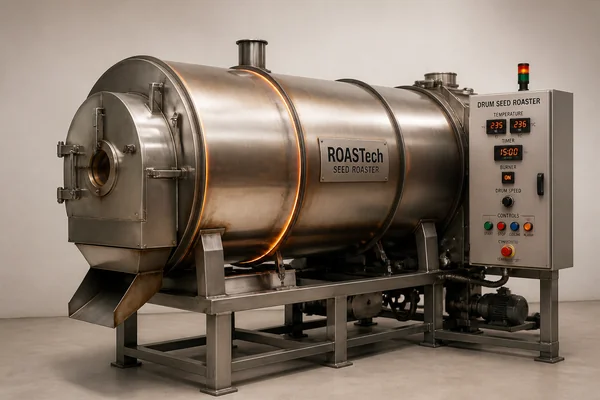
The ranges below reflect typical published practice for hot-press preparation. They are starting points, not guarantees: roaster type (drum vs flat-bottom, direct fire vs thermal-oil vs induction), batch size, and kernel moisture all shift the effective heat at the seed surface. Always confirm doneness by color and aroma — light golden kernels with a clean nutty smell — and run a small trial batch when changing seed or equipment.
Within one band, lower temperatures give milder flavor and lighter oil; the upper end develops the deep toasted aroma of traditional fragrant oils but narrows the margin to scorching.
Peanut: shell first (shells absorb oil and slow heating); moderate roast for pressing, deeper for fragrant peanut oil. Sesame: the classic reference — ~170°C/~15 min for fragrant oil; very heat-sensitive, stir constantly. Sunflower: mild conditioning is usually enough; over-roasting darkens this naturally light oil quickly. Rapeseed/canola: moderate conditioning improves release; traditional small mills roast darker for flavor. Soybean: low oil content rewards thorough conditioning; often flaked + heated in larger plants. Flaxseed: lowest end of the band — its oil is delicate and heat-degradable.
Moisture going in matters: kernels around 8–13% moisture (the same band that suits shelling) roast evenly; very wet seed steams instead of roasting.
Even heat is the real specification. Drum roasters (electric, open-fire, closed-fire, induction) keep seed tumbling for uniformity; flat-bottom roasters (induction, electric thermal-oil, fired thermal-oil) suit batch work and sticky seeds. All seven configurations are in the seed roasting machine range — tell our engineers your seed and capacity and they will size the right one.
| Seed | Typical Temp Range | Typical Time | Notes |
|---|---|---|---|
| Peanut | ~110–180°C | ~15–30 min | Shell first; deeper roast for fragrant oil |
| Sesame | ~170°C (range ~150–210°C) | ~15 min | Heat-sensitive; classic fragrant-oil reference |
| Sunflower | ~100–150°C | ~10–20 min | Mild conditioning; darkens quickly if overdone |
| Rapeseed / Canola | ~100–160°C | ~10–25 min | Moderate conditioning; darker roast in traditional mills |
| Soybean | ~100–160°C | ~15–30 min | Low oil content; thorough conditioning helps |
| Flaxseed | ~90–120°C | ~10–15 min | Delicate oil; keep to the low end |
No — they are typical published-practice starting points. Roaster design, batch size and seed moisture shift effective heat. Run a trial batch and judge by light golden color and clean aroma, then record your own machine's settings.
You get deeper toasted flavor and darker oil — desirable for traditional fragrant oils, risky for light oils like sunflower or flaxseed. The margin to scorching narrows, so even heat distribution becomes critical.
Usually not — one well-controlled roaster covers multiple seeds at different settings. Choose drum vs flat-bottom by batch style and seed behavior, and pick the heat source (electric, gas, induction, thermal-oil) by local energy cost.
SinoOil engineers size the right pretreatment equipment for your capacity — free plant design included.