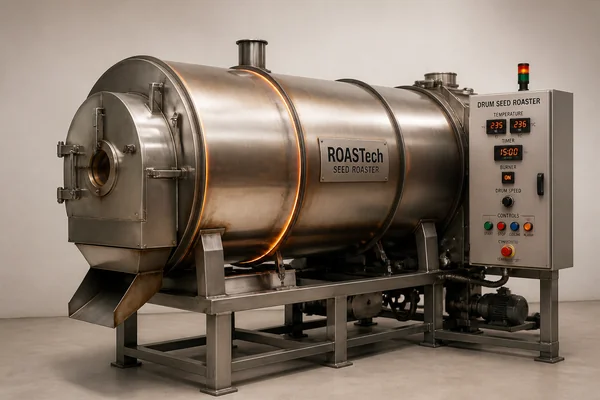
When oilseeds such as peanuts, sesame or sunflower are heat-conditioned before mechanical pressing, two things happen at the cellular level: seed proteins denature, and micro-pores open in the cell walls. Both effects let oil escape more easily under the pressure of a screw press. The difference is not marginal. Published food-science research on sesame found that press recovery improved from approximately 33.5% to approximately 62.6% after heat conditioning — close to double the oil from the same raw material.
Temperatures vary by seed and target flavor. Sesame is typically roasted at approximately 170°C for around 15 minutes, while the general working band for oilseed heat treatment runs from approximately 90°C up to approximately 260°C. Lower temperatures condition the seed with minimal flavor change; higher temperatures develop the deep toasted aroma associated with traditional fragrant peanut and sesame oils.
Cold pressing deliberately skips the roasting step (or keeps press temperatures low), trading yield for a different product. The resulting oil is typically lighter in color, milder in taste, and marketed on the strength of minimal processing — a positioning that supports premium retail pricing in health-oriented markets in Europe, North America and increasingly elsewhere.
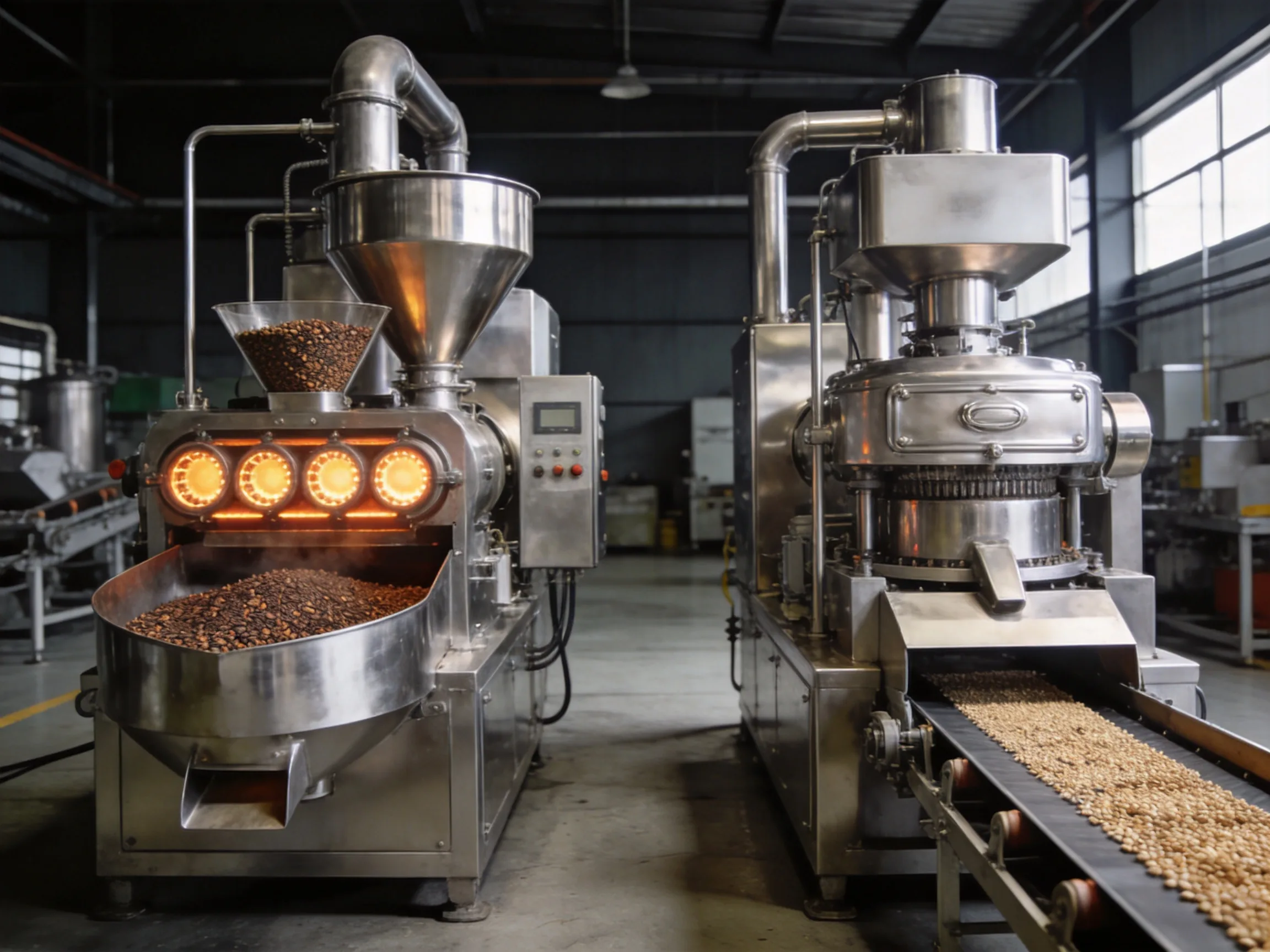
The economics work differently: a cold-press line accepts lower recovery per tonne of seed but sells the finished oil at a higher unit price, often in smaller bottles. The press cake also retains more residual oil, which can have value as animal feed. Cold-press lines still benefit from thorough upstream preparation — cleaning, screening and dehulling — because foreign matter and shell fragments degrade both the press and the "clean label" story.
Neither route is universally better; they serve different buyers. Hot-pressed (roasted) peanut and sesame oils dominate markets where consumers expect strong fragrance — much of Asia, Africa and the Middle East — and the higher recovery rate means lower raw-material cost per liter. Cold-pressed oils win where buyers pay for a light, neutral, minimally processed product. Oil color follows the same split: roasting darkens the oil toward amber and deep gold, while cold-pressed oil stays pale.
Many mid-size mills ultimately run both: a hot-press line for volume sales into the local fragrant-oil market, and a smaller cold-press line for premium bottled product. Because the pressing equipment is largely shared, the main capital difference is the seed roasting machine and its fuel system.
A hot-press line adds a roasting stage between seed preparation and the screw press. Roaster designs vary by fuel source and batch size — drum roasters (electric, open-fire, closed-fire or induction heated) and flat-bottom roasters (induction, electric-thermal-oil or fired) are the common formats; see the seed roasting machine category for the seven typical configurations. Consistent, even heat matters more than peak temperature: scorched seed produces bitter oil, while under-roasted seed sacrifices yield.
Both routes share the same preparation backbone. A seed cleaning machine and vibrating screen remove stones, dust and stems that would otherwise wear the press. For peanuts, a peanut shelling machine (typically 300–1000 kg/h at approximately 95% shelling rate across 60/80/100 types) removes shells before pressing — shells absorb oil during pressing and act as an abrasive inside the press barrel, so dehulling protects both yield and equipment life. The full preparation lineup is covered under seed preparation equipment.
Start from the customer, then work backwards to the line. If your buyers are local consumers or food-service customers who expect fragrant peanut or sesame oil, the hot-press route delivers the flavor profile they want plus substantially better recovery. If you are targeting export retail, health-food channels or private-label bottling where "cold-pressed" is the selling claim, accept the lower yield and design for premium presentation. If demand is mixed, size a roaster for partial throughput and keep the option to run cold batches on the same press.
SinoOil Machinery manufactures the complete seed preparation range — cleaning machines, vibrating screens, peanut shellers and all seven roaster configurations — under ISO9001, CE and SGS certification, and can help you size a hot-press, cold-press or dual line for your seed type and daily capacity. Contact our engineers with your raw material and target output to get a tailored equipment recommendation.
| Factor | Hot Press (Heat-Conditioned) | Cold Press |
|---|---|---|
| Press recovery | High — sesame research showed approximately 33.5% rising to 62.6% after heat conditioning | Lower — more residual oil stays in the cake |
| Flavor & aroma | Strong toasted, fragrant profile (classic roasted peanut/sesame oil) | Mild, light, raw-seed character |
| Oil color | Darker — amber to deep gold, deepens with roast level | Pale, light color |
| Market positioning & price | Volume markets expecting fragrant oil; lower cost per liter | Premium "cold-pressed" health/retail positioning; higher unit price, smaller volumes |
| Equipment needed | Cleaning, screening, dehulling + seed roasting machine + screw press | Cleaning, screening, dehulling + screw press (no roaster) |
Generally yes. The press itself is largely shared between the two routes; the main difference is whether seeds pass through a roaster first. Many mills run a roaster for fragrant-oil batches and bypass it for cold-press batches, adjusting press settings for the harder, unconditioned seed.
Sesame is typically roasted at approximately 170°C for around 15 minutes for fragrant oil. Across oilseeds in general, heat treatment runs in a band of approximately 90–260°C — lower for mild conditioning, higher for deep toasted aroma. Even heat distribution matters as much as the setpoint.
Yes. Shells absorb oil during pressing, cutting recovery on a process that already yields less, and shell fragments are abrasive inside the press barrel. Removing shells first — for example with a peanut shelling machine at approximately 95% shelling rate — protects both yield and equipment life.
It depends on your buyers. Hot pressing earns through volume and roughly doubled recovery in seeds like sesame; cold pressing earns through premium pricing per bottle. Mills selling locally into fragrant-oil markets usually favor hot press; export and health-food channels often justify a cold-press line.
SinoOil engineers size the right pretreatment equipment for your capacity — free plant design included.