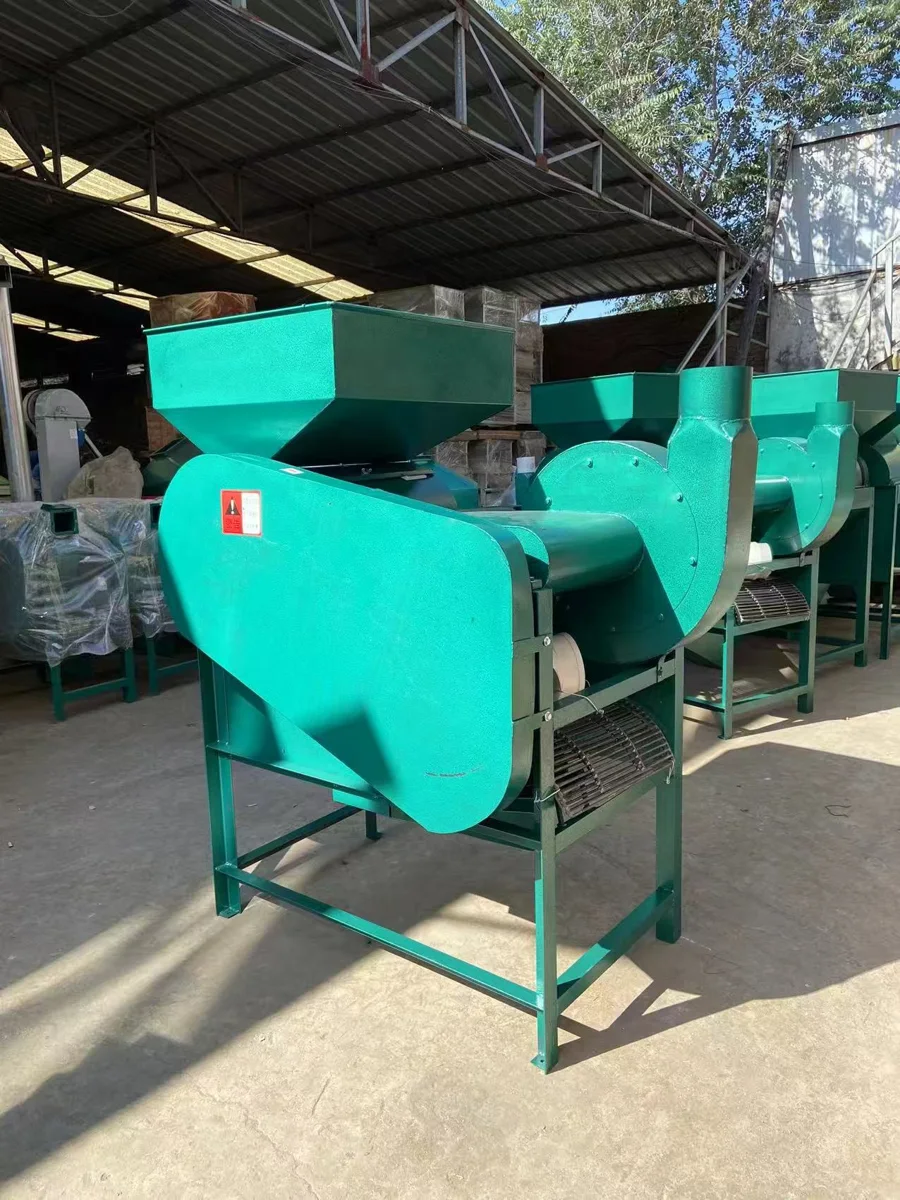
Shelling before pressing is not optional in a well-run peanut oil line. Shells absorb oil during pressing, dragging down yield, and their abrasive fiber accelerates wear on the screw press barrel and worm shaft. Removing them first raises oil recovery and extends press life — which is why a dedicated peanut shelling machine sits at the front of nearly every peanut pressing line.
The 60, 80 and 100 type designations refer to machine size class, and the practical difference between them is throughput: approximately 300-400 kg/h, 400-600 kg/h and 800-1,000 kg/h of in-shell peanuts respectively. All three share the same working principle — a rotating rubbing cage over a screen, with a fan to lift shells away and a 360-degree shell outlet — and the same performance band of roughly 95% single-pass shelling with kernel breakage held at or below 5%.
The correct sizing method is to work backward from your press capacity. A sheller running an 8-hour shift gives you its hourly rate × 8 in daily shelled output, minus roughly 25-30% shell weight. On that basis, a 60 type comfortably feeds a small line of approximately 1-3 tons per day; an 80 type matches a 3-5 TPD mill running one or two screw presses; and a 100 type keeps a 6-10 TPD multi-press plant supplied without becoming the bottleneck.
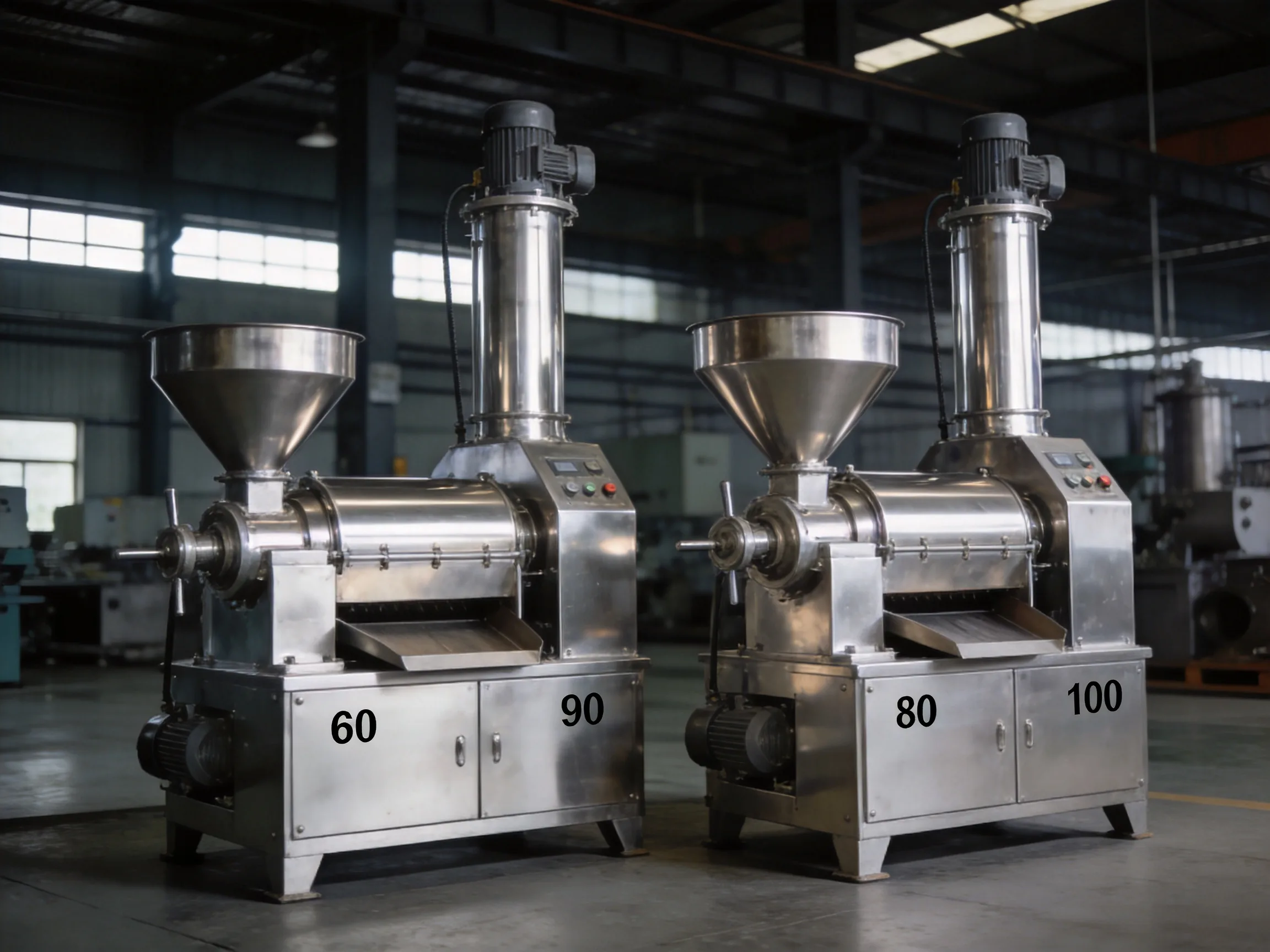
A common and sensible practice is to size the sheller one step above the press line. Shelling is typically done in batches ahead of pressing, and headroom lets you absorb harvest-season surges, re-run unshelled rejects, and stop the sheller for cleaning without starving the presses. The price gap between adjacent sizes is usually small relative to the cost of a press line standing idle.
All three sizes are driven by copper-wound motors, which run cooler and tolerate the voltage fluctuation common in rural grids better than aluminum-wound alternatives. The practical dividing line is electrical supply: smaller units are typically available in single-phase configurations suited to workshops and farm sites, while the 100 type generally requires a three-phase connection, consistent with its larger motor. If your site runs on generator power, confirm the genset is rated with margin above the motor's starting load — an undersized generator is a frequent cause of nuisance trips on larger shellers.
Whichever size you select, performance depends heavily on feed condition. Peanut moisture of approximately 8-13% is ideal: overly dry pods shatter and push breakage up, while damp pods resist rubbing and cut efficiency. In dry winter conditions, a proven field method is to spray roughly 10 kg of warm water per 50 kg of peanuts, cover with plastic film for about 10 hours, then sun-dry for around 1 hour before shelling.
Choose the 60 type if you shell for a single small press, offer paid shelling as a village service, or need a unit that runs on limited single-phase power. Choose the 80 type if you operate a small commercial mill in the 3-5 TPD range — it is the most common choice for first-time oil mill investors because it leaves growth headroom. Choose the 100 type if you run a multi-press plant or trade kernels in volume, where 800-1,000 kg/h keeps labor cost per ton lowest.
Remember the sheller is one stage of seed preparation: pairing it with a cleaning machine upstream protects the shelling screens from stones and soil, and a roaster downstream improves oil release before pressing.
SinoOil Machinery has manufactured factory-direct oil processing equipment since 2009, supplying mills in 80+ countries with ISO9001, CE and SGS certification. All three sheller sizes are detailed on the peanut shelling machine page. Tell us your target TPD and power supply, and our engineers will recommend the right size and full line configuration — request a quote here.
| Specification | 60 Type | 80 Type | 100 Type |
|---|---|---|---|
| Capacity | 300-400 kg/h | 400-600 kg/h | 800-1,000 kg/h |
| Typical use case | Workshop / farm-gate shelling | Small oil mill, 1-2 presses | Mid-size pressing plant, multi-press line |
| Drive | Copper-wound electric motor; single-phase typically available | Copper-wound electric motor | Copper-wound electric motor; three-phase typically required |
| Pairs with press line (approx.) | 1-3 TPD | 3-5 TPD | 6-10 TPD |
| Single-pass shelling rate | ~95% | ~95% | ~95% |
| Kernel breakage | ≤5% | ≤5% | ≤5% |
Not comfortably. At 300-400 kg/h, an 8-hour shift yields roughly 2.4-3.2 tons of in-shell throughput — below 5 TPD demand even before shell weight is removed. A 5 TPD mill should use an 80 type at minimum, and many operators choose the 100 type for headroom.
No meaningful difference — all three sizes achieve approximately 95% single-pass shelling with kernel breakage at or below 5%, in line with the industry band of 95-98% shelling and 2-5% breakage. Results depend more on peanut moisture (ideally 8-13%) than on machine size.
Too dry, and kernels shatter against the screen, raising breakage; too wet, and pods resist rubbing, lowering efficiency. In dry winters, spray about 10 kg of warm water per 50 kg of peanuts, cover with film for roughly 10 hours, then sun-dry about 1 hour before shelling.
Shells absorb oil during pressing, lowering recovered yield, and their abrasive fiber wears the screw press barrel and worm prematurely. Shelling first raises oil yield, improves cake quality, and extends press component life — which is why shellers lead nearly every peanut line.
SinoOil engineers size the right pretreatment equipment for your capacity — free plant design included.