Hand-shelling peanuts is slow in a way that is easy to underestimate. A practiced worker typically shells only a few kilograms per hour, and output falls as hands tire. Processing a single tonne of in-shell peanuts manually can occupy a small crew for several days — exactly when the harvest window demands speed, because peanuts left in shell at the wrong moisture invite mold and aflatoxin risk.
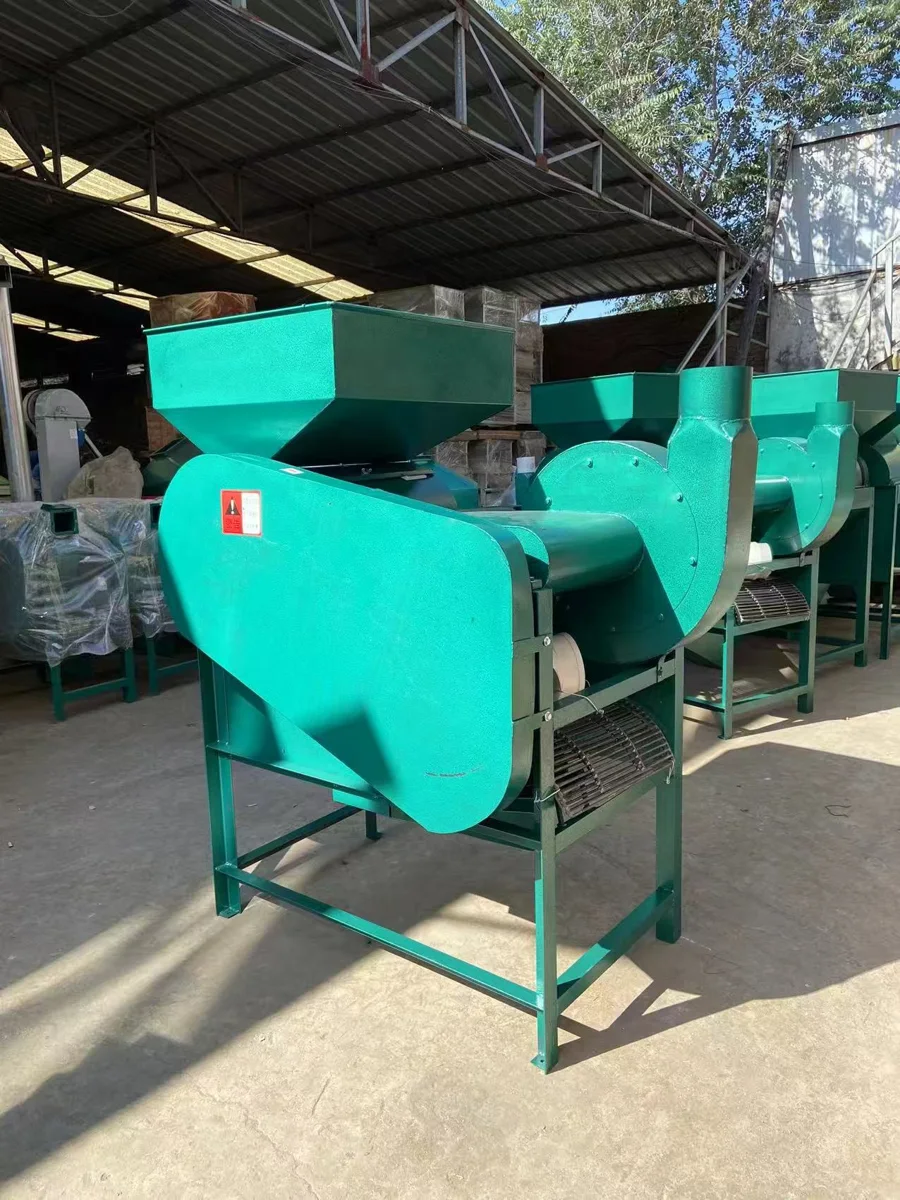
A mechanical peanut shelling machine compresses that timeline to hours. Entry-level 60-type units run at approximately 300–400 kg/h, 80-type at 400–600 kg/h, and 100-type at 800–1,000 kg/h — meaning a tonne is shelled in one to three hours with one or two operators feeding the hopper and bagging kernels. For an oil mill, that throughput difference cascades downstream: presses stay fed, drying yards turn over faster, and seasonal purchasing is not bottlenecked by shelling capacity.
Manual shelling is often assumed to be gentler, but in practice breakage is inconsistent — it rises sharply with worker fatigue and with over-dry nuts. A properly fed machine is more predictable: industry shelling rates run 95–98% in a single pass, with kernel breakage typically 2–5%. Quality machines achieve approximately 95% single-pass shelling with breakage at or below 5%.
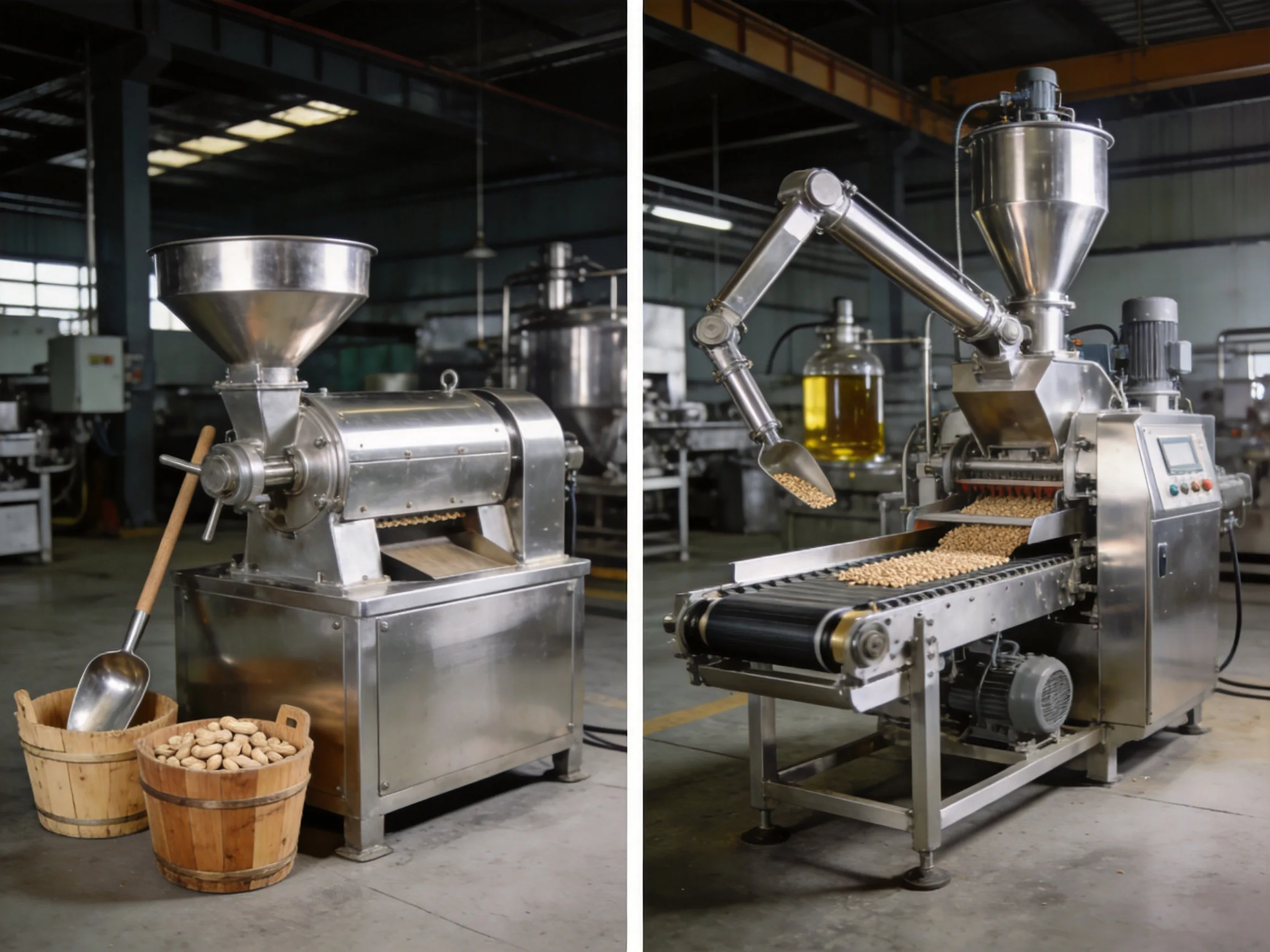
The discipline is moisture. Peanuts shell best at approximately 8–13% moisture; too dry and kernels shatter, too wet and the rubbing action loses efficiency. In dry winter conditions, a proven field technique is to spray roughly 10 kg of warm water over each 50 kg of in-shell peanuts, cover with plastic film for about 10 hours, then sun-dry for approximately one hour before shelling. Mills that follow this routine consistently hit the low end of the breakage range — and since shells absorb oil during pressing, complete shell removal directly raises oil yield while protecting the screw press from abrasive wear. That is the same logic behind dedicated seed dehulling machines across other oilseeds.
Hand shelling usually happens on open floors or mats, with repeated hand contact and shells, soil, and kernels mixing freely. For mills selling food-grade kernels or pressing edible oil, that introduces contamination points that are hard to audit. A mechanical sheller encloses the shelling chamber and discharges shells through a dedicated 360-degree outlet, keeping kernels and waste streams separated from the first second.
Mechanical shelling also slots cleanly into a controlled seed preparation line: kernels can move directly to a vibrating screen for grading and on to cleaning before pressing, with consistent material flow that manual batching cannot match.
Machine prices vary by model, motor specification, and destination, so any payback claim quoting exact months without your numbers should be treated skeptically. The honest framework is simple: payback period = machine cost ÷ (monthly labor cost avoided + value of additional intact kernels + margin on extra throughput you can now sell).
In markets across Africa, Asia, and Latin America where shelling labor is inexpensive, the case rarely rests on wages alone. It rests on three quieter factors: capturing the full harvest window instead of turning suppliers away, the kernel value recovered when breakage drops to a stable 2–5%, and the oil yield gained because clean, shell-free kernels press more efficiently and spare the press from wear. A mill processing under a few hundred kilograms per week may reasonably stay manual; once volumes pass a few tonnes per week, the arithmetic almost always favors the machine. Run your own figures before buying — a credible supplier will help you do exactly that.
Size the machine to your peak weekly intake, not your average: a 60-type (300–400 kg/h) suits small village mills, an 80-type (400–600 kg/h) fits growing commercial operations, and a 100-type (800–1,000 kg/h) serves dedicated processing plants. Look for an all-copper motor for sustained duty cycles, a documented single-pass shelling rate near 95%, and breakage specified at 5% or below.
SinoOil Machinery has manufactured factory-direct peanut shelling machines and complete seed preparation lines since 2009, exporting to 80+ countries with ISO9001, CE, and SGS certification. Send your monthly peanut volume and target kernel use to our engineering team for a model recommendation and an honest payback calculation based on your local labor and kernel prices.
| Factor | Manual shelling | Machine shelling (60–100 type) |
|---|---|---|
| Throughput | Typically only a few kilograms per worker-hour; one tonne can occupy a small team for days | 300–1,000 kg/h depending on model; roughly 1–3 hours per tonne |
| Labor per tonne | Dozens of worker-hours, rising during harvest peaks | Typically 1–2 operators for feeding and bagging |
| Shelling rate | Varies with skill and fatigue | Approximately 95% single pass (industry range 95–98%) |
| Kernel breakage | Inconsistent; climbs as workers tire or nuts are over-dry | ≤5% at correct moisture (industry norm 2–5%) |
| Hygiene | Hand contact, open-floor work, mixed debris | Enclosed shelling chamber with dedicated 360° shell outlet |
| Consistency | Output drops through the day and across seasons | Stable hourly output across shifts |
| Cost structure | No upfront cost, but cost per tonne never falls | One-time investment; cost per tonne drops as volume grows |
Approximately 8–13% moisture is ideal. Too dry and kernels shatter, pushing breakage up; too wet and shelling efficiency drops. A common winter trick: spray roughly 10 kg of warm water over 50 kg of in-shell peanuts, cover with plastic film for about 10 hours, then sun-dry for around 1 hour before feeding the sheller.
Yes. Peanut shells absorb oil during pressing, so feeding unshelled or partially shelled material lowers recovery. Removing shells first raises oil yield and also protects the screw press from abrasive wear, since shell fragments accelerate erosion of the worm shaft and press cage.
It depends on local hand-shelling speed, but a mid-size 80-type machine running at 400–600 kg/h typically does in one hour what a manual crew accomplishes over several full working days. Most mills redeploy that labor to sorting, drying, and bagging rather than eliminating it.
Use the framework: payback period = machine cost ÷ (monthly labor cost avoided + value of extra intact kernels + margin on additional throughput sold). Machine pricing varies by model, motor configuration, and shipping destination, so request a quote with your monthly volume to run the numbers accurately.
SinoOil engineers size the right pretreatment equipment for your capacity — free plant design included.