Soybean is a protein crop that happens to carry oil: typical oil content is just 18–20% (industry range), versus 40%+ for peanut or sesame. A screw press recovers part of that oil and leaves a protein-rich cake — and for most soybean mills, that meal is half the business case. Plan your line and your pricing around both products, not the oil alone.
Screen out pods, stems, soil and split-damaged beans with a seed cleaning machine. Soybeans arriving from bulk handling also pick up tramp metal — a magnet ahead of the cracker protects the rolls.
Crack each bean into several pieces with corrugated cracking rolls. Whole soybeans are hard, smooth and nearly impossible to press effectively; cracking opens the bean for conditioning and lets the hull loosen for the next step.
Aspirate the loosened hulls off the cracked pieces with a dehulling machine. Dehulling raises the protein content of the final meal — often the difference between feed-grade and premium meal pricing. Smaller press lines sometimes skip it; if meal price matters in your market, do not.
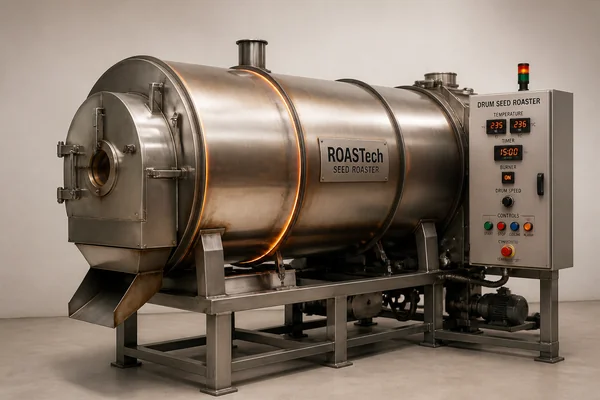
Condition the cracked (or dehulled) pieces with heat and moisture in a cooker / roaster until they are hot and slightly plastic, then press immediately. Conditioning is what makes soybean pressing workable at all — raw cracked soybeans yield poorly and strain the press.
Many modern lines add extrusion before pressing to further rupture cells and boost press yield; ask us about pairing an extruder with your press when sizing a line via the complete pretreatment line guide.
Soybeans contain about 18–20% oil, and a screw press recovers part of that — meaningfully less per ton than peanut or sunflower. Exact yield depends on cracking, conditioning, press settings and whether extrusion is used. See our full breakdown of soybeans per gallon of oil. Read full answer →
It is optional for oil yield but valuable for meal quality: removing hulls raises meal protein, which usually means better meal prices. Small lines sometimes skip dehulling; commercial lines rarely do.
Almost always insufficient pretreatment: beans not cracked fine enough, or pressed cold. Soybean must be cracked and heat-conditioned (ideally extruded) before the press — raw whole beans are among the hardest materials to press.
Usually only when the meal is sold well — with just 18–20% oil content, the protein-rich cake often carries the economics. Mills in livestock-feed regions do best, selling oil and high-protein meal together.
Hot enough to make the cracked pieces slightly plastic before they enter the press — mills tune the exact point to their press and moisture. Condition immediately before pressing; cooled material loses the benefit.
SinoOil engineers size the right pretreatment equipment for your capacity — free plant design included.