Sesame is one of the oiliest seeds in commercial pressing — typical oil content sits around 48–55% (industry range). But the seed is tiny, and field-harvested sesame arrives mixed with sand, stems and dust that wear out press screws and darken the oil. Skipping pretreatment costs you both yield and oil quality.
The flavor of sesame oil is also made in pretreatment: the roasting step creates the toasted aroma buyers expect. Raw-pressed sesame oil is pale and bland; properly roasted sesame produces the dark, fragrant oil that commands premium prices in most markets.
Run raw sesame across a vibrating screen with fine mesh and air separation. Because sesame seeds are so small, screen selection matters more than for most oilseeds — the goal is removing sand of nearly the same size as the seed.
Target visibly clean seed with impurities reduced to roughly 1% or less before roasting (general mill practice). Heavy contamination at this stage shows up later as dark sediment in the pressed oil.
Most small mills press sesame with the hull on — it is the simpler, standard route for toasted sesame oil. Hulling is worth considering only when your market wants very light-colored oil or you are also selling hulled sesame as food: the hull carries oxalates and slight bitterness.
If you do hull, plan for extra drying, since wet-method hulling raises seed moisture well above pressing range.
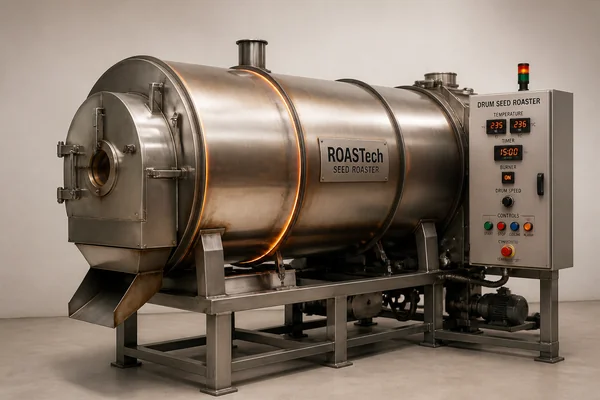
Roast cleaned sesame at around 170°C for about 15 minutes in a rotating seed roasting machine, keeping seeds in constant motion so they toast evenly without scorching. This is the same temperature-and-time window detailed in our roasting temperature chart.
Roasting does three jobs at once: it develops the signature aroma, lowers moisture into pressing range, and ruptures oil cells so the press can actually extract the oil. Under-roasted sesame presses hard and yields less; burnt sesame makes acrid oil.
Press hot, straight from the roaster when possible — warm seed flows and presses better. With clean, well-roasted sesame, mechanical screw pressing recovers a large share of the seed's 48–55% oil content; exact yield depends on press type and cake thickness settings.
For equipment sizing across the whole line, see the complete pretreatment line guide — the same line layout applies to sesame with finer screens.
Around 170°C for about 15 minutes is the common working point for toasted sesame oil, with constant stirring or drum rotation. Lighter roasts give milder oil; pushing far past this window risks scorched, bitter oil.
No — most mills press sesame hull-on, which is standard for toasted sesame oil. Hulling is only worth it for very light-colored oil or food-grade hulled sesame production.
Aim for roughly 1% impurities or less. Sand is the main enemy — it is close to seed size, wears press parts, and ends up as sediment in the oil, so fine screening with air separation matters.
You can — it is called raw or cold-pressed sesame oil — but yield drops and the oil is pale with little aroma. For the toasted sesame oil most markets expect, roasting is essential.
Typically 48–55% by weight (industry range), among the highest of commercial oilseeds. Actual pressed yield depends on roasting quality, press type and how thin you run the cake.
SinoOil engineers size the right pretreatment equipment for your capacity — free plant design included.