Unlike sesame or rapeseed, sunflower seed carries a thick fibrous hull — around a quarter of seed weight — that holds almost no oil. Press everything together and the hull soaks up oil into the cake; remove every hull and the press struggles for grip. The craft is in partial dehulling.
Oil-type sunflower varieties typically contain 38–50% oil (industry range). At that oil content, each percentage point of extraction efficiency you gain in pretreatment is real money at the press.
Screen out stems, stones and dust with a seed cleaning machine combining sieves and air flow. Sunflower lots from smallholder supply chains often carry field trash that jams dehullers, so clean first, always.
Run cleaned seed through a dehulling machine set to crack and remove most — not all — of the hull. Common mill practice keeps roughly 8–12% hull content in the pressed material: enough fiber for the screw to grip and for oil to drain through the cake, not so much that the hull steals oil.
Separated hulls are not waste — they burn well as boiler fuel or go into livestock bedding.
Crack the dehulled kernels with a crusher or flaking roll before cooking. Breaking the kernel multiplies the surface area heat can reach and starts rupturing oil cells, which is what makes the next step effective.
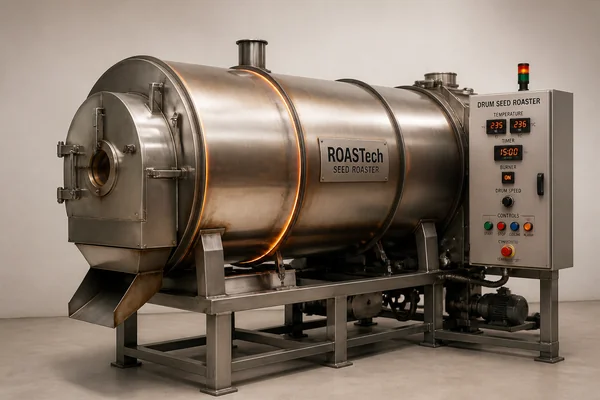
Cook the crushed material in a seed roaster / cooker to pressing temperature, stirring constantly. Conditioning lowers oil viscosity and finishes opening the oil cells; properly cooked sunflower presses dramatically easier than raw kernels.
From there it goes straight to the screw press. For the full line layout and machine sizing, see the complete pretreatment line guide.
Clean the seed, partially dehull it, crush the kernels, heat-condition them, then run them through a screw press. The press squeezes oil out mechanically; the pretreatment steps before it determine how much oil the press can actually recover.
A small hull fraction — roughly 8–12% — gives the screw press fiber to grip and creates drainage channels for oil to escape the cake. Fully dehulled sunflower tends to slip in the press and can actually yield less.
Oil-type varieties typically run 38–50% oil by weight (industry range). Confectionery-type sunflower is lower and generally not worth pressing commercially.
They need heat conditioning (cooking) rather than flavor roasting — warm, conditioned kernels release oil far more readily. Cold pressing is possible but yields noticeably less and suits premium niche markets only.
Mills typically burn them as boiler fuel — they have real heating value — or sell them for livestock bedding and pellets. Hulls hold almost no oil, so removing most of them does not cost yield.
SinoOil engineers size the right pretreatment equipment for your capacity — free plant design included.