
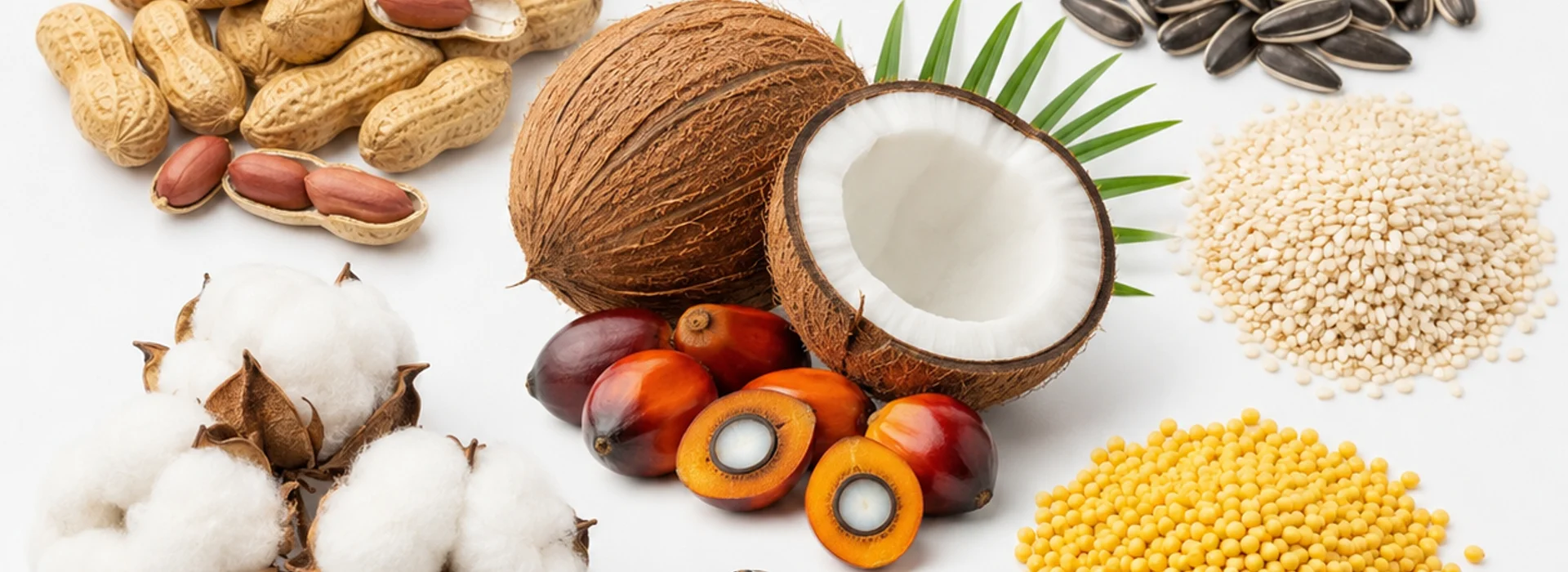
Seed Preparation Line — The Foundation of Quality Oil
Integrated cleaning, dehulling, screening and roasting systems that prepare oilseeds for maximum extraction yield and long equipment life downstream.
Why Seed Preparation Matters
Proper seed conditioning is the most cost-effective way to improve oil yield, protect presses and refiners, and deliver consistent product quality
Remove Impurities
Stones, metal, dust, stems and undersized kernels are separated before pressing — preventing wear on screws, bearings and filter cloths while meeting food safety expectations.
Improve Oil Yield
Dehulling and roasting optimize kernel structure and moisture content. Well-prepared seeds typically deliver 2–8% higher extraction rates compared with raw, unconditioned material.
Protect Equipment
Clean, uniform feedstock reduces jamming, screw wear and unplanned downtime on oil presses and filtration systems — extending service intervals and lowering maintenance cost.
Ensure Oil Quality
Controlled roasting develops desirable aroma and color while reducing free fatty acid precursors. Consistent prep supports stable crude oil specs for refining or direct retail sale.
Seed Preparation Equipment
Modular machines configured for peanut, soybean, sunflower, sesame, rapeseed, cottonseed and other oil-bearing crops
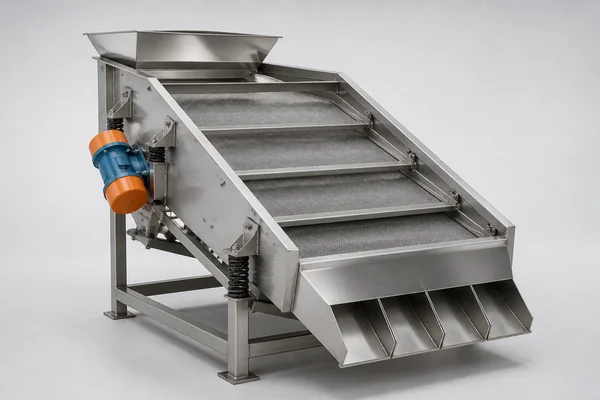
Seed Cleaning Machine
Vibrating screen, destoner and air classifier remove stones, metal and light impurities — achieving 99%+ cleaning efficiency on most oilseed grades.
View Equipment →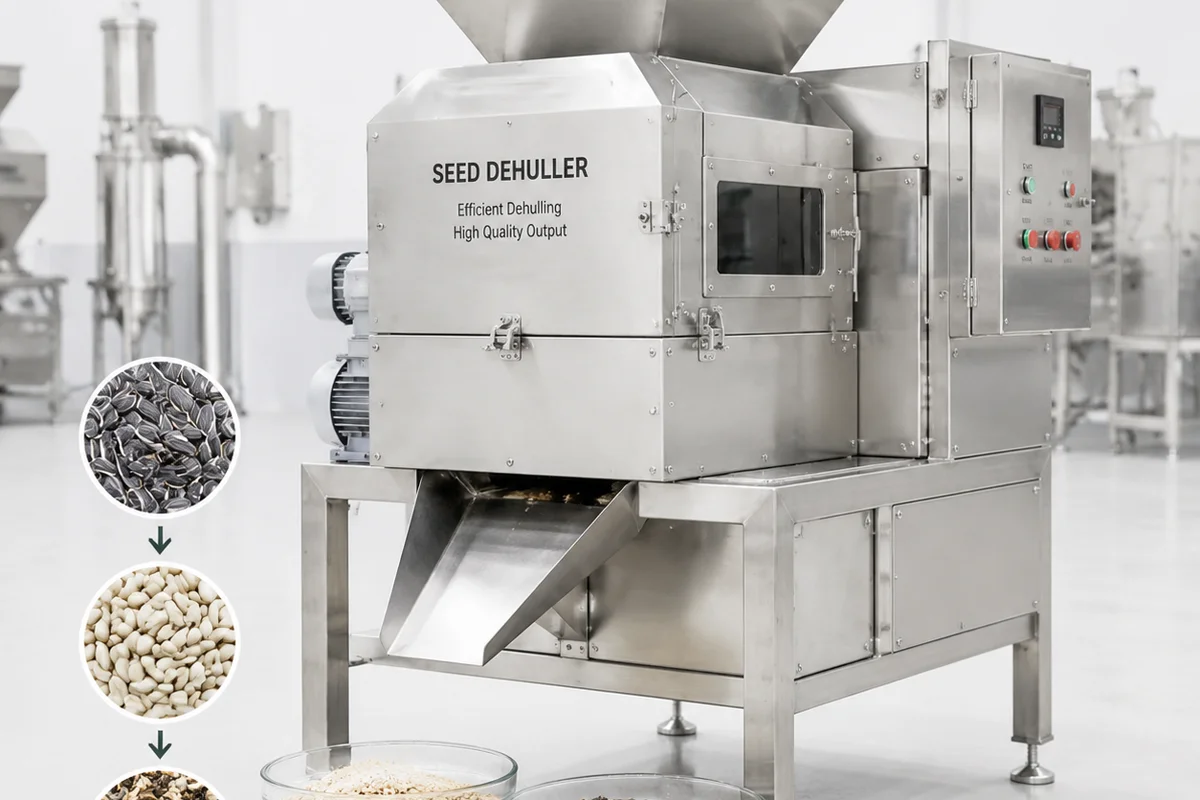
Dehulling Machine
Cracking and separating hulls from kernels for soybean, sunflower and cottonseed — reducing fiber in press cake and improving oil extraction rates.
View Equipment →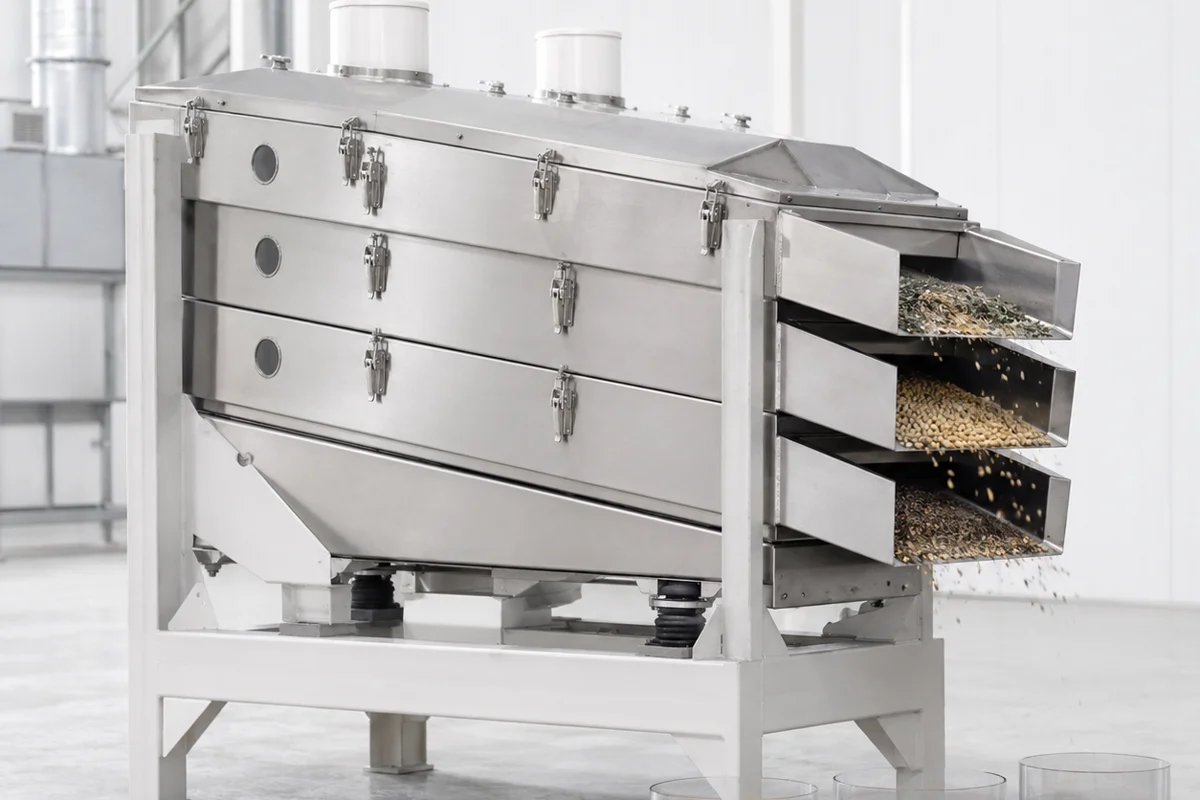
Vibrating Screen
Multi-deck grading screens classify kernels by size after cleaning or dehulling — ensuring uniform feed to roasters and presses for stable throughput.
View Equipment →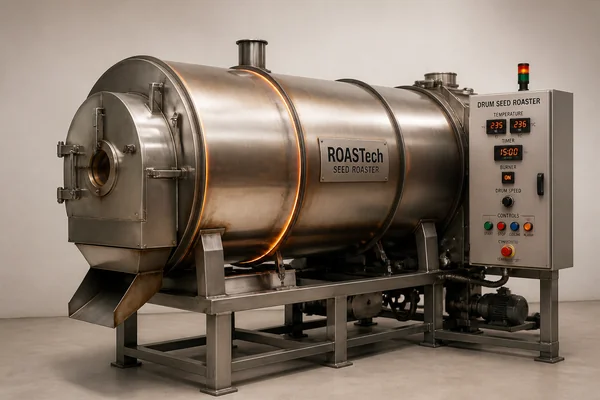
Seed Roasting Machine
Drum or belt roaster with temperature control reduces moisture, develops aroma and conditions seeds for maximum pressing efficiency and oil quality.
View Equipment →Need a complete category overview? Browse all seed preparation equipment →
Typical Seed Preparation Process
Four integrated steps from raw oilseed intake to press-ready conditioned kernels
Process steps are customized per oilseed type — peanut lines may emphasize shelling and roasting, while soybean lines focus on cleaning, dehulling and size grading. Prepared seeds then feed into the oil pressing line.
Available Capacities
Seed preparation lines from compact workshop modules to industrial pre-press plants — matched to your daily oilseed throughput
Small Prep Line
- Single cleaner + optional roaster
- Ideal for 1–5 TPD oil mills
- Footprint: 40–120 m²
- Manual or semi-auto conveying
Commercial Prep Line
- Cleaner, dehuller, screen and roaster
- Serves 5–20 TPD pressing plants
- Footprint: 120–400 m²
- Screw conveyor integration
Factory Prep Line
- Multi-stage cleaning and grading
- For 20–50 TPD processing plants
- Centralized dust collection
- PLC temperature monitoring
Industrial Prep Plant
- High-capacity cleaners and roasters
- 50–100+ TPD integrated lines
- Automated conveying and buffering
- Export-grade process documentation
Frequently Asked Questions
Almost all mechanical pressing operations benefit from seed preparation. Peanut, sunflower, cottonseed and soybean typically require cleaning plus dehulling or shelling. Sesame and rapeseed often need cleaning and roasting. We configure each line based on your raw material, target oil quality and downstream press type.
Not for every crop. Peanuts use shelling rather than dehulling; sesame is often pressed with hulls for specialty oils. Soybean, sunflower and cottonseed gain significant yield and cake quality improvements from dehulling. Our engineers recommend only the stages your oilseed and market require.
Investment depends on hourly throughput, number of process stages and automation level. A basic cleaner-and-roaster module for a small mill may start from USD 8,000–15,000, while a full commercial line with dehuller, screens and conveyors for 5–20 TPD plants typically ranges from USD 35,000–80,000. We provide itemized quotations after reviewing your capacity and oilseed type.
Yes. Many clients retrofit preparation equipment upstream of existing presses to improve yield and reduce wear. We supply layout drawings for connecting cleaners, roasters and conveyors to your current press feed point with minimal production interruption during installation.
Small prep modules are often commissioned within 3–7 days after delivery. Full commercial lines with civil works and conveying typically need 2–4 weeks on site. We provide installation guidance, operator training and startup support as part of our turnkey service.
Ready to Build Your Seed Preparation Line?
Tell us your oilseed type, daily throughput and existing plant layout — our engineers will recommend the right cleaning, dehulling and roasting configuration within 48 hours.
Watch It Run
See This Machine In Action
A real SinoOil machine demonstration — see how it works before you buy.