
Overview: what a quality report tells you
An edible oil specification is not a single number. It is a small panel of laboratory tests, each answering a different question about the oil: How fresh is it? How far has it oxidised? How clean is it? Which oil is it, and is it suitable for frying? When a buyer receives a certificate of analysis (CoA), every line on it maps to one of those questions. Understanding the parameters lets a quality-control team accept or reject a batch with confidence, and lets a buyer compare offers on a like-for-like basis instead of guessing from price alone.
Throughout this guide the figures we give are typical, indicative directions drawn from established analytical practice (the kind of methods standardised by bodies such as AOCS and reflected in Codex). They are written to help you read a report, not to define a legal pass or fail. The binding numbers for any shipment are those in the applicable national standard, the relevant Codex standard, or your purchase contract — always check the parameter against the specification that governs your trade.
The single most useful object in this whole topic is the summary table below. It lists each key parameter, what it physically measures, and the typical direction of travel from crude pressed oil to fully refined oil. Keep it beside any CoA you are reviewing.
| Parameter (typical unit) | What it measures | Typical crude | Typical refined |
|---|---|---|---|
| FFA, % as oleic / Acid value, mg KOH/g | Freshness & hydrolytic breakdown of triglycerides | Higher (often well above 1%) | Very low (often <0.1%) |
| Peroxide value, meq O₂/kg | Primary oxidation — early rancidity | Variable; rises with poor handling | Low in fresh refined oil |
| p-Anisidine value | Secondary oxidation products (aldehydes) | Can be elevated if abused | Low in fresh oil |
| Totox (2×PV + AnV) | Overall oxidative state | Higher if mishandled | Low |
| Moisture & volatile matter, % | Water content driving hydrolysis | Higher | Very low |
| Insoluble impurities, % | Solids, sediment, fines | Higher | Near nil |
| Colour, Lovibond red/yellow | Appearance / pigment load | Dark | Pale, light |
| Iodine value, g I₂/100 g | Degree of unsaturation — oil identity | Characteristic of the seed; little changed by refining | |
| Saponification value, mg KOH/g | Average fatty-acid chain length | Characteristic of the oil; little changed by refining | |
| Smoke point, °C | Cooking suitability | Lower (unrefined) | Higher (refined) |
Read it as a panel, not a scoreboard. No single parameter “grades” an oil. A low peroxide value on its own can hide an oil that was already abused and then partly oxidised through to secondary products — which is exactly why anisidine value and Totox exist. Always interpret freshness, oxidation, purity and identity together.
FFA and acid value
Free fatty acid (FFA) is usually reported as a percentage “as oleic acid”, while the closely related acid value is reported in milligrams of potassium hydroxide needed to neutralise one gram of oil (mg KOH/g). They describe the same thing from two angles: the amount of fatty acids that have broken free from the triglyceride backbone. As a rule of thumb, FFA % (as oleic) ≈ acid value / 1.99, so the two convert easily.
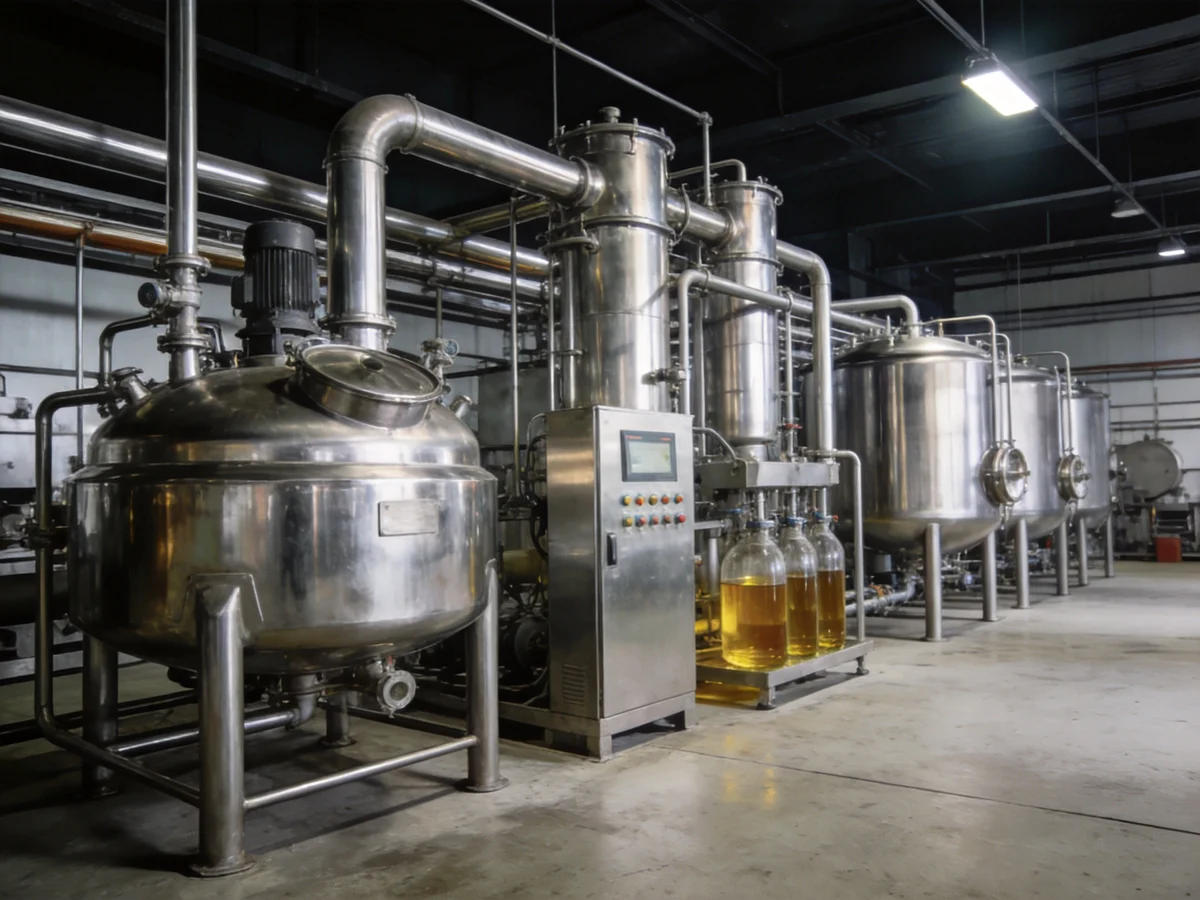
Free fatty acids form when triglycerides undergo hydrolysis — splitting in the presence of water, heat, enzymes (lipase) or time. A high FFA therefore flags an oil that is old, was extracted from damaged or wet seed, or has been stored poorly. Crude pressed oil commonly shows a meaningfully elevated FFA, whereas fully refined oil is typically very low, often below 0.1% because neutralisation (chemical or physical) is designed specifically to strip free acids out.
Freshness and hydrolytic breakdown. Rising FFA is the most direct sign that an oil is degrading or was made from poor feedstock.
High FFA means more refining loss, lower yield of finished oil, and a shorter usable life. It is one of the first lines QC checks on intake.
For refining strategy, FFA also drives the route: oils high in free acid often suit physical (steam) refining, while lower-FFA oils are frequently neutralised chemically. Either way, the goal is the same — a finished oil with a low, stable acid value.
Peroxide value
Peroxide value (PV), reported in milliequivalents of active oxygen per kilogram of oil (meq O₂/kg), measures primary oxidation — the hydroperoxides that form first when oxygen attacks the unsaturated fatty acids. It is the classic early-warning test for rancidity. Fresh, well-handled oil reads low; PV climbs when oil is exposed to air, light, heat or pro-oxidant metals during storage and transport.
Important nuance: peroxides are intermediates. They build up, then break down into secondary products. A surprisingly low PV in an oil that has clearly been abused can mean it is past the peroxide peak, not that it is fresh. This is why PV is never read alone — it is paired with anisidine value below.
For the equipment side, keeping PV down is a handling discipline as much as a processing one: minimise air contact, control temperature, and avoid copper/iron contamination. Good deodorization removes existing peroxides and volatile off-notes, but it cannot undo oxidation that continues afterwards in a poorly sealed tank.
Oxidation: p-anisidine value and Totox
Where peroxide value catches the first stage of oxidation, the p-anisidine value (AnV) catches the second. It responds to the aldehydes — chiefly 2-alkenals — that form as hydroperoxides decompose. These are the compounds most associated with the stale, painty, “old oil” flavour. A low AnV in a fresh oil is normal; an elevated AnV says the oil has oxidised deeper than PV alone would suggest.
Because the two tests cover different stages, the industry combines them into a single oxidative-state index, the Totox value (total oxidation):
- Totox = (2 × Peroxide value) + p-Anisidine value. The peroxide term is doubled because primary oxidation feeds the secondary products.
- A low Totox indicates an oil that is both currently fresh (low PV) and has not been heavily oxidised in its history (low AnV).
- A high Totox is a red flag even when one component looks acceptable — it is the most complete single snapshot of oxidative quality.
Together, FFA, PV, AnV and Totox describe the whole “freshness and oxidation” story of an oil. For long shelf-life or export shipments, buyers increasingly ask for AnV and Totox, not just PV, on the CoA.
Moisture and insoluble impurities
Two purity parameters describe how clean the oil is. Moisture and volatile matter (M&V, %) is the water plus anything that evaporates under the test’s heating conditions. Water is the enemy of shelf life because it feeds the hydrolysis that creates FFA, and it can encourage microbial and enzymatic activity in crude oil. Finished oil is dried to a very low moisture so that it stays stable in storage.
Insoluble impurities (%) are the solids the oil carries — seed fines, meal particles, sediment and other matter that does not dissolve. Crude oil straight from the press or extractor carries these until it is cleaned up. Effective crude oil filtration and, where needed, degumming remove particulates and phospholipid gums, dropping impurities toward nil in the refined product.
| Purity parameter | Risk if high | How it is controlled |
|---|---|---|
| Moisture & volatile matter, % | Hydrolysis → rising FFA; poor stability | Drying / vacuum during processing |
| Insoluble impurities, % | Sediment, cloudiness, off appearance | Filtration, settling, degumming |
Colour
Colour is the most visible quality cue and is usually reported on the Lovibond scale as red and yellow units measured in a standard cell. It reflects the pigment load of the oil — carotenoids, chlorophyll and breakdown products — plus any darkening from heat or oxidation. Crude oils are typically dark; bleaching and the wider refining sequence lower colour markedly, leaving a pale, bright finished oil that meets buyer expectations for the retail or food-manufacturing market.
A finished oil that is darker than expected, or that darkens after refining, can hint at over-heating, oxidation, or an under-performing bleach step — so colour is read alongside the freshness panel rather than in isolation.
Iodine value and saponification value
Two parameters are less about freshness and more about identity — they tell you which oil you actually have and how it will behave.
The iodine value (IV, g I₂/100 g) measures the degree of unsaturation: how many carbon–carbon double bonds the fatty acids contain. A high IV means a highly unsaturated, typically liquid oil that is more prone to oxidation and, in some oils, to “drying” (film formation); a low IV indicates a more saturated, more stable oil. Because each oilseed has a characteristic IV range, the test doubles as an identity and adulteration check — an out-of-range IV suggests the oil is not what it claims to be, or has been blended.
The saponification value (SV, mg KOH/g) reflects the average chain length of the fatty acids: it is the amount of KOH needed to saponify a fixed mass of oil. Oils rich in shorter-chain fatty acids give a higher SV; longer-chain oils give a lower SV. Like IV, it is largely a property of the oil’s botanical origin and changes little through normal refining.
Unsaturation → oxidation/drying tendency and oil identity. Used to confirm the oil and screen for blending.
Average fatty-acid chain length. A fingerprint of the oil’s origin, useful for verification.
Smoke point
The smoke point (°C) is the temperature at which an oil, heated under defined conditions, begins to give off a continuous bluish smoke. It is a practical cooking parameter rather than a chemical purity test, but it is closely tied to quality: free fatty acids and impurities lower the smoke point, so a cleaner, lower-FFA oil smokes at a higher temperature. That is why refined oils generally have a higher smoke point than unrefined ones and are preferred for high-heat frying, while many unrefined or virgin oils — valued for flavour — sit lower and suit gentle cooking.
Because smoke point tracks FFA and impurity content, it tends to fall as an oil ages or is repeatedly heated. For frying operations it is a useful in-use indicator that an oil is nearing the end of its working life.
Crude vs refined — and a word on contaminants
Pulling the panel together, the journey from crude to refined oil shows a consistent pattern: freshness and purity parameters improve dramatically, while identity parameters stay put. FFA, moisture, impurities and colour all drop sharply through neutralisation, degumming, bleaching and deodorization; smoke point rises; iodine and saponification values barely move because they are fixed by the oil’s fatty-acid makeup. If you understand that pattern, an unexpected reading — say, a refined oil with stubbornly high colour or FFA — immediately points you toward which processing step under-performed.
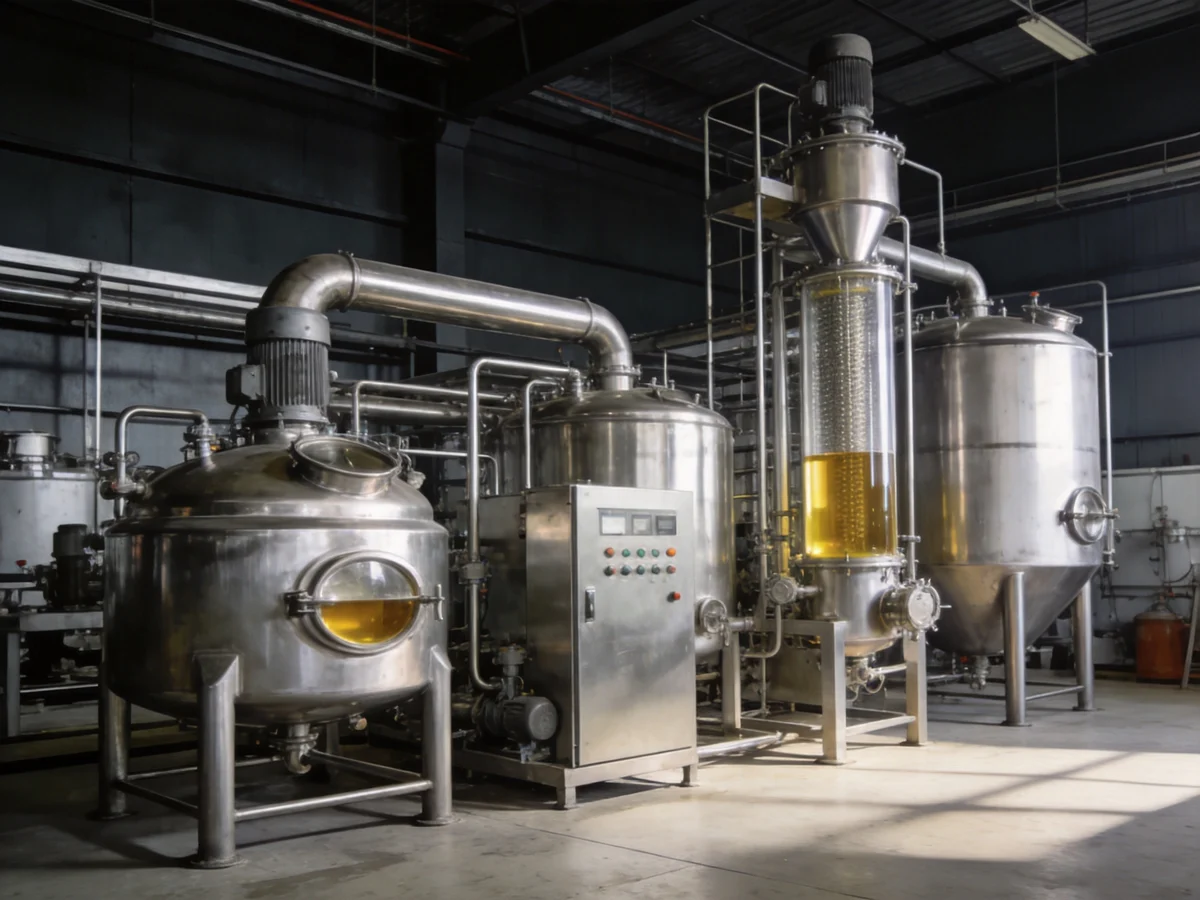
Beyond the routine panel, finished edible oils are also screened for contaminants such as aflatoxins (from mouldy seed), benzo(a)pyrene and other polycyclic aromatic hydrocarbons (PAHs, often from over-heating or smoke contact during drying), and process contaminants like 3-MCPD and glycidyl esters (which can form at high refining temperatures). These are controlled by good agricultural and storage practice, careful feedstock selection, and well-managed refining — particularly optimised deodorization conditions. The permitted levels for these contaminants are set by the applicable national standard or Codex and must be checked against the version in force for your market; treat any figure you see quoted casually as indicative only.
Practical takeaway for buyers: ask for a full CoA covering the freshness panel (FFA/acid value, PV, and ideally AnV/Totox), the purity panel (moisture, impurities, colour) and the identity panel (IV, SV), plus any contaminant tests your market requires. Then compare each line against your contract spec and the governing standard — not against price.
Hit your quality targets from the equipment up. Most quality parameters are won or lost on the line: degumming and filtration for purity, neutralisation for FFA, bleaching for colour, and controlled deodorization for peroxides, flavour and contaminants. If you are planning or upgrading a plant, our engineers can configure oil refining equipment around the exact FFA, colour and oxidation specs your buyers demand. Tell us your seed, capacity and target spec and get a free plant design — or see the full refining workflow first.