
What dewaxing (winterization) is
Dewaxing, often called winterization, is the refining operation that removes natural waxes from an edible oil. Waxes are long-chain esters of fatty acids and fatty alcohols with very high melting points. Even when present at only a few hundred parts per million, they will crystallize out as the oil cools, scattering light and making the oil look cloudy, hazy or even turbid. Dewaxing deliberately grows and removes those crystals so the finished oil stays brilliantly clear, even after hours in a cold kitchen or refrigerator.
The name “winterization” comes from an old observation: oils that looked perfectly clear in a warm warehouse turned cloudy on a cold winter day. Producers learned to chill the oil on purpose, let the haze form, and filter it out before bottling — “wintering” the oil so it could survive the cold without clouding. The waxes themselves are harmless and tasteless; the problem is purely one of appearance. Because consumers equate clarity with quality, removing the wax is worth a dedicated processing step even though it changes nothing about the oil's nutrition or flavour.
Dewaxing is the optional letter in the DBDW refining sequence. Many oils — palm, soybean, rapeseed — contain so little wax that they never need it. But for a handful of high-wax oils it is essential to a clear, premium product. Depending on the plant layout, dewaxing is usually carried out after bleaching, and either just before or just after deodorization.
Why oils are dewaxed
The driver for dewaxing is almost entirely about cold clarity and shelf appeal. A consumer who buys a bottle of clear golden salad oil expects it to stay clear on the shelf, in the fridge and on the table. Waxes betray that expectation: as temperature drops they come out of solution as a fine white haze or a sediment at the bottom of the bottle, which buyers read as spoilage or poor quality even though the oil is perfectly wholesome.
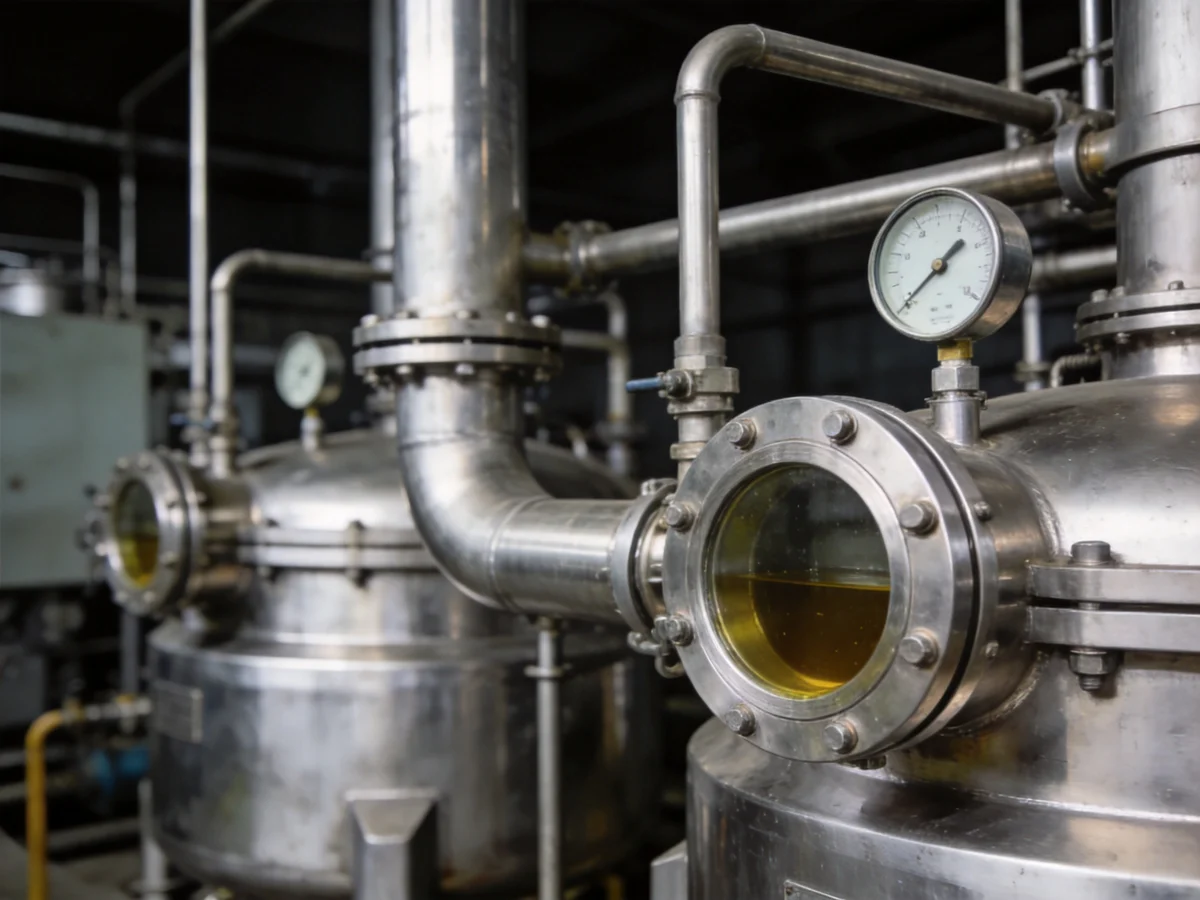
For oils destined to be cooked with immediately, a little wax haze rarely matters. But for bottled salad oils, dressings and oils that may be refrigerated, dewaxing is what separates an ordinary product from a clear, premium one.
Which oils need dewaxing
Only oils that are naturally rich in waxes require dewaxing. The classic candidates are sunflower, rice bran and corn (maize) germ oil. Other oils are typically low enough in wax to skip the step entirely. The table below gives an approximate picture; exact figures vary with seed variety, growing conditions and how aggressively the oil was extracted.
| Oil | Typical wax level | Dewaxing usually needed? |
|---|---|---|
| Sunflower | ~hundreds to ~2,000 ppm | Yes — classic winterized oil |
| Rice bran | High (variety-dependent) | Yes |
| Corn (maize) germ | Moderate to high | Often |
| Soybean | Low | Rarely |
| Rapeseed / canola | Low | Rarely |
| Palm / palm olein | Negligible | No |
Sunflower oil is the textbook case: it can carry anywhere from a few hundred up to roughly 2,000 ppm of wax, more than enough to cloud the oil in a cold room. Rice bran oil and corn germ oil are the other two oils most plants routinely winterize. If you are processing one of these, plan for a dewaxing section; if you are processing soybean, rapeseed or palm, you can usually leave it out.
How dewaxing works
Dewaxing is, at heart, a controlled crystallization problem. In warm oil the waxes are fully dissolved and invisible. As the oil cools, the waxes become less soluble and begin to come out of solution; the whole art of dewaxing is managing how they come out so that the resulting crystals are big and strong enough to be caught on a filter without plugging it. Get this right and the wax separates almost effortlessly; get it wrong and the same wax becomes a slurry that fouls every filter it touches. Three things have to go right in sequence: cooling, maturation and filtration.
1. Slow, controlled cooling. The oil is cooled gradually — typically down to about 5–10°C — in heat exchangers or jacketed crystallizers with gentle agitation. Slow cooling is the single most important rule. If the oil is chilled too fast, the wax crashes out as a cloud of microscopic crystals that behave like a slurry of fine powder: they slip through filter media, blind the filter almost instantly, and trap a lot of valuable oil with them.
2. Maturation (crystal growth). After reaching temperature, the oil is held — “matured” — for several hours with slow stirring. During this holding period the tiny crystals grow into larger, more uniform particles that filter cleanly. Patience here pays off directly in filtration speed and oil recovery.
3. Filtration. The matured slurry is then filtered to remove the wax crystals, very often with the help of a filter aid (a diatomaceous-earth-type powder) that builds a porous cake and keeps the filter from blinding. The bright, dewaxed oil passes through; the wax stays behind in the cake.
The process step by step
- Start with bleached oil. Dewaxing normally follows bleaching, working on clean, degummed, bleached oil so that gums and pigments do not interfere with crystal formation.
- Cool slowly to ~5–10°C. Pass the oil through chillers or jacketed crystallizers, dropping the temperature gradually with gentle agitation to encourage a few well-formed crystals rather than a fine haze.
- Mature (hold) for several hours. Hold the cold oil with slow stirring so the wax crystals grow large and uniform enough to filter.
- Filter out the wax. Send the matured slurry to a filter, usually dosed with filter aid, to capture the wax crystals and produce bright, clear oil.
- Verify with a cold test. Confirm the finished oil stays clear after several hours at around 0°C before it is sent on to deodorization (if not already done) and packing.
Key process parameters
The exact set-points depend on the oil, its wax level and the equipment, so treat the numbers below as typical, approximate targets rather than fixed rules. The skill of dewaxing lies in tuning the cooling profile and maturation time to your specific feedstock.
| Parameter | Typical range / approach | Why it matters |
|---|---|---|
| Cooling target | ~5–10°C (oil-dependent) | Brings high-melting waxes out of solution |
| Cooling rate | Slow, controlled, gentle agitation | Controls crystal size; prevents filter blinding |
| Maturation time | Several hours | Lets crystals grow large and uniform |
| Filtration | Filter press / leaf filter, often with filter aid | Captures wax cleanly with minimal oil loss |
| Quality check | Cold test (clear after hours at ~0°C) | Confirms the oil will stay clear when chilled |
The cold test
The finished oil is judged by a cold test. A sample is held at a low temperature — commonly around 0°C — for a set number of hours and then inspected: a properly dewaxed oil stays bright and clear with no visible haze or crystals, while an under-dewaxed oil turns cloudy. Passing the cold test for several hours at refrigerator temperature is the practical specification that defines a true “winterized” or “salad” grade.
If a sample fails, the usual culprits are cooling that was too fast, maturation that was too short, or filtration that let some wax slip through — all of which point back to the crystallization and holding steps rather than the filter alone.
Common problems and how to avoid them
Most dewaxing trouble traces back to the crystallization stage rather than the filter itself:
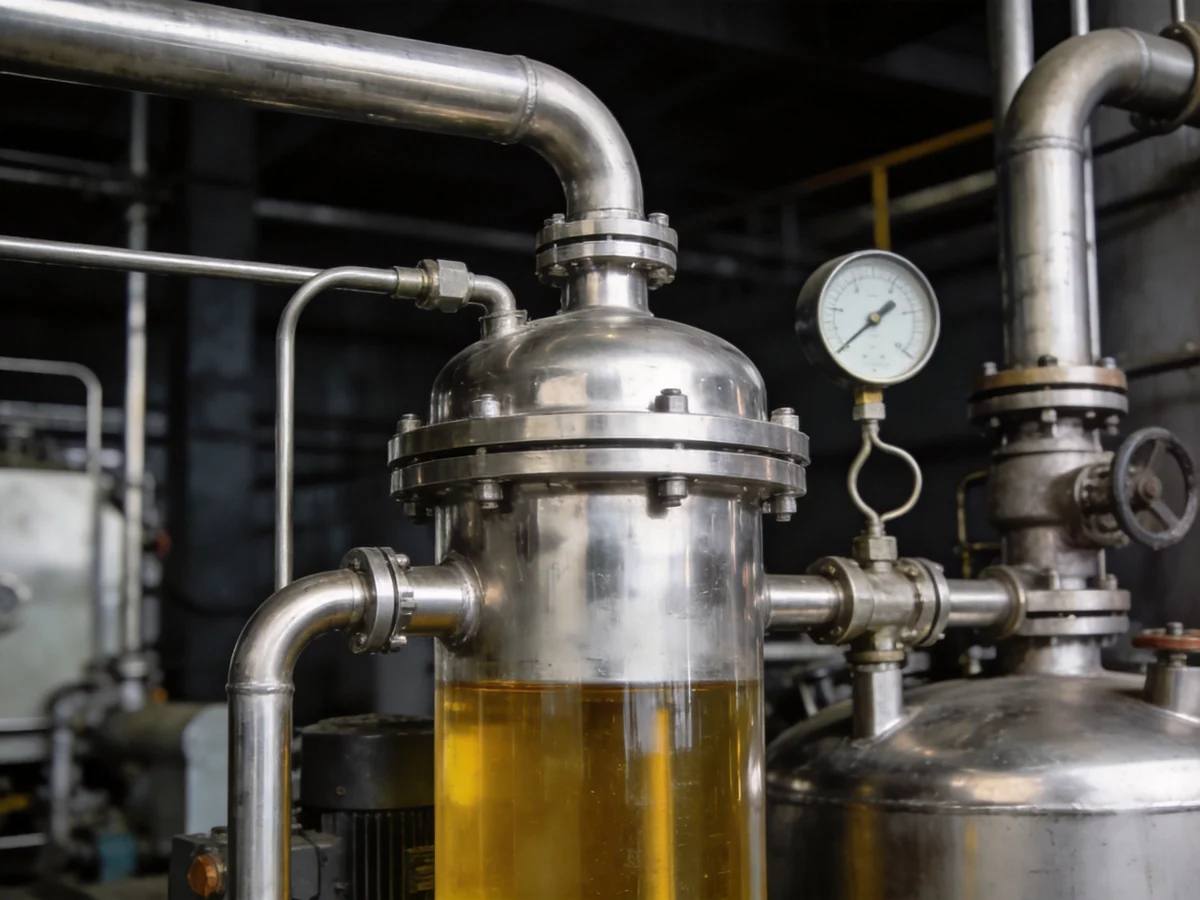
- Filters blinding quickly — almost always caused by cooling too fast, which produces a cloud of tiny crystals. Slow the cooling rate and extend maturation so crystals grow larger.
- High oil loss in the wax cake — fine crystals trap (entrain) oil. Larger, well-matured crystals hold less oil; correct dosing of filter aid also helps.
- Cold test failures — insufficient cooling, too-short maturation, or wax breakthrough during filtration. Revisit the cooling profile and holding time first.
- Inconsistent results batch to batch — wax content varies with seed variety and crop. Tune the cooling and maturation recipe to the incoming oil rather than relying on a fixed schedule.