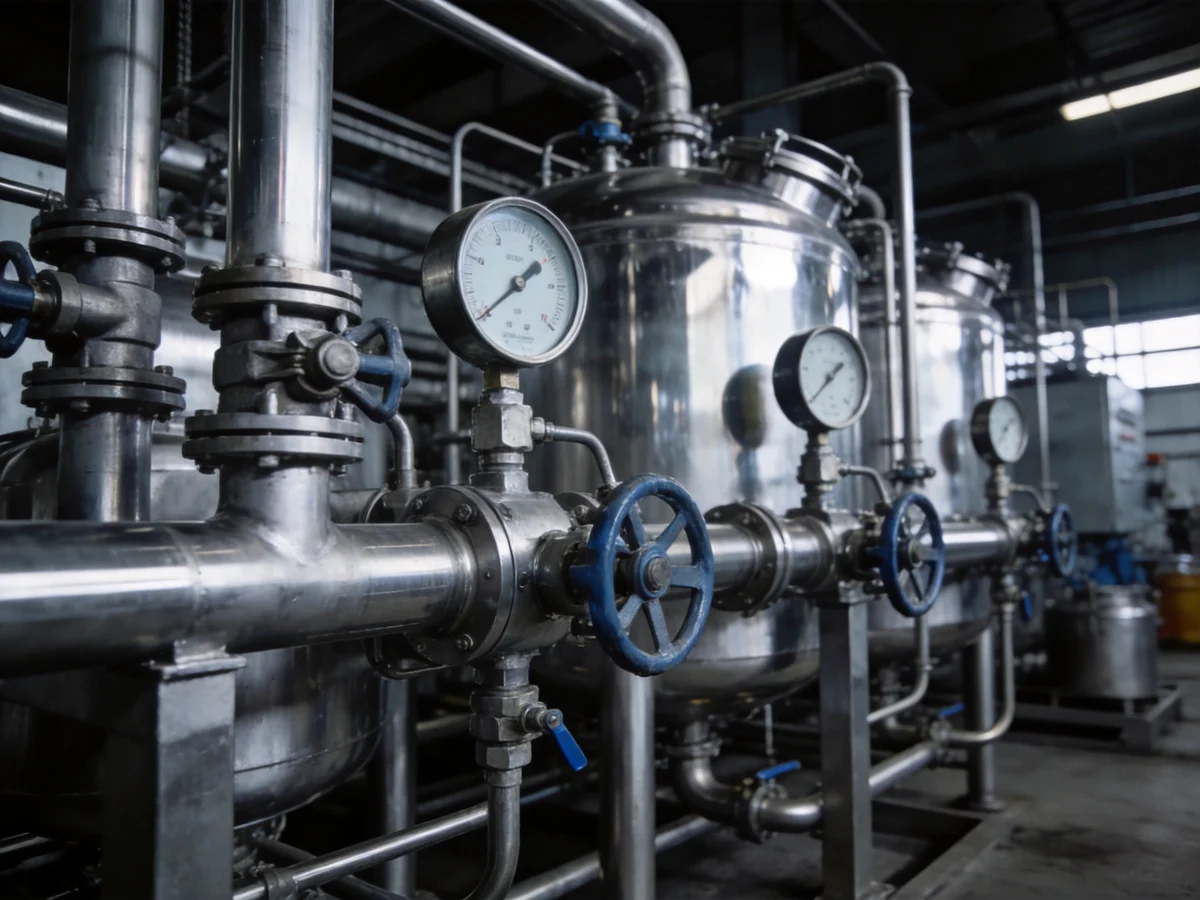
What oil neutralization is
Neutralization — also called deacidification or caustic refining — is the refining step that removes free fatty acids (FFA) from degummed crude vegetable oil. Crude oils naturally contain a fraction of FFA, the loose fatty-acid molecules that have split away from the triglyceride backbone. Left in the oil they cause off-flavours, a low smoke point, soap formation during cooking, and poor oxidative stability. The classic refining route neutralizes them chemically: a controlled amount of caustic soda (sodium hydroxide, NaOH) reacts with the FFA to form soap, which is heavier than oil and can be spun off as a separate phase.
Within the four-stage refining sequence often abbreviated DBDW — Degumming, Neutralization (sometimes called the “B” deacidification/bleaching block depending on the convention), Bleaching and Deodorization — neutralization is the second step. Degumming has already pulled out most of the phospholipids (gums); neutralization now strips the acids; bleaching then removes colour pigments and trace metals; deodorization finally lifts off odour and residual volatiles. Each step prepares the oil for the next, and skipping or under-running neutralization shows up as instability and off-flavour at the end of the line.
Why oil is neutralized
Free fatty acids are the single biggest quality liability in crude oil after gums. They lower the smoke point, so the oil fumes early when heated; they carry a sharp, acidic taste; and because they are reactive they accelerate rancidity, shortening shelf life. They also interfere with later steps — excess FFA load the bleaching earth and overwork the deodorizer. Removing them early therefore protects the whole downstream process.
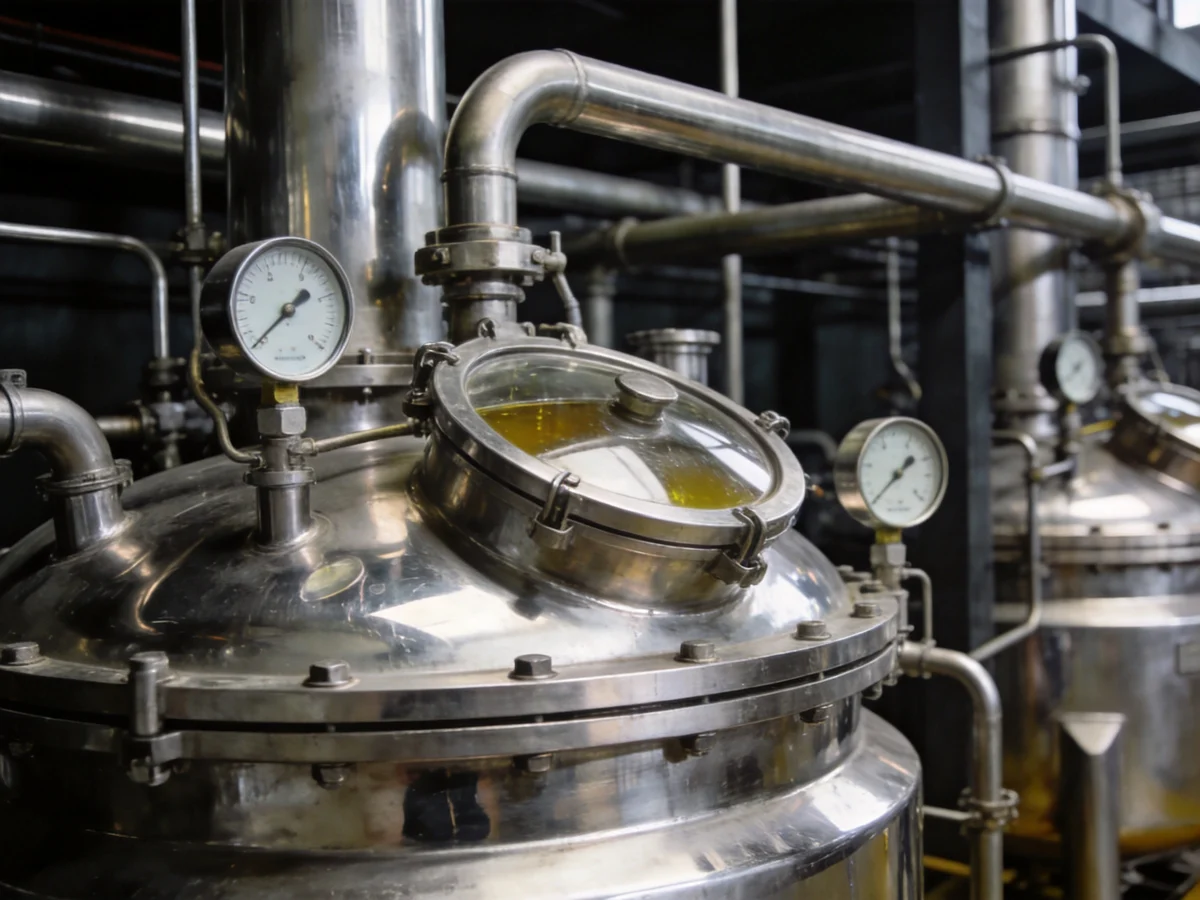
FFA give crude oil its harsh, acidic note. Removing them is essential for a clean, neutral edible oil.
High FFA make oil smoke and degrade early during frying; deacidification raises and stabilizes the smoke point.
FFA promote rancidity. Lower FFA means longer shelf life and better resistance to oxidation.
Leftover acids burden bleaching and deodorization. Neutralizing first keeps later steps efficient.
The target is to bring FFA down to a low residual level — typically a small fraction of one percent — while losing as little of the valuable neutral oil (the triglycerides you actually want to sell) as possible. That trade-off between thorough acid removal and neutral-oil loss is the central balancing act of the whole step.
How caustic refining works
The chemistry is a straightforward acid–base reaction. Free fatty acid plus sodium hydroxide yields a fatty-acid sodium salt (soap) plus water:
FFA + NaOH → soap (sodium soap) + water
The caustic is added as a dilute aqueous solution, not as solid lye, so that it disperses evenly and contacts the FFA without locally over-reacting. Its strength is conventionally expressed in degrees Baumé (°Bé), a measure of solution density; typical working strengths sit around 12–20 °Bé, with weaker (lower-density) caustic chosen for low-FFA oils to limit side reactions and stronger caustic for higher-FFA feeds. The dose is calculated from the measured FFA content (the stoichiometric amount needed to neutralize all the acid) plus a small excess to drive the reaction to completion. That excess is where the trade-off bites: too little and FFA survive into the finished oil; too much and the surplus caustic begins to attack (saponify) the neutral triglycerides themselves, swelling the soapstock and wasting good oil.
The oil is warmed — typically around 60–90°C — and the caustic is mixed in to form a fine dispersion of soap droplets. The mixture is then held briefly so the reaction completes and the soap droplets coalesce. Because the soap-and-water phase (soapstock) is denser than oil, it can be separated mechanically — in modern continuous plants by a high-speed centrifugal separator rather than slow gravity settling. The cleaned oil still carries traces of soap, so it is washed with hot soft water (often one or two washes), each wash followed by another centrifugal separation, and finally vacuum-dried to remove the wash moisture before it goes on to bleaching.
Process steps
- Dosing & mixing. Measure the incoming oil’s FFA, calculate the caustic dose (stoichiometric plus a small excess), and inject dilute caustic soda (~12–20 °Bé, typical) into the warm oil with intensive mixing so the FFA and NaOH react to form soap.
- Reaction & coalescence. Hold the mixture briefly at ~60–90°C so the soap fully forms and the fine soap droplets grow large enough to separate cleanly from the oil.
- Primary separation. Spin the mixture through a centrifugal separator. The heavy soapstock phase is drawn off as a by-product while the neutralized oil exits with most of its FFA gone.
- Water washing. Wash the oil with hot soft water (typically one or two washes), separating again after each wash, to remove residual dissolved soap that would otherwise carry colour and instability forward.
- Vacuum drying. Dry the washed oil under vacuum to strip the moisture picked up during washing, leaving a low-acid, low-moisture oil ready for the bleaching step.
Key parameters
Neutralization is controlled by a handful of inputs the operator sets from the measured feed quality. The values below are typical/approximate and depend on oil type, crude FFA level and plant design.
| Parameter | Typical range / role | What it controls |
|---|---|---|
| Caustic strength | ~12–20 °Bé (dilute aqueous NaOH) | Reaction selectivity; weaker for low-FFA oils to limit neutral-oil saponification |
| Caustic excess | Small surplus over FFA stoichiometry | Completeness of acid removal vs. neutral-oil loss |
| Reaction temperature | ~60–90°C | Reaction rate and soap-droplet coalescence for clean separation |
| Mixing intensity | Intensive, brief | Even caustic dispersion and full FFA contact |
| Water washes | ~1–2 hot soft-water washes | Removal of residual dissolved soap |
| Final drying | Under vacuum | Low residual moisture before bleaching |
Neutral oil loss
Neutral oil loss is the headline efficiency metric of caustic refining. It is the fraction of valuable triglyceride oil that leaves with the soapstock instead of ending up in the refined product. Some loss is unavoidable: as the soap phase forms and is spun off, it physically entrains a little neutral oil, and any caustic excess saponifies a little more. The two main levers are therefore the caustic excess and the caustic strength — push either too hard to chase the last traces of FFA and the soapstock swells with good oil.
This is why neutralization is always a balance, never a maximum. The aim is the lowest practical FFA in the finished oil at the lowest practical neutral-oil loss. A useful rule of thumb: a high-FFA crude inherently loses more oil during caustic refining than a clean, low-FFA crude, because more soap is generated and more oil is entrained — which is exactly why high-FFA feeds are often candidates for physical refining instead.
Chemical vs physical refining
Caustic (chemical) refining is not the only way to remove FFA. In physical refining the acids are not reacted with caustic at all — instead they are stripped out by steam during the high-temperature deodorization step, exploiting the fact that free fatty acids are volatile. This skips the caustic, the soapstock and the associated neutral-oil loss entirely, but it depends on the oil being very thoroughly degummed first, because any residual phospholipids would survive the steam stripping and spoil colour and stability.
| Aspect | Chemical (caustic) refining | Physical (steam) refining |
|---|---|---|
| FFA removal | Neutralized by NaOH into soapstock | Steam-stripped during deodorization |
| By-product | Soapstock (further processed to acid oil) | Fatty-acid distillate; no soapstock |
| Neutral-oil loss | Higher — soap entrains/saponifies oil | Lower — no soap phase formed |
| Degumming demand | Standard degumming sufficient | Needs very thorough (deep) degumming |
| Best suited to | Oils with notable gums/phosphatides (e.g. soybean, rapeseed) | Low-phospholipid, high-FFA oils (e.g. palm, coconut) |
In practice the choice is driven by the oil type. Low-phosphatide, high-FFA oils such as palm and coconut favour physical refining: it avoids the heavy neutral-oil loss that caustic refining would suffer on a high-FFA feed and produces a clean fatty-acid distillate instead of soapstock. Oils that carry more phospholipids, or whose gums are harder to remove completely, are typically routed through chemical refining, where caustic also helps mop up traces of remaining gums. Many real plants are designed to run either way on the same line.
Soapstock by-product
The dense phase spun off during neutralization is soapstock — a mixture of sodium soaps, entrained neutral oil, water and minor impurities. Far from being pure waste, it is a recoverable by-product. It is most commonly acidulated (treated with acid) to split the soaps back into free fatty acids, yielding acid oil or fatty acids that feed into soap manufacture, animal-feed energy, fatty-acid chemistry and oleochemical uses.
The volume and oil content of the soapstock are a direct readout of how the neutralization was run: a heavier, oilier soapstock signals more neutral-oil loss, often from too much caustic excess or too strong a caustic. Tracking soapstock yield alongside finished-oil FFA gives operators a practical feedback loop for tuning the step.
Common problems
Over-dosing saponifies neutral oil, swelling soapstock and wasting product. Dose to measured FFA plus a small excess only.
Under-dosing leaves FFA in the oil, causing off-flavour and overloading bleaching and deodorization downstream.
Wrong temperature or weak coalescence carries soap into the oil. Hold the reaction window so droplets grow before centrifuging.
Inadequate washing leaves dissolved soap that harms colour and stability. Use enough hot-water washes and separate cleanly.
Skipping or under-running vacuum drying sends wet oil to bleaching, hurting that step. Dry thoroughly under vacuum.
Caustic-refining a high-FFA, low-gum oil wastes oil. For palm/coconut-type feeds, physical refining is usually the better fit.
Neutralization sits in the middle of the refining chain, so its faults travel both ways: poor degumming upstream makes it harder to run, and any soap, FFA or moisture it lets through makes bleaching and deodorization work harder. Read it together with degumming (step 1) and the full edible-oil refining overview to see how the four stages interlock, or review the complete oil refining process.