
What Oilseed Flaking Is
Flaking is the pretreatment step in which softened, conditioned oilseed meats are pressed between smooth rolls into thin, uniform flakes. It sounds mechanically simple, yet it is one of the most decisive operations in the whole oil mill. The goal is not just to make the seed thinner; it is to rupture the microscopic cells that hold the oil and to open up the structure so that oil or solvent can get out quickly.
Inside a conditioned oilseed, the oil is locked inside countless tiny cell walls. As long as those cells stay intact and the diffusion path is long, oil release is slow and incomplete. A well-made flake breaks open a large fraction of those cells and reduces the distance any oil molecule has to migrate to a fraction of a millimetre. Everything downstream — pressing, expanding, or solvent extraction — depends on the quality of the flake delivered to it.
Why Flake the Seed at All?
You could try to press or extract whole or cracked seed, but yields would be poor and energy use high. Flaking earns its place for three linked reasons:
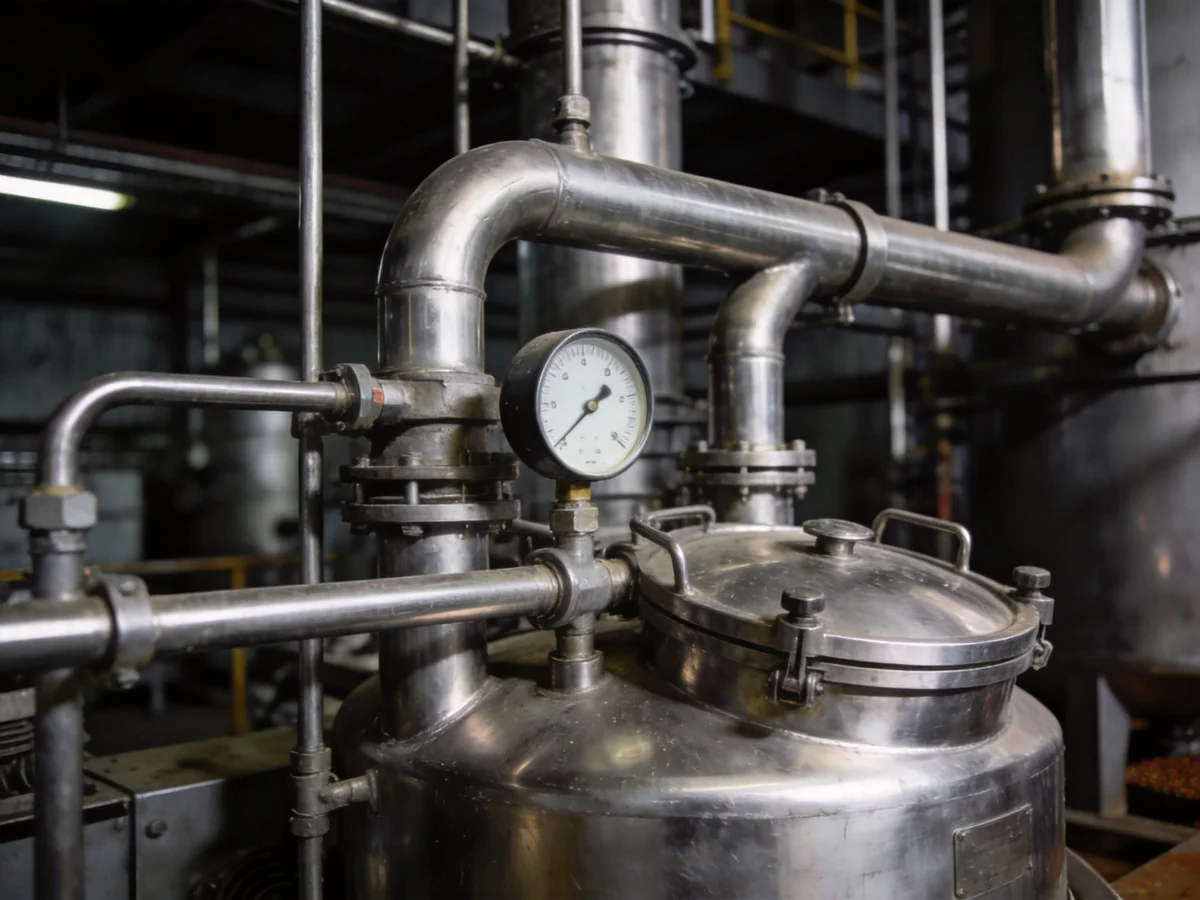
Rolling shears and crushes the oil-bearing cells so the oil is no longer trapped behind intact walls. Open cells release oil far more readily.
A thin flake exposes vastly more surface per gram than a chunk of seed. More surface means more contact for solvent or more efficient pressing.
Oil and solvent only have to travel through ~0.3 mm of flake, not through several millimetres of seed. The path is what governs extraction speed.
Good flakes form a porous bed that solvent can drain through evenly — essential for efficient countercurrent extraction.
In short, flaking converts a slow, deep-seated mass-transfer problem into a fast, shallow one. That is why nearly every modern soybean, rapeseed, sunflower and cottonseed plant flakes the meats as a standard step.
How Flaking Actually Works
The conditioned meats are fed in a thin, even curtain onto a pair of large, smooth, hardened rolls turning toward each other with a tightly controlled gap. As the seed passes through the nip (the line where the rolls are closest), it is squeezed under high pressure. Because the meats were heated and moistened during conditioning, they are plastic — they flatten and spread instead of shattering into powder.
The combination of pressure and slight shear does two jobs at once: it presses the particle down to the target thickness, and it tears open the internal cell walls. A small differential speed between the two rolls (one turning slightly faster) adds shear that helps rupture cells and keeps material moving across the roll face. The result is a flat, coherent, slightly translucent flake rather than a crushed crumb.
It helps to picture what is happening at the scale of the seed structure. Before flaking, the oil sits inside intact cells deep within thick particles, and any oil that wants to leave must diffuse a long way through solid tissue. After flaking, a large share of those cell walls are torn, the oil is exposed at or near a surface, and the whole particle is only a fraction of a millimetre thick. The same heat-and-moisture conditioning that makes the meats plastic also reduces brittleness, so the rolls can deform the particle rather than fracture it — which is precisely why the flake holds together as a sheet rather than disintegrating into dust.
- Even feed: a feeder spreads conditioned meats uniformly across the full roll width so the flake is consistent end to end.
- Nip compression: the meats enter the gap and are pressed to the set thickness under high roll load.
- Cell rupture & shear: pressure plus differential speed tears open oil cells while the plastic meats flatten.
- Discharge: formed flakes leave the rolls and move on to cooking/expanding, pressing or extraction.
Flake Thickness: the Make-or-Break Variable
If you remember one number from this guide, make it flake thickness. It is the single parameter that most directly sets residual oil, throughput and bed drainage. Thinner is generally better for extraction — up to the point where the flakes become fragile and break down into fines.
Typical (approximate) target ranges by route:
| Process route | Typical flake thickness | Why |
|---|---|---|
| Solvent extraction (general) | ~0.25–0.40 mm | Thin flakes give short diffusion paths and low residual oil while still draining solvent. |
| Soybean for extraction | ~0.25–0.30 mm | Soybeans flake well and are run thin to push residual oil down. |
| Direct mechanical pressing | A little thicker | Thicker, more robust flakes hold together and feed the press without excessive fines. |
Too thick and you get poor extraction or pressing with high residual oil left in the meal — wasted product. Too thin and the flakes are fragile: they crumble into fines that blind filters, choke percolation in the extractor bed, and reduce solvent drainage. The art is finding the thinnest flake that still holds together as a flake under the conditions of your plant.
Thickness also interacts with the choice of downstream route. A plant that runs flakes straight to solvent extraction can usually push thinner, because it wants the shortest possible diffusion path and lowest residual oil, and the extractor bed will tolerate a thin flake as long as fines are controlled. A plant that presses mechanically, or that pre-presses before extraction, often keeps the flake a touch thicker so it survives the mechanical handling and feeds the press cleanly. There is no single "correct" number; the right target is the one that gives low residual oil and a stable, drainable bed for the specific seed and process route in front of it.
The Flaking Mill
A flaking mill (flaker) is built around two — sometimes more — large, smooth, hardened steel rolls. They run with a precisely controlled gap and develop very high roll pressure across the nip. Key build features:
Polished, wear-resistant surfaces form clean flakes. The surface finish directly affects flake quality.
Hydraulic or spring loading holds high pressure while allowing the rolls to relieve if a hard object passes through.
A slight speed difference between rolls adds the shear that helps rupture cells and clear the surface.
A spreading feeder lays an even curtain of meats across the full width so flakes are consistent.
Rolls are consumables in the long run: their surface wears, the gap drifts, and flake quality degrades. Periodic re-grinding (re-machining the roll surface true and smooth) is normal maintenance, and roll condition should be tracked as part of routine plant care.
Key Parameters to Control
Beyond thickness, several settings interact to determine flake quality. None of them works in isolation:
| Parameter | Effect on the flake |
|---|---|
| Roll gap | Sets target flake thickness — the primary control. |
| Roll pressure / loading | Maintains the gap under load and ensures full cell rupture. |
| Differential speed | Adds shear to rupture cells and keep the roll face clear. |
| Feed uniformity & rate | Even, steady feed gives consistent flakes; surging causes thickness variation. |
| Incoming conditioning | Moisture and temperature set how plastic the meats are — and whether they flake or shatter. |
| Roll surface condition | Worn or grooved rolls produce uneven flakes and more fines. |
Operators tune these together: the gap sets the number you want, the loading and differential speed make sure you actually reach it cleanly, and the feed and conditioning decide whether the flake holds together once formed.
Where Flaking Fits in Pretreatment
Flaking is never a stand-alone step. It sits in the middle of a deliberate pretreatment sequence, and its inputs and outputs are both defined by the steps around it:
The seed is first cleaned and cracked into pieces, then softened and conditioned with heat and moisture so the meats become plastic. Only then is the material flaked. Many plants follow flaking with cooking or expanding to further open the structure, before sending flakes (or expanded collets) to a screw press, an oil expander, or directly to solvent extraction.
Because each step feeds the next, a problem at flaking ripples downstream as high residual oil or a blinded extractor bed. To see how the surrounding steps work, read about how oilseed pretreatment works, how an oil expander works, how a screw oil press works, and how solvent extraction works.
Common Problems & What Causes Them
Most flaking troubles trace back to one of three roots: thickness, conditioning, or roll condition.
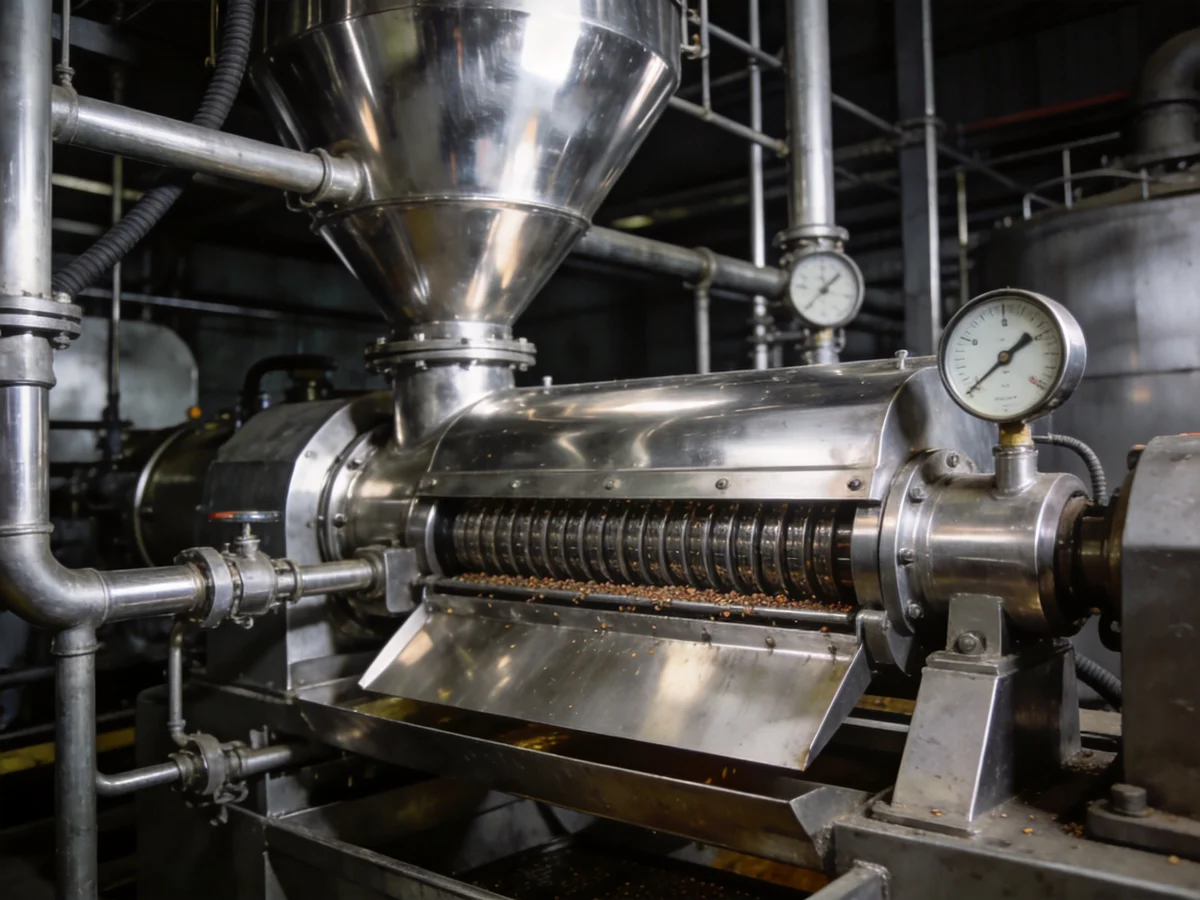
Usually flakes are too thick, or the gap has drifted as rolls wore. Check the gap and re-grind worn rolls.
Flakes too thin, or meats under-conditioned (too dry/cold) and shattering. Adjust thickness and conditioning together.
Too many fines pack the bed and choke solvent percolation. Trace it back to thickness and fines at the flaker.
Worn or grooved rolls, uneven feed, or unstable roll loading. Inspect roll surface and feeder distribution.
The recurring lesson is that flaking is a balancing act: push the flake as thin as the route needs for low residual oil, but not so thin that fines take over — and make sure conditioning and roll condition keep that flake clean and consistent.