
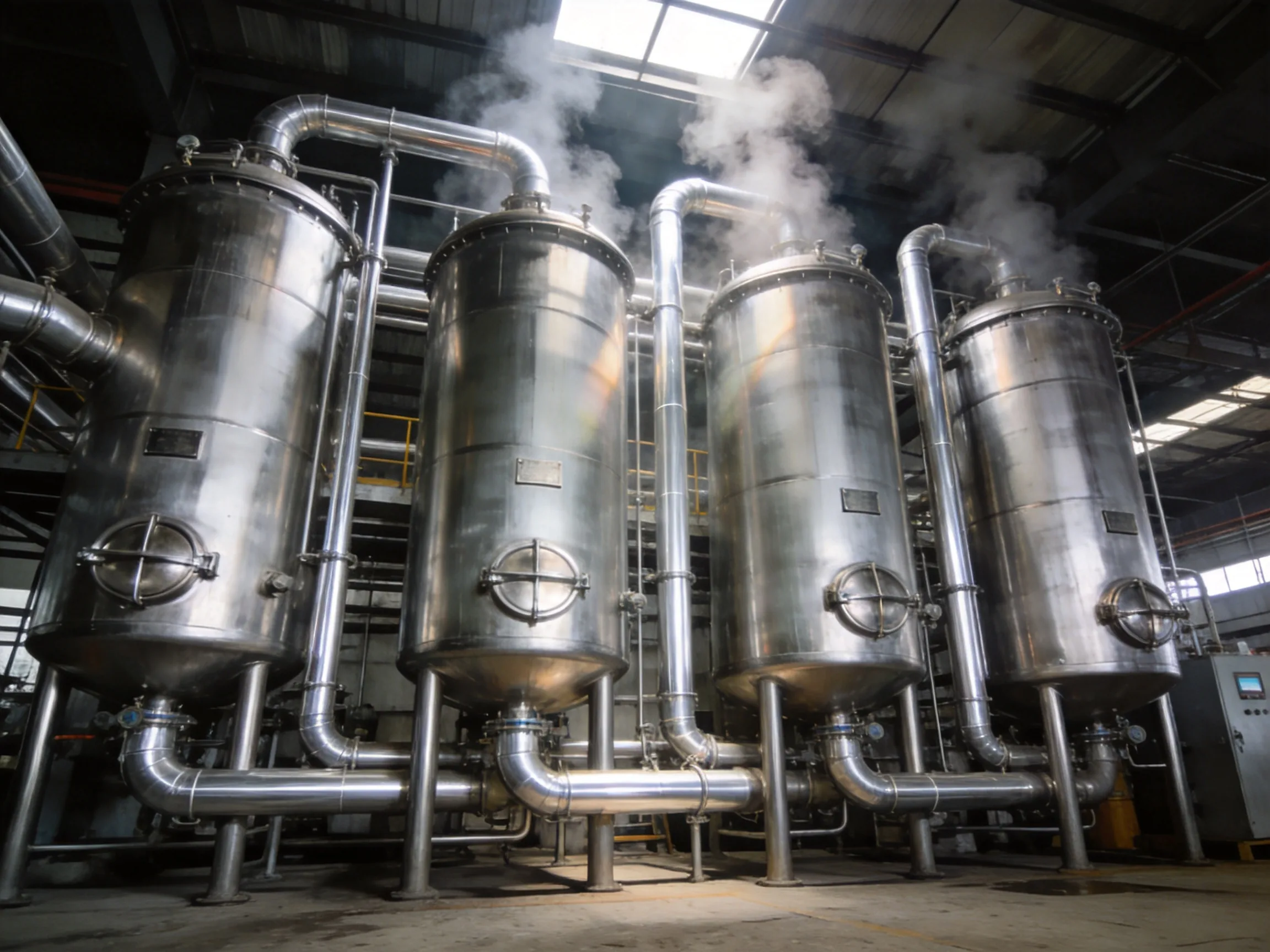
Why Does Crude Oil Need Refining?
Crude pressed oil is not food-grade in most markets. Fresh from the press, it carries a range of impurities — some visible, some chemical — that cause rapid deterioration, health risks, and unacceptable sensory properties. Understanding what each impurity does explains why each refining stage exists.
- Free Fatty Acids (FFA): 1–5% in typical crude oil. FFA causes rancidity (off-flavour within weeks), shortened shelf life, and fails food safety standards (Codex: <0.6 mg KOH/g).
- Phospholipids (gums): 50–2,000 ppm. Cause haze (oil clouds when heated), emulsification problems, and foaming in cooking. Visible as brown sludge in stored crude.
- Colour pigments: Carotenes (orange/red), chlorophyll (green). Cause unappealing dark colour in retail oil.
- Volatile compounds: Aldehydes, ketones from oxidation — cause off-flavours and "rancid" smell.
- Metal traces: Iron (Fe), Copper (Cu) — catalyze oxidation and shorten shelf life significantly.
- Moisture: 0.1–0.5% in crude oil — causes spoilage and microbiological risk.
The table below shows what a complete DBDW refinery achieves across every key parameter:
| Parameter | Crude Oil | After Full Refining |
|---|---|---|
| FFA | 1–5% | <0.05–0.1% |
| Phospholipids | 50–2,000 ppm | <2 ppm |
| Colour (Lovibond) | Dark yellow-red | Pale yellow (<10Y) |
| Peroxide Value | 5–15 meq/kg | <0.5 meq/kg |
| Odour | Characteristic seed smell | Neutral |
| Moisture | 0.1–0.5% | <0.05% |
Stage 1 — Degumming (D)
What it removes: Phospholipids (gums), which cause haze, emulsification problems, and foam during cooking.
Process Steps
- Heat crude oil to 60–80°C with agitation
- Add 1–2% hot water (for water degumming) or 0.1–0.5% phosphoric acid (for non-hydratable phospholipids)
- Agitate 15–20 minutes — water hydrates phospholipids, making them insoluble in oil
- Allow to settle (1–2 hours) or centrifuge — gums sink as heavy sludge
- Drain off gum phase; retain clarified oil for neutralizing
Key Parameters
By-product value: Crude gum/lecithin represents 0.3–0.5% of soybean oil weight. Refined lecithin sells for $800–$1,500/tonne as a food emulsifier. Don't discard it — sell it.
Skip degumming? Only for oils with very low phospholipid content (palm CPO <50 ppm, coconut). For soybean (500–2,000 ppm) and sunflower — degumming is mandatory. Skipping it causes foaming in the bleaching stage and darker colour in the final product.
Stage 2 — Neutralizing (N)
What it removes: Free Fatty Acids (FFA), converted via saponification to soap (soapstock), which is then separated by centrifuge or settling.
Chemical Neutralizing Process
- Heat degummed oil to 65–75°C
- Add calculated NaOH (caustic soda) solution — concentration 12–18°Bé measured by hydrometer
- NaOH reacts with FFA: FFA + NaOH → soap + water (saponification)
- Agitate 15–30 minutes for complete reaction
- Settle or centrifuge — soap sinks as dense soapstock layer
- Wash with hot water 3–4 cycles at 50–60°C to remove residual soap
- Dehydrate under vacuum to remove wash water before bleaching
NaOH Dosage Formula: NaOH required (kg/tonne oil) = (FFA% × 0.713 × 1.1) × (10 / NaOH concentration%). Always use 5–10% excess alkali above stoichiometric for complete FFA reaction.
Key Parameters
Physical Neutralizing Alternative
Instead of caustic soda, FFA can be removed by steam stripping during deodorizing (high temperature + vacuum). No soap is formed. This is the preferred route for palm, coconut, and rice bran oils. For soybean, chemical neutralizing is the industry standard due to high phospholipid content.
Skip neutralizing? Only justifiable for artisan crude oil sold to markets that accept 1–3% FFA. For any retail cooking oil or food manufacturing supply — FFA above 0.5% causes unacceptable rancidity within the product shelf life window.
Stage 3 — Bleaching (B)
What it removes: Colour pigments (carotenes, chlorophyll), oxidation products (aldehydes, ketones), metal traces (Fe, Cu, Ni), residual soaps from neutralizing, and aflatoxins (40–70% removal).
Process Steps
- Heat neutralized oil to 90–110°C
- Apply vacuum (50–70 mbar) to prevent oxidation during contact
- Add 0.5–3% activated bleaching earth (acid-activated bentonite) by weight
- Agitate under vacuum for 20–30 minutes for complete adsorption
- Filter through Niagara leaf filter or plate filter to remove spent earth completely
- Sample for colour check (Lovibond meter) before proceeding
Bleaching Earth Dosage Guide by Oil Type
| Oil Type | Earth Dosage | Key Challenge |
|---|---|---|
| Soybean, Sunflower, Peanut | 0.8–1.5% | Standard dosage sufficient |
| Palm CPO (high carotene) | 2.0–3.0% | High beta-carotene content |
| Cottonseed (gossypol) | 1.5–2.5% | Gossypol pigment adsorption |
| Coconut (light colour) | 0.3–0.8% | Minimal pigment load |
Critical warning: Spent bleaching earth must be completely removed by filtration before deodorizing. Earth left in oil causes severe darkening and oxidation at the 220–260°C deodorizing temperature. A Niagara leaf filter with intact seal is non-negotiable. Inspect filter cloth before every batch.
Stage 4 — Deodorizing (D)
What it removes: Volatile odour and flavour compounds (aldehydes, ketones, volatile FFA), remaining peroxides, residual bleaching earth fines, and trace tocopherol oxidation products.
Process Steps
- Heat bleached oil to 220–260°C — the highest temperature in the entire process
- Apply deep vacuum: 2–5 mbar (0.002–0.005 atm — near-total vacuum)
- Inject direct steam at 0.6–0.8% of oil weight
- Steam strips volatile compounds from oil by steam distillation principle
- Volatile compounds condense in the deodorizer trap as "deodorizer distillate"
- Cool refined oil through heat recovery heat exchangers before finished oil storage
Key Parameters by Oil Type
| Oil Type | Temperature | Vacuum | Steam % | Residence Time |
|---|---|---|---|---|
| Palm, Coconut | 220–240°C | 2–4 mbar | 0.6% | 30–60 min |
| Soybean, Sunflower | 240–260°C | 2–5 mbar | 0.7–0.8% | 60–90 min |
| Peanut, Sesame | 230–250°C | 2–4 mbar | 0.6–0.7% | 45–75 min |
| Rice Bran | 240–260°C | 2–5 mbar | 0.7–0.8% | 60–90 min |
Deodorizer distillate — a valuable by-product: 0.5–2% of oil by weight. Contains tocopherols (vitamin E, $5–15/kg), sterols, and free fatty acids. A 30 TPD plant produces 25–50 kg distillate daily. Sell to tocopherol extractors for significant additional revenue.
Heat recovery saves 30–40% fuel: Incoming bleached oil (~100°C) pre-heats against outgoing deodorized oil (~260°C) in counter-current heat exchangers. Always specify this when ordering a refinery — it pays back in 12–18 months of fuel savings.
Stage 5 — Winterization / Dewaxing (W, optional)
What it removes: Waxes (esters of long-chain fatty acids and fatty alcohols) that crystallize below 12–15°C, causing oil to cloud or solidify in the refrigerator.
Required for: Sunflower oil (300–1,500 ppm wax), canola/rapeseed, cottonseed, corn oil.
Not needed for: Palm, coconut, soybean, peanut, sesame.
Process Steps
- Cool refined oil slowly from 60°C down to 0–5°C at 3–5°C/hour cooling rate
- Hold at 0°C for 48–72 hours — wax crystals grow slowly and completely
- Filter through plate filter at low pressure (50–100 psi) while cold
- Verify pass: cold test at 0°C, sealed container, no turbidity within 5.5 hours
Physical vs Chemical Refining — Which to Choose
The choice between chemical refining (using NaOH) and physical refining (steam deacidification) depends primarily on the oil type, its phospholipid content, and FFA level. Use this decision table:
| Oil Type | Typical FFA | Phospholipids | Recommended Method |
|---|---|---|---|
| Soybean | 0.5–1.5% | 500–2,000 ppm | Chemical (DNCBDW) |
| Sunflower | 0.3–1.5% | 100–500 ppm | Chemical or Physical |
| Peanut | 0.5–2% | 100–300 ppm | Chemical |
| Palm CPO | 3–8% | <50 ppm | Physical (D-BDW) |
| Coconut/Copra | 1–5% | <50 ppm | Physical |
| Rice Bran | 5–25% | 200–800 ppm | Physical |
Common Refining Problems & Solutions
These are the six most common problems encountered in commercial edible oil refineries, their root causes, and the correct corrective actions:
| Problem | Likely Cause | Solution |
|---|---|---|
| Dark colour after bleaching | Insufficient earth dosage or contact time; spent earth not filtered | Increase earth %, extend contact; check filter seal |
| Oil foams in bleacher | Residual soap from neutralizing; high moisture in oil | Ensure complete washing; dehydrate thoroughly before bleaching |
| High FFA in final oil | Insufficient NaOH, incomplete washing, reacidification | Check NaOH concentration by hydrometer; add wash cycles |
| Off-flavour after deodorizing | Insufficient vacuum, insufficient steam, short residence time | Check vacuum pump integrity; increase steam; extend time |
| Oil clouds on cooling | Wax not removed (sunflower/canola) | Add winterization stage |
| Spent earth in final oil | Filter seal failure, torn or degraded filter cloth | Check Niagara filter leaf seal integrity; replace filter cloth |