Most yield problems blamed on the screw press actually start upstream. Unshelled, dirty or under-roasted peanuts can cost an oil mill several percentage points of recoverable oil before the press is ever involved. Shells absorb oil during pressing, sand and stones grind down press worms and cages, and oil locked inside intact cell walls simply never leaves the cake.
A complete pretreatment line solves these problems in sequence: cleaning → shelling → crushing/flaking → roasting. Each stage is covered below, with the equipment category it maps to in a typical seed preparation equipment lineup, plus capacity-matching rules so the whole chain runs at one balanced throughput.
Farm-delivered peanuts typically carry soil, stones, vine fragments, metal and immature pods. A seed cleaning machine removes these impurities by combining screening with air aspiration: oversize trash is held back on the top deck, undersize sand falls through the bottom deck, and light dust and leaves are pulled out by the fan. A magnetic separator before the sheller is cheap insurance against tramp metal.
For finer size grading — and for separating broken kernels or re-screening material between stages — a vibrating screen with interchangeable mesh decks is the standard tool. Many plants place one after the sheller as well, so kernels, half-kernels and shell fragments leave on separate streams. Skipping cleaning is the most common cause of premature screw-press wear, because quartz sand is harder than the press worm steel.
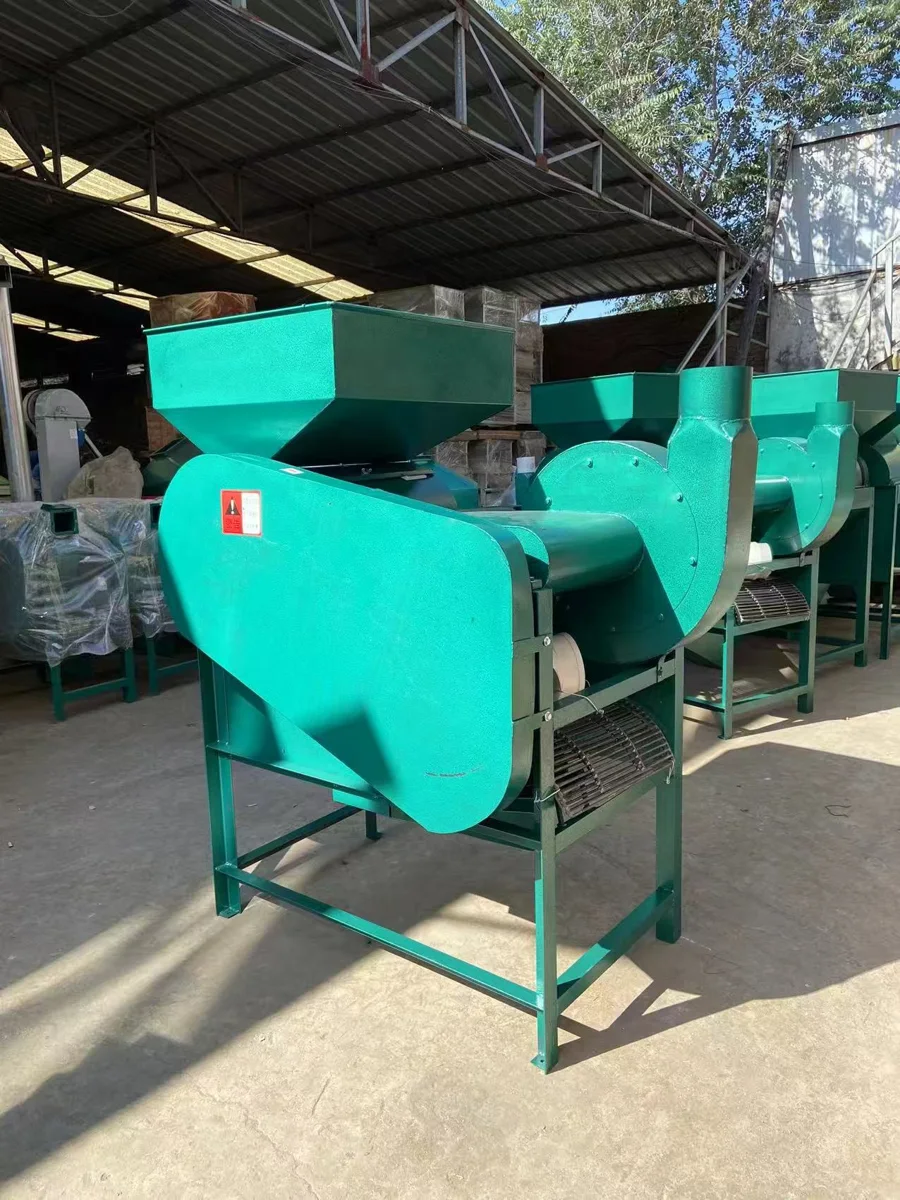
Peanut shells contribute essentially no oil but soak it up like a sponge during pressing, so removing them before the press directly raises yield — and removes the most abrasive material from the press feed. Modern seed dehulling machines for peanuts achieve industry shelling rates of roughly 95–98% with kernel breakage of about 2–5%. A dedicated peanut shelling machine combines a rubbing rotor with a built-in fan and screen so shells are blown out — on better designs through a 360-degree shell outlet — while clean kernels discharge separately. Typical single-pass shelling rate is around 95% with breakage at or below 5%.
Moisture is the single biggest operating variable: kernels shell best at approximately 8–13% moisture. Too dry and breakage spikes; too wet and shells tear instead of cracking, so efficiency drops. In dry winter conditions a proven field trick is to spray roughly 10 kg of warm water over each 50 kg of in-shell peanuts, cover them with plastic film for about 10 hours so moisture equalizes, then sun them for about an hour before shelling.
Whole peanut kernels are large, so for medium and larger lines a crushing or flaking step between shelling and roasting pays off. Breaking kernels into smaller pieces increases surface area, lets heat penetrate evenly during roasting, and shortens the time needed to reach target temperature at the kernel core. Small mills pressing under a few tonnes per day often feed whole kernels straight to the roaster and accept a slightly longer roast — workable, but less uniform.
Whether you crush or not, keep the post-shelling stream clean: a quick pass over a vibrating screen catches residual shell fragments and undersize fines that would otherwise scorch in the roaster and darken the oil.
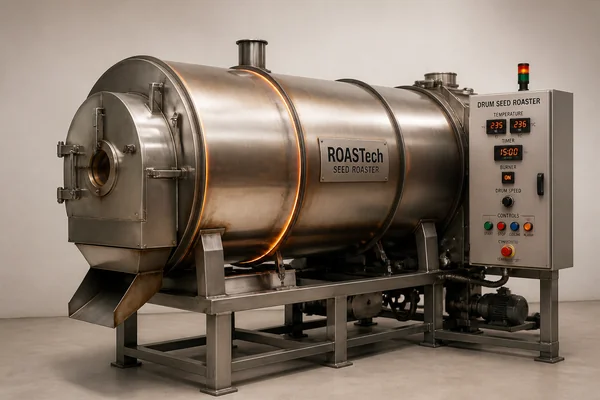
Roasting does two things that pressing alone cannot: it denatures the proteins that bind oil inside the seed, and it creates micro-pores in cell walls so oil can migrate out under press pressure. The effect is dramatic — published research on sesame showed oil yield improving from 33.5% to 62.6% with proper roasting, and peanuts respond similarly. Roasting also drives kernel moisture down to pressing range and develops the characteristic aroma that commands a premium for fragrant peanut oil in many markets.
Roasting temperatures across oilseeds span roughly 90–260°C; sesame, for reference, is typically roasted around 170°C for about 15 minutes, while peanut schedules vary with kernel size and target flavor. Seed roasting machines come in two families: rotating-drum roasters (electric, open-fire, closed-fire or electromagnetic-induction heated) that tumble the material for even exposure, and flat-bottom stirring roasters (induction, electric thermal-oil or fired thermal-oil) suited to continuous feeding ahead of a press line. Choose the heat source by what is cheap and reliable at your site — electricity, gas or solid fuel.
Size every machine to the press, not the other way around. Peanut shellers commonly come in three frames: 60 type at 300–400 kg/h, 80 type at 400–600 kg/h, and 100 type at 800–1,000 kg/h (in-shell feed). On a typical 10–12 hour shift, that translates approximately to:
| Sheller model | Shelling capacity | Suited press line (approx.) |
|---|---|---|
| 60 type | 300–400 kg/h | ~3–4 TPD |
| 80 type | 400–600 kg/h | ~4–6 TPD |
| 100 type | 800–1,000 kg/h | ~8–10 TPD |
Layout tips: arrange the line in straight flow — cleaner → sheller → screen → roaster → press — and exploit gravity by elevating the cleaner discharge so material falls into the sheller hopper rather than being re-conveyed. Place the roaster as close to the press as practical, because kernels press best while still warm (heat lost in long conveying must be paid for again). Leave at least a metre of service access around the sheller screen and roaster drum, duct shell-outlet and roaster exhaust dust outside the building, and put the whole chain on a shared buffer hopper before the press so brief stoppages upstream do not starve it. SinoOil Machinery has supplied complete seed preparation lines — cleaner, sheller, screens and all seven roaster configurations — to oil mills in 80+ countries since 2009, factory-direct with ISO9001, CE and SGS certification. For a pretreatment line matched to your press capacity and local fuel, request a free layout proposal.
The line above is drawn for peanut — the same logic adapts to other oilseeds with different stage emphasis. Crop-specific guides: sesame (fine cleaning + 170°C roast), sunflower (partial dehulling, 8–12% hulls kept), rapeseed / canola (no dehulling, flake + cook 80–90°C), and soybean (cracking + conditioning, meal-driven economics).
Approximately 8–13% kernel moisture. Drier peanuts crack and break (breakage rises above the normal 2–5%), while wetter peanuts shell inefficiently. In dry winters, spray about 10 kg of warm water per 50 kg of peanuts, cover with film for around 10 hours, then sun-dry for about an hour before shelling.
Yes, for yield and machine life. Shells absorb oil during pressing, so leaving them in lowers recoverable oil, and their abrasiveness accelerates wear on screw-press worms and cage bars. A peanut shelling machine typically removes about 95% of shells in a single pass.
Roasting denatures oil-binding proteins and opens micro-pores in cell walls, so oil releases far more easily — published sesame research showed yield improving from 33.5% to 62.6% with roasting. It also reduces moisture to pressing range and creates the fragrant flavor many markets pay extra for.
An 80-type sheller (400–600 kg/h) typically covers 4–6 tonnes per day on a 10–12 hour shift. For ~8–10 TPD choose the 100 type (800–1,000 kg/h); small 3–4 TPD lines run well on the 60 type (300–400 kg/h).
Roughly 15–20 lb (7–9 kg) of shelled peanuts per gallon on a screw press — peanut oil weighs about 7.6 lb per gallon, peanuts run 40–50% oil, and presses leave some oil in the cake. Read full answer →
SinoOil engineers size the right pretreatment equipment for your capacity — free plant design included.