
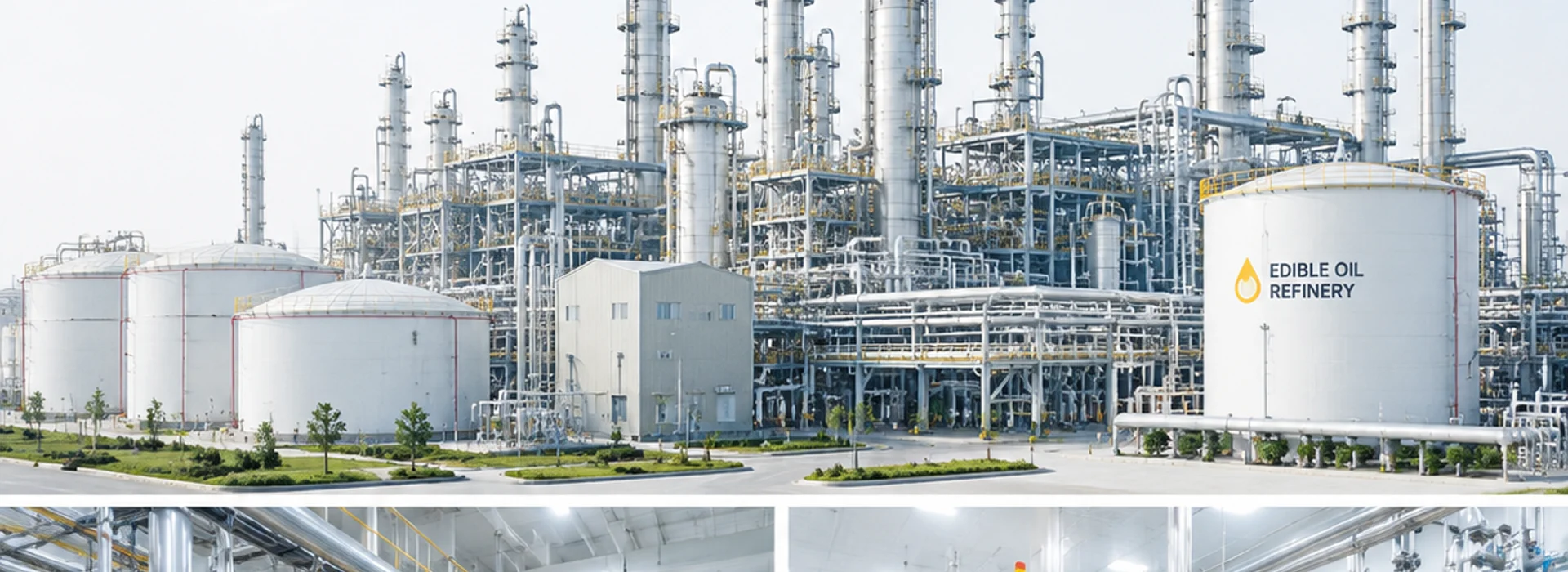
Oil Refining Line — From Crude to Premium
Batch, semi-continuous and continuous refinery systems that transform crude edible oil into premium food-grade product — degumming, neutralization, bleaching and deodorization in one integrated line.
Why Oil Refining Matters
Crude pressed oil contains free fatty acids, phospholipids, pigments and volatile compounds — refining removes these impurities to meet supermarket, export and food-service quality standards
Reduce Free Fatty Acids
High FFA causes rancidity, off-flavors and regulatory rejection. Alkali neutralization in refining lowers acidity to food-grade levels required for retail and export markets.
Remove Color & Odor
Natural pigments and volatile compounds give crude oil a dark appearance and strong smell. Bleaching and deodorization produce light, neutral oil that consumers expect on supermarket shelves.
Meet Food Safety Standards
Refined edible oil must comply with national and international limits on peroxide value, moisture and impurities. A proper refinery line delivers consistent quality batch after batch.
Unlock Premium Markets
Supermarkets, food processors and export buyers typically require refined oil. Refining transforms workshop crude oil into a higher-value product with broader distribution channels.
Oil Refining Equipment
Batch refinery, semi-continuous and continuous refining systems plus turnkey complete plants — configured for peanut, soybean, sunflower, rapeseed, palm and sesame oils
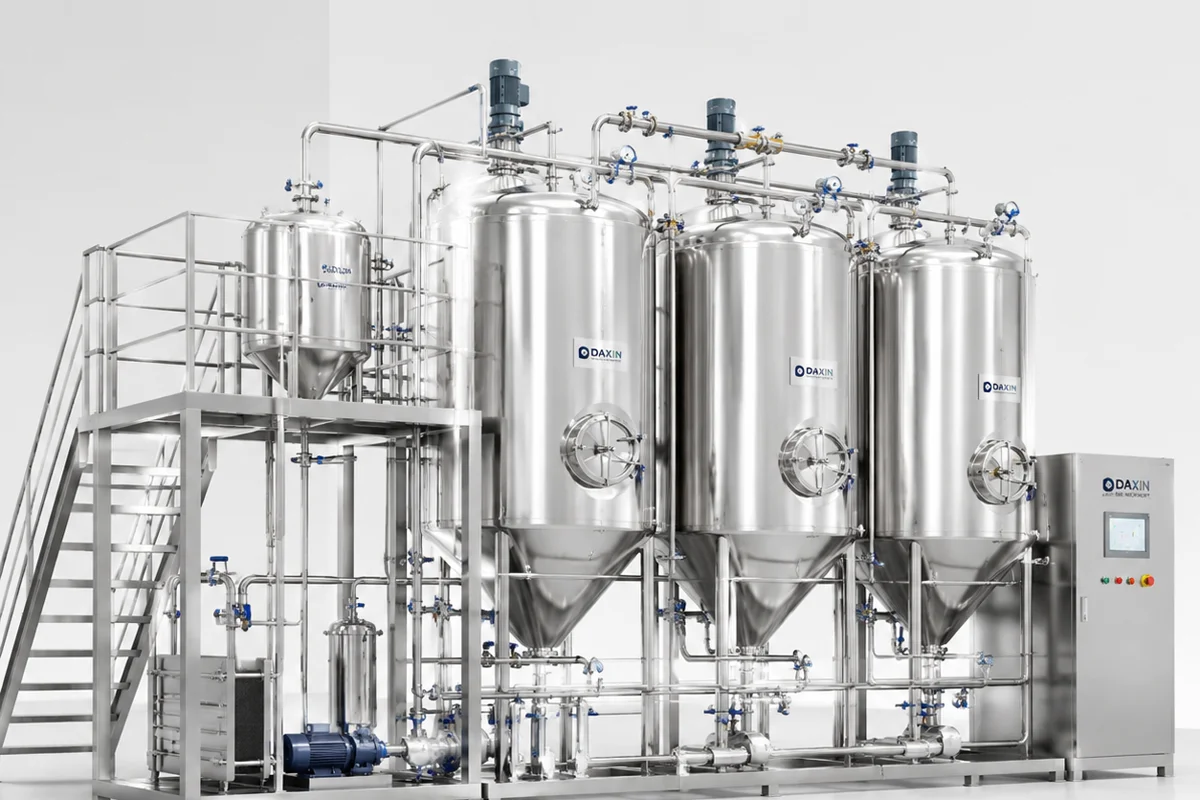
Batch Refinery
Compact batch refining system for 1–20 TPD — ideal for startups and regional mills. Full degumming, neutralization, bleaching and deodorization in stainless steel vessels.
View Equipment →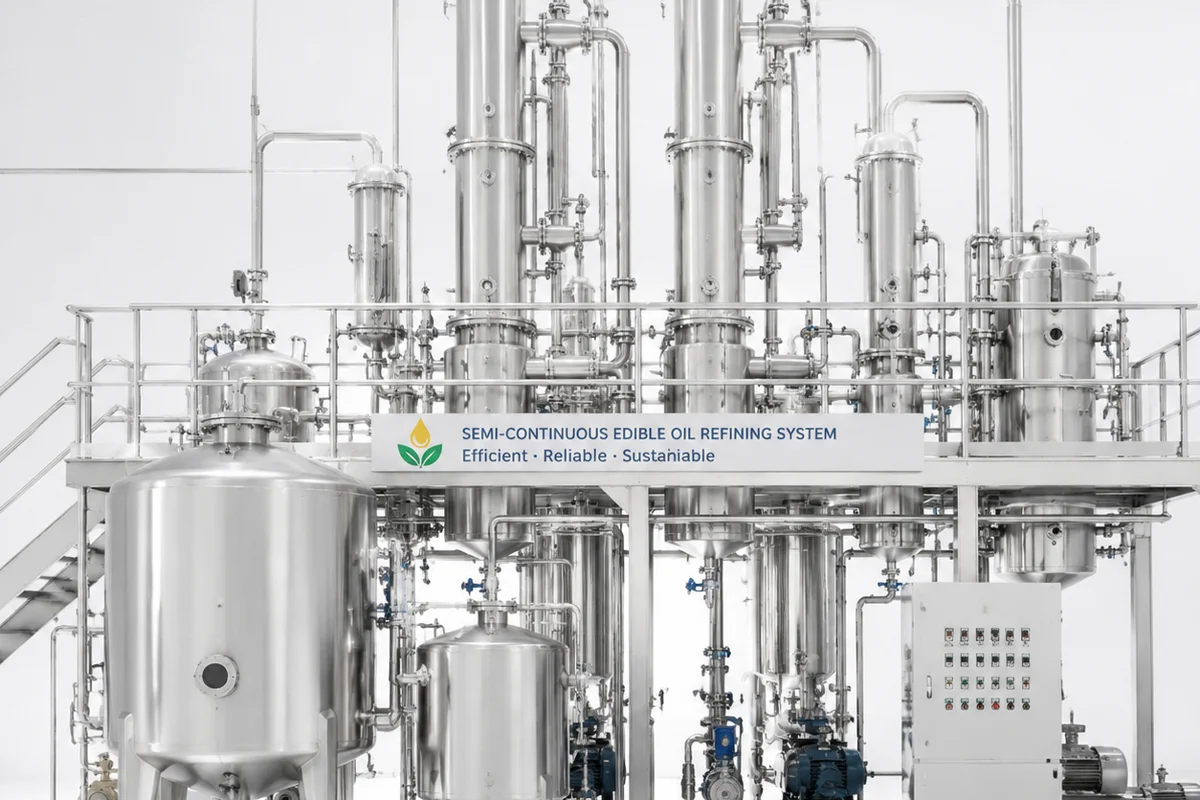
Semi-Continuous Refinery
Hybrid refining for 10–50 TPD — combines batch flexibility with improved throughput. Balanced investment for growing edible oil manufacturers upgrading from crude oil sales.
View Equipment →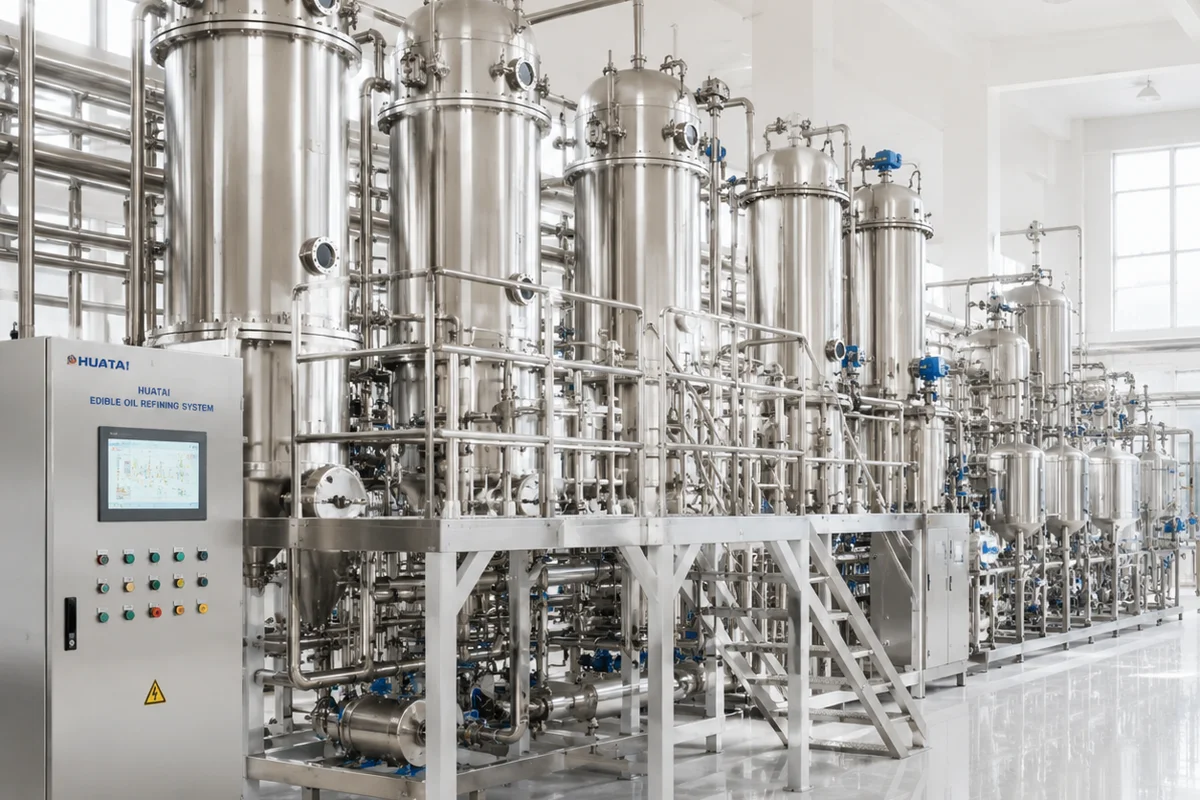
Continuous Refinery
Fully continuous refining for 50–500+ TPD — PLC-controlled operation with consistent quality, low labor cost and maximum productivity for industrial producers.
View Equipment →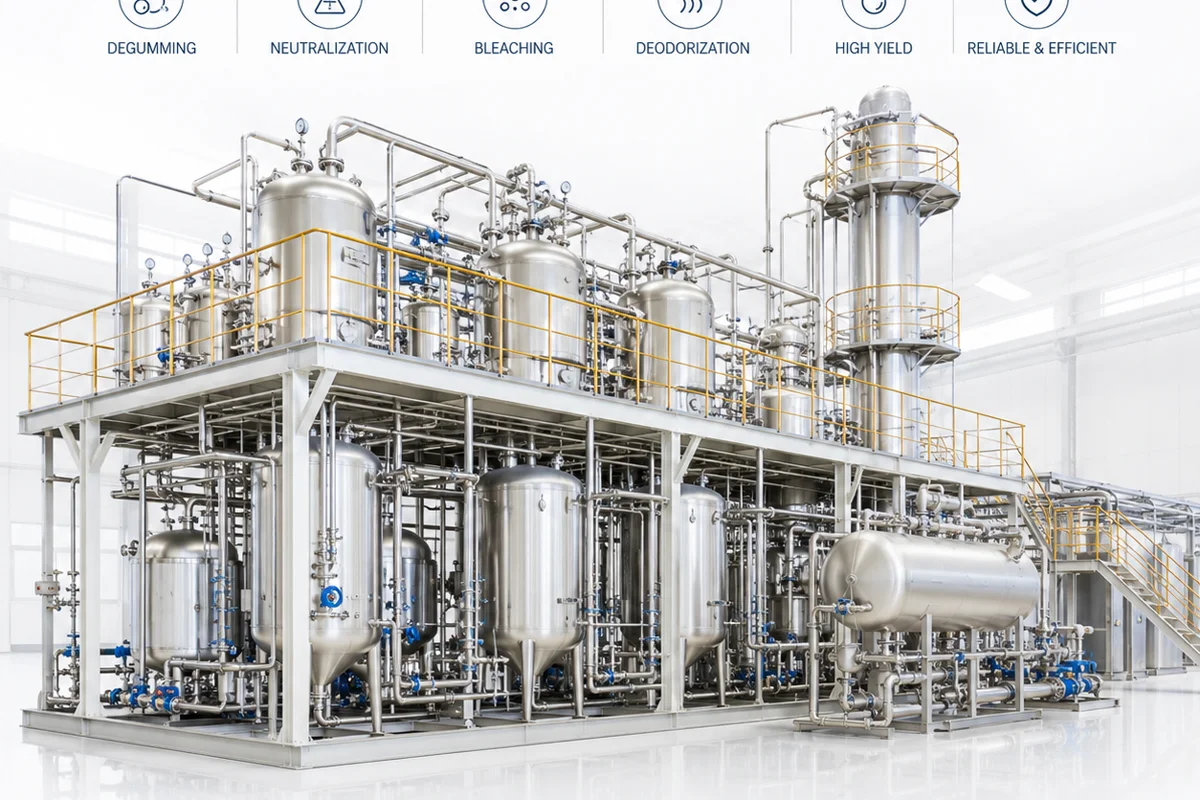
Complete Refining Plant
Turnkey refinery from process design to installation — all refining stages, utilities, tanks and automation integrated for commercial and enterprise-scale projects.
View Equipment →Need vacuum systems, tanks or a full category overview? Browse all oil refining equipment →
The Edible Oil Refining Process
Physical and chemical refining transform crude oil through four standard stages. Each stage targets specific impurities — together they produce light, odorless, food-grade refined oil suitable for bottling, cooking and industrial food applications.
Crude oil from the oil filtration line or direct press output enters the refinery. Optional winterization (dewaxing) can follow deodorization for sunflower and cottonseed oils. Our engineers adjust chemical dosages, temperatures and residence times for each oil type.
Batch vs Semi-Continuous vs Continuous
Compare refining system types to choose the right refinery configuration for your daily throughput, automation level and investment budget
| Parameter | Batch Refinery | Semi-Continuous Refinery | Continuous Refinery |
|---|---|---|---|
| Operation mode | Batch cycles in single vessels | Hybrid — some stages continuous | Fully continuous 24/7 flow |
| Typical capacity | 1–20 TPD | 10–50 TPD | 50–500+ TPD |
| Automation level | Manual / semi-auto | Semi-automatic PLC | Full PLC / DCS control |
| Labor requirement | Higher per ton | Moderate | Low — minimal operators |
| Oil loss rate | Moderate (batch handling) | Lower than batch | Lowest — optimized flow |
| Product flexibility | High — easy oil switching | Good | Lower — dedicated lines |
| Best for | Startups, small mills, multi-oil workshops | Growing manufacturers, 10–50 TPD | Industrial producers, export plants |
| Investment level | Low–medium | Medium | High |
Most new refineries start with batch equipment and upgrade to semi-continuous or continuous systems as volume grows. A complete refining plant packages the right configuration with tanks, vacuum systems and utilities from day one.
Frequently Asked Questions
Filtration removes solids and some moisture, but cannot reduce free fatty acids, remove pigments or eliminate odors. If you target supermarkets, food processors or export markets, refining is typically required. Many plants filter first, then refine — the two stages complement each other.
Batch refineries suit 1–20 TPD startups with flexible oil types and lower capital budgets. Semi-continuous systems fit growing plants at 10–50 TPD. Continuous refineries are optimal above 50 TPD where automation, consistent quality and lowest cost per ton justify the higher investment.
Standard chemical refining uses phosphoric or citric acid for degumming, caustic soda (NaOH) for neutralization, and activated bleaching earth for decolorization. Deodorization uses steam only — no chemicals. All processing agents are food-grade and fully removed from the final oil. We provide dosage guidelines for each oil type.
A small 1–5 TPD batch refinery may start from USD 30,000–80,000. A 10–30 TPD semi-continuous line typically ranges from USD 100,000–250,000. Industrial continuous refineries at 50–200+ TPD are quoted individually based on automation, utilities and civil works. We provide detailed quotations after reviewing your capacity and quality targets.
Yes. Many clients retrofit a refinery downstream of existing press and filtration lines to upgrade from crude to refined oil sales. We supply layout drawings, utility requirements and installation support to connect new refining equipment with minimal disruption to current production.
Ready to Build Your Oil Refining Line?
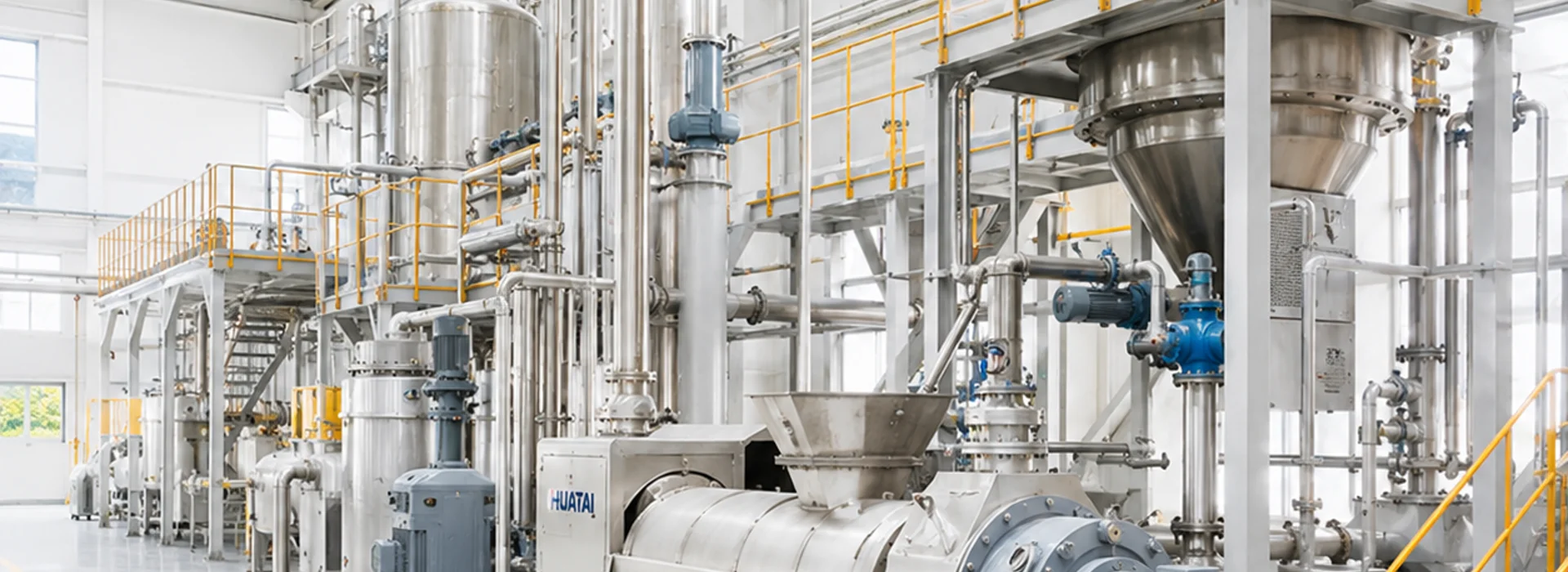
Tell us your oil type, daily throughput and target market — our engineers will recommend batch, semi-continuous or continuous refinery configuration within 48 hours.
Watch It Run
See This Machine In Action
A real SinoOil machine demonstration — see how it works before you buy.