
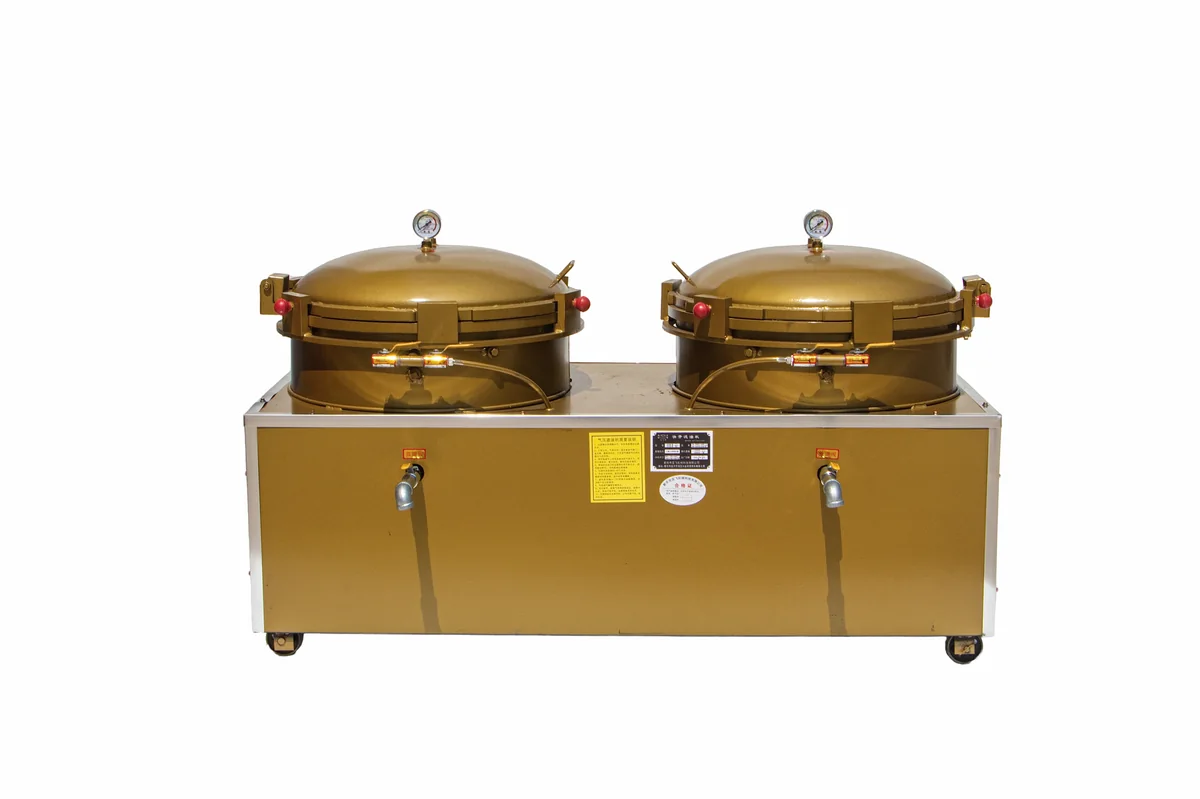
Single vs Dual Pneumatic Oil Filter
The main decision is chamber count, operating continuity and whether oil viscosity requires controlled warming before filtration.
SinoOil factory demonstration · dual filtration
See the twin-chamber layout before comparing operating duty
The decision matrix distinguishes footprint, chamber management and cleaning interruption. The video makes the dual-vessel arrangement, filter cloth, pressure gauge and access points easier to inspect.
What to watch:
- Two separate pressure vessels and their working access
- Filter-cloth placement inside the shown chamber
- Pressure gauge, safety hardware and outlet arrangement
Source: SinoOil Machinery official YouTube channel. The video documents one twin-tank filter. It does not prove alternating operation, batch capacity or filtration quality for every oil; confirm the supplied valve sequence, cloth grade, temperature and pressure limits.
Start with the process duty
A single-chamber unit is compact and straightforward. A dual-chamber arrangement can provide more working area and may allow one chamber to be cleaned while the other remains available, subject to the supplied valve and piping arrangement.
Engineering note: Final ratings, materials, utilities and operating limits must be confirmed in the current technical agreement for the supplied machine.
Decision matrix
| Decision | Single chamber | Dual chamber |
|---|---|---|
| Footprint | Smaller | Larger |
| Filter chamber management | One chamber to load, filter and clean | Two chambers can support alternating work when configured for it |
| Typical operating priority | Simple small/medium batch filtration | Higher duty or reduced cleaning interruption |
| Heating option | Useful when controlled warming is required | Useful when controlled warming is required |
| Must confirm | Filter cloth, pressure source, oil temperature and batch size | Valve sequence, filter cloth, pressure source, oil temperature and batch size |
Practical checklist
When to consider heating
- Oil is too viscous at the normal working temperature
- The process requires controlled warming before pressure filtration
- The heater rating and temperature control match the oil and batch
- The operator can avoid overheating and dry heating
Before purchase
- Provide oil type and inlet temperature
- Describe visible solids and upstream settling
- State batch volume and desired cycles per day
- Confirm compressed-air or built-in pump arrangement
- Request the current filter cloth and spare-parts schedule