
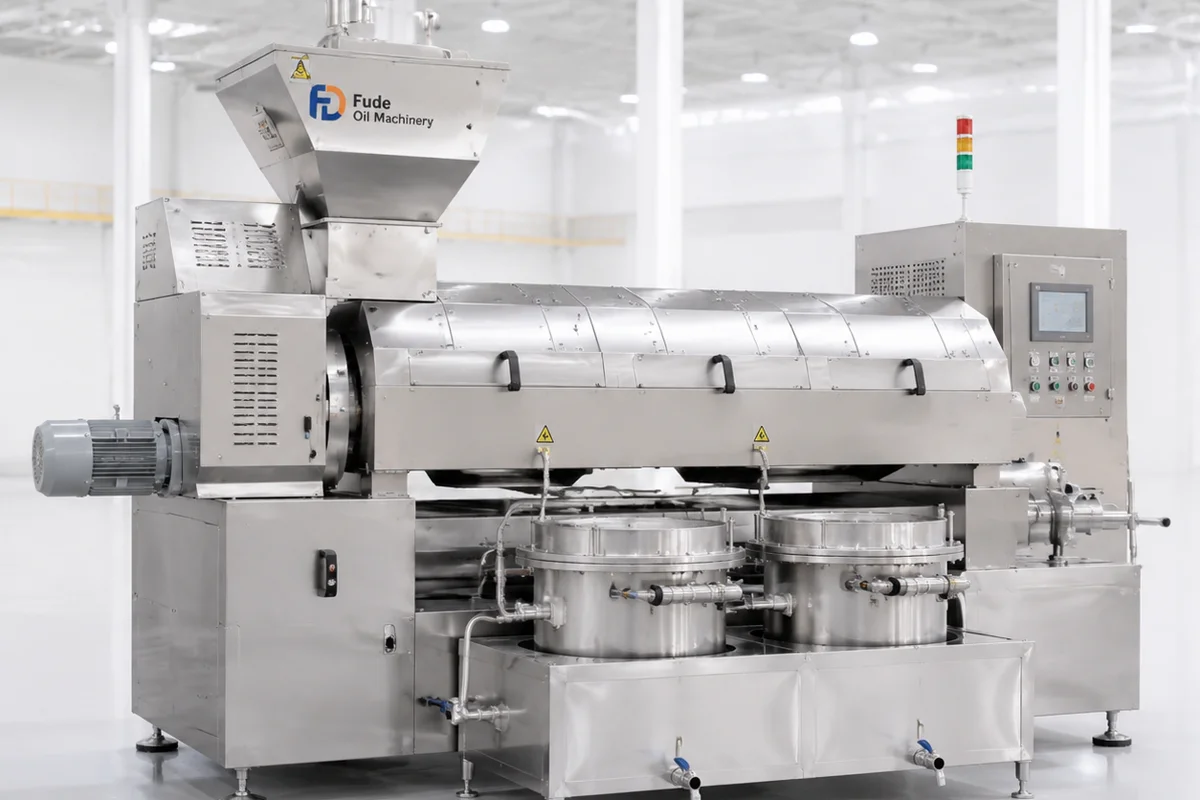
How to Select an Industrial Oil Press for Your Oilseed and Production Target
The correct press depends on the oilseed, preparation route, required throughput, operating condition, cake target, labor plan and downstream oil treatment. Begin with these inputs before comparing the approved press models.
Short answer
A model number is not a complete selection. First define the material entering the press, the duty per hour or day, the operating schedule and the required oil and cake condition.
Seven inputs that control press selection
Oilseed and variety
Seed structure and condition change preparation and pressing behavior.
Preparation route
Cleaning, shelling, size reduction, conditioning or roasting affect press feed.
Required throughput
State the basis, operating hours and whether the line is batch or continuous.
Temperature strategy
Define whether cold, conditioned or heated pressing is intended.
Oil and cake targets
Clarify downstream filtration and intended cake use.
Labor and maintenance
Confirm staffing, cleaning, changeover and spare-part planning.
Approved product families to review
| Approved page | Use the page to confirm |
|---|---|
| 101-Type Bar-Cage Cold Oil Press | Reviewed construction, process position and current specification request. |
| 120-Type Screw Oil Press | Reviewed screw-press configuration and project inputs. |
| 125-Type Four-Stage Bar-Cage Oil Press | Reviewed multi-stage arrangement and current technical file. |
| Integrated Bar-Cage Oil Press | Reviewed integrated arrangement and included functions. |
Do not compare unconfirmed numbers
Capacity, motor power, residual oil, temperature, dimensions and utilities depend on the approved configuration and test basis. Compare those values only when the source, raw material and operating condition are stated consistently.
Prepare a useful press trial or RFQ
- Identify the seed, origin, moisture and impurity condition.
- State preparation steps already available or required.
- State hourly or daily throughput and operating hours.
- Describe the desired oil, cake and downstream treatment.
- Provide power supply, heating options and installation location.
- Request the current model specification and test basis.
Related decision tools
Technical review boundary
General selection and diagnostic guidance can be used for planning. Final model data, settings, limits, utilities, test conditions and acceptance criteria must come from the current approved technical file for the supplied machine. Fields without a recorded technical source remain pending review.
Frequently asked questions
Which press gives the highest yield?
No model should be selected from a universal yield claim. Feedstock, preparation, operating condition and test basis must be comparable.
Can one press handle every oilseed?
A supplier must review the actual seed, preparation and product target. Mechanical compatibility does not prove the same performance for every material.
What information is needed for a quote?
Provide seed details, throughput, operating hours, preparation, target oil and cake, utilities, location and required documents.
Send the material, present process, required duty, utilities and target outlet condition.