
How to Select a Vacuum Oil Dehydrator for Edible Oil Processing
Select from the incoming oil condition and required outcome—not from tank size alone. Water load, batch quantity, oil temperature, vacuum stability, heating arrangement and downstream cooling all change the configuration that should be reviewed.
SinoOil factory demonstration · vacuum dehydration
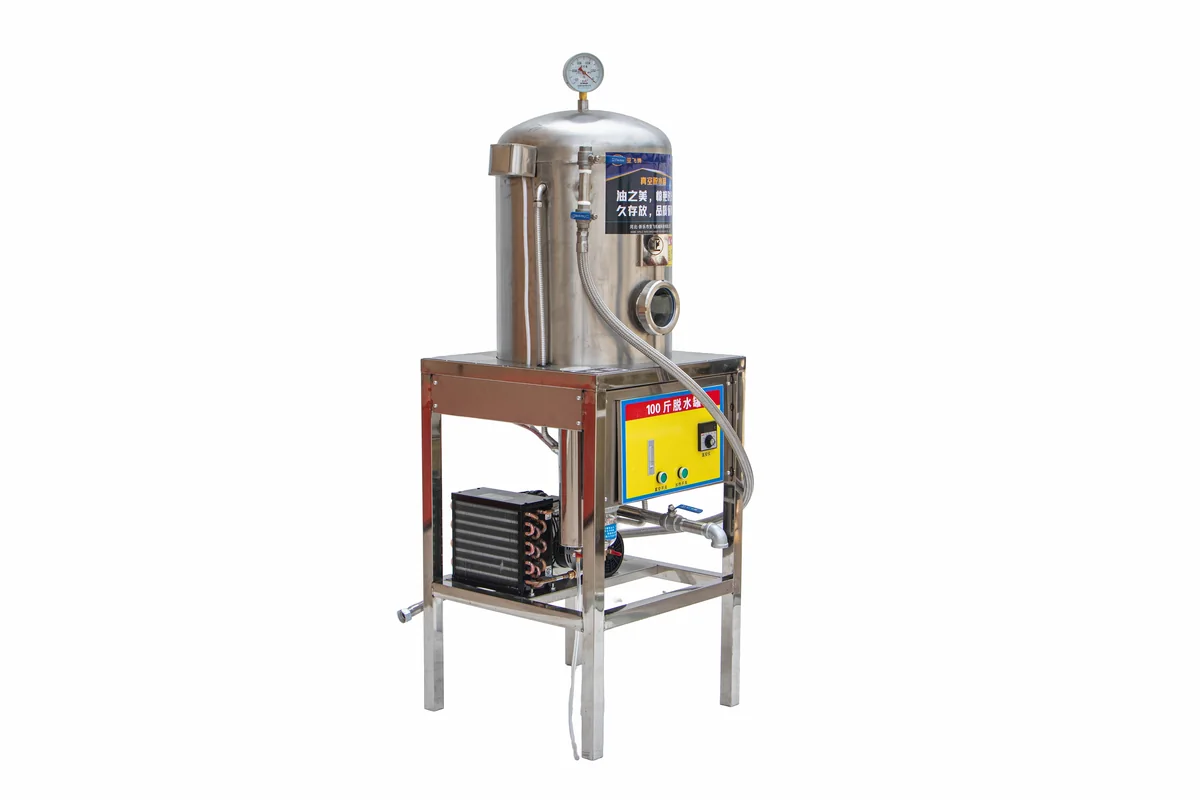
Inspect the selection points on a 300 kg vacuum dehydrator
Selection depends on oil condition, batch duty and the downstream storage target. The walkthrough shows the tank, sight glasses, controls and circulation hardware that should be confirmed against the quotation.
What to watch:
- 304 stainless-steel vessel and overall skid arrangement
- Dual sight glasses used to observe the shown process
- Control cabinet, heating, vacuum and circulation components
Source: SinoOil Machinery official YouTube channel. The video shows a 300 kg labeled configuration; it does not prove final moisture, storage life or throughput for every oil. Those outcomes require inlet data and an agreed acceptance test.
Short answer
A useful selection starts with six inputs: oil type, present process, batch or flow, incoming temperature, observed water problem and required outlet condition. A supplier cannot responsibly confirm the model from capacity alone.
What vacuum dehydration is intended to do
Vacuum dehydration provides a controlled route for removing moisture from oil while limiting the temperature required for evaporation. In an edible-oil line it may be reviewed after hydration, centrifugal separation, washing or another stage that leaves residual water. It does not replace correct upstream separation, sanitation or storage control.
When to review dehydration after hydration or centrifugation
Visible or measured moisture
Record whether the concern is free water, persistent haze, unstable storage, foaming or a laboratory moisture result. These are different observations and should not be treated as one diagnosis.
Warm oil awaiting storage
If oil must also be cooled before storage or packaging, compare a dehydration-only unit with a combined dehydration-and-cooling arrangement.
Repeated upstream carryover
Confirm settling, centrifuge operation and phase separation first. A downstream dehydrator should not be used to hide an unresolved upstream fault.
Inputs required before selection
| Input | Why it changes the choice |
|---|---|
| Oil type and present process | Defines oil condition and the most likely source of water. |
| Batch volume or continuous flow | Defines required working duty and cycle planning. |
| Incoming and required outlet condition | Defines heating, vacuum and possible cooling duty. |
| Observed symptom and test data | Separates moisture removal from other quality problems. |
| Power, heat and cooling utilities | Limits the practical equipment arrangement. |
| Cleaning and product-change needs | Affects piping, access and operating sequence. |
100-type, 300-type and combined cooling: the decision boundary
The approved product center contains a 100-type vacuum dehydrator, a 300-type vacuum dehydrator and a 300-type dehydration-and-cooling machine. Their final capacity, working volume, power, heating, vacuum components and cooling duty must be confirmed from the current reviewed specification. Use the model family only after the project inputs are known.
What this machine cannot correct
- Oxidation, contamination or acidity caused by unrelated storage and handling conditions.
- Incomplete phospholipid removal or poor phase separation upstream.
- Off-spec oil created by unsuitable raw material or uncontrolled processing.
- A required cooling result that has not been included in the heat-load review.
Technical review boundary
General selection and diagnostic guidance can be used for planning. Final model data, settings, limits, utilities, test conditions and acceptance criteria must come from the current approved technical file for the supplied machine. Fields without a recorded technical source remain pending review.
Frequently asked questions
Can I select by tank size?
No. Tank size does not define water load, cycle time, heat input, vacuum stability or cooling duty.
Do I need a separate oil cooler?
That depends on the required outlet temperature, cooling time and available cooling utilities. Review dehydration and cooling as one duty when both are required.
What should I send for review?
Send the oil type, previous process, batch or flow, incoming temperature, observed problem, any moisture test and required outlet condition.
Send the material, present process, required duty, utilities and target outlet condition.