
Compact batch oil refining
300-Type Edible Oil Refining Machine
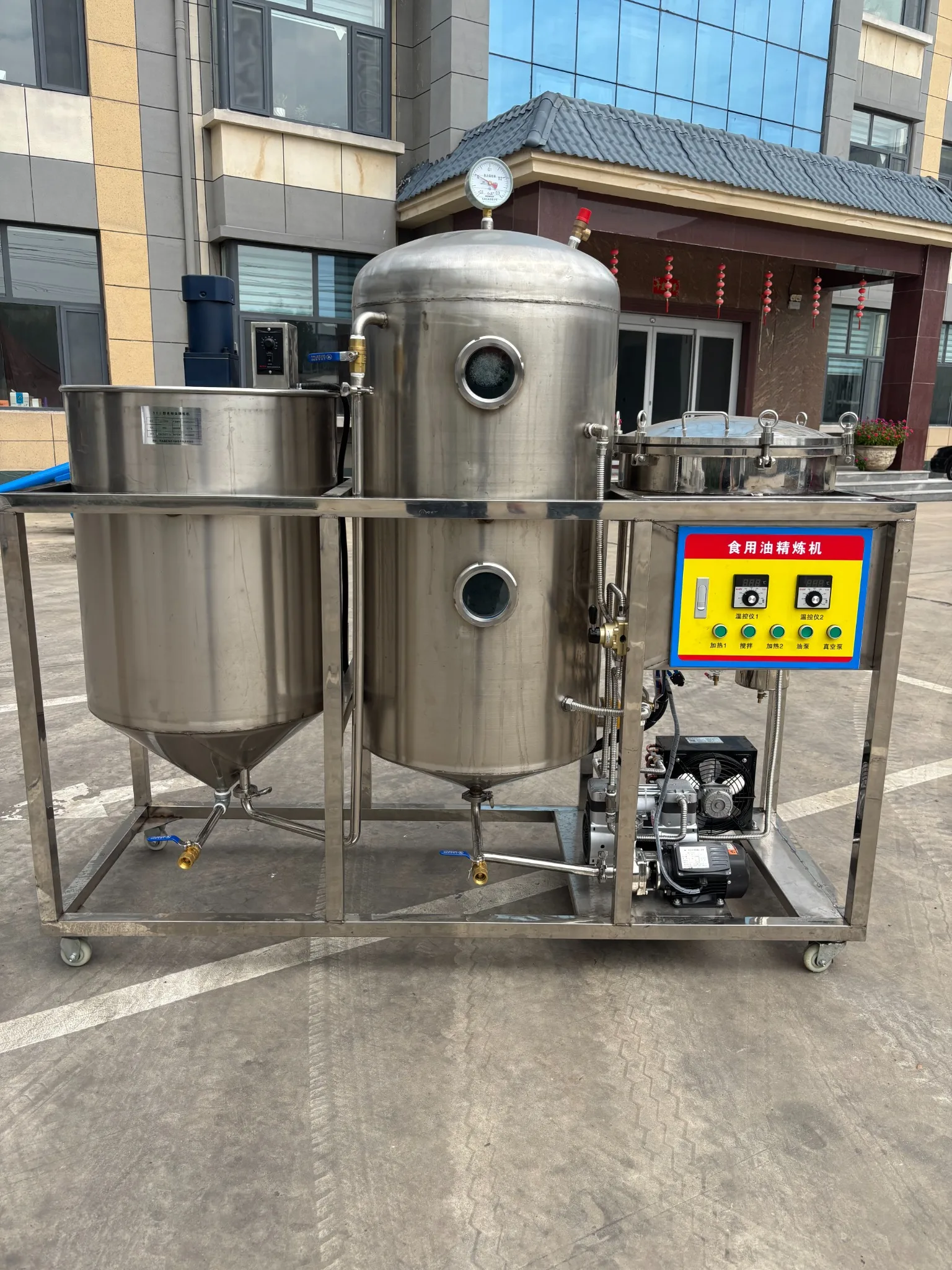
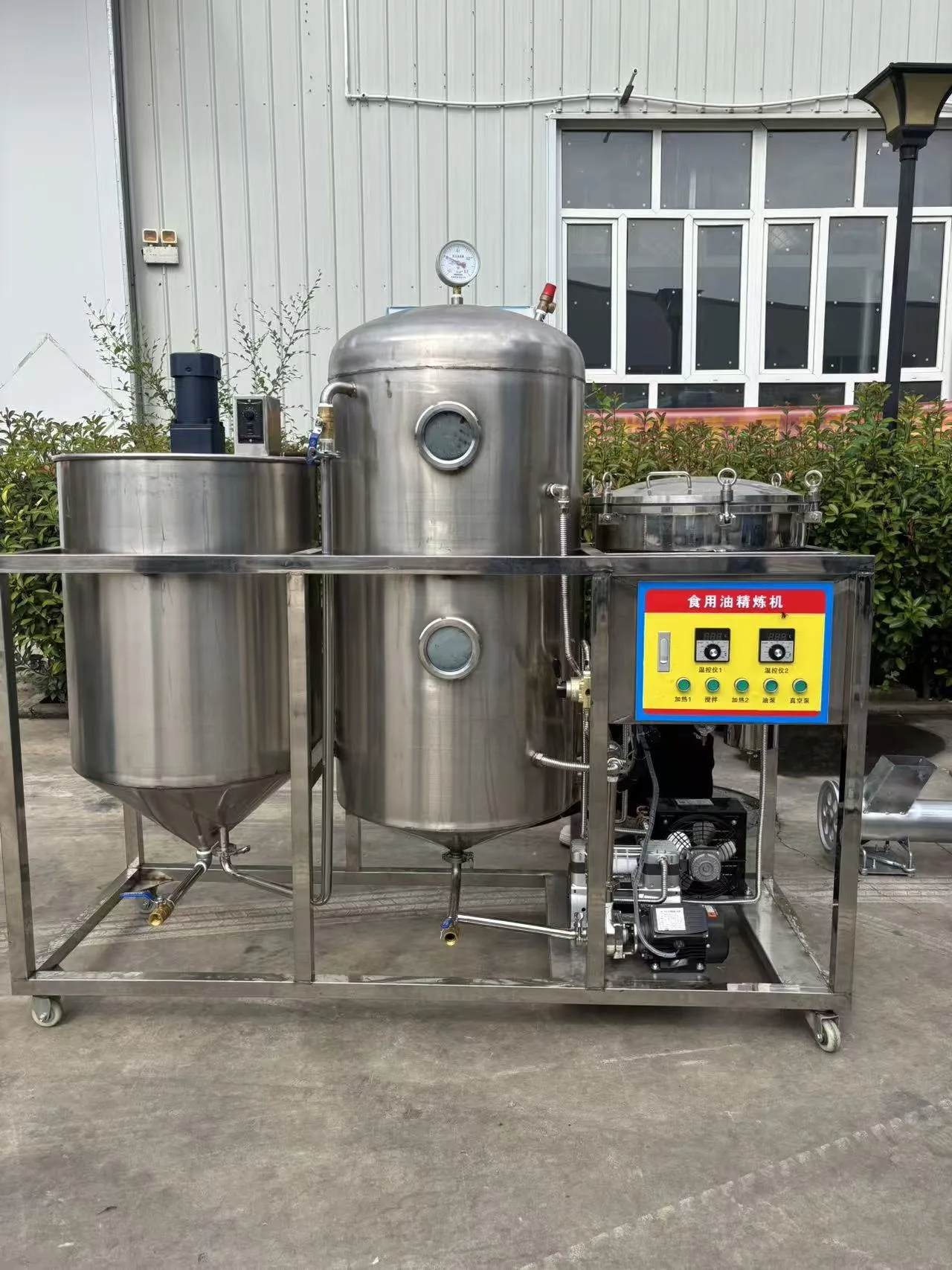
The JLJ-300 is a compact, integrated small edible oil refinery for customers who need approximately 150 kg per batch. Its photographed configuration combines stainless-steel process vessels, vacuum and pump assemblies, cooling components and a straightforward control panel on one frame.
A practical batch size for small processors and budget-conscious projects.
Process vessels, pumps, vacuum and controls are arranged on one compact frame.
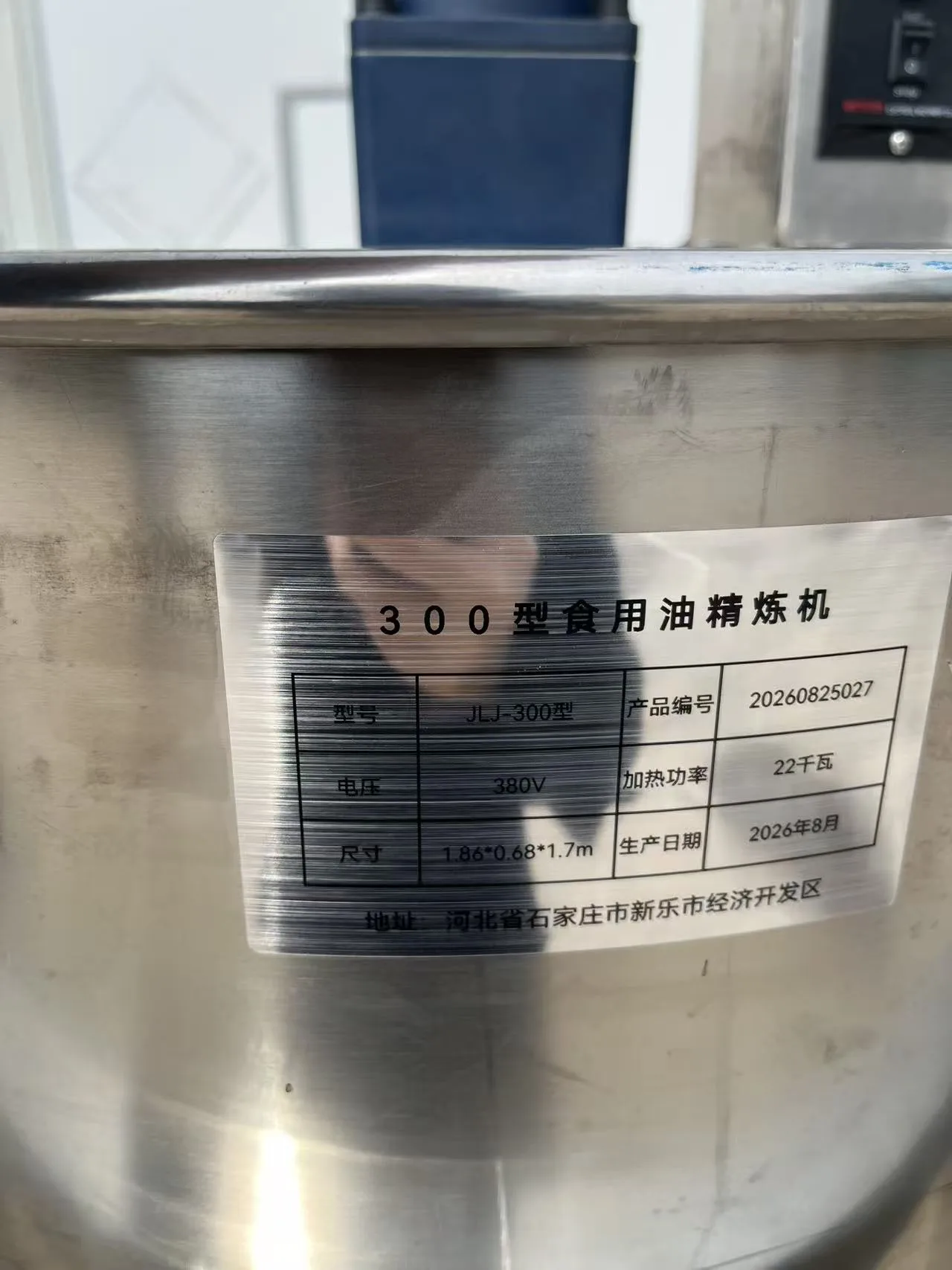
The photographed JLJ-300 is rated at 380 V with 22 kW heating power.
Final stages and components are confirmed from crude-oil condition and target quality.
JLJ-300 Technical Specifications
| Product name | 300-Type Edible Oil Refining Machine |
| Model | JLJ-300 |
| Batch capacity | Approximately 150 kg/batch |
| Voltage | 380 V |
| Heating power | 22 kW |
| Overall dimensions | 1.86 × 0.68 × 1.7 m |
| Equipment format | Compact integrated batch unit |
Real Machine Gallery
Typical Batch Refining Workflow
A small batch refinery is normally configured around the crude oil condition and the required finished-oil quality. The general sequence below is explanatory; exact stages, dosing, temperatures, vacuum duty and downstream filtration are customized and confirmed in the project specification.
Load the measured crude oil batch and bring it to the specified operating condition.
Carry out the selected treatment stages, which may include degumming, neutralization or color treatment as required.
Use the configured vacuum and condensing assembly where moisture or volatile removal is part of the agreed process.
Condition the treated oil for transfer and any required polishing filtration, storage or filling step.
Equipment Structure & Components
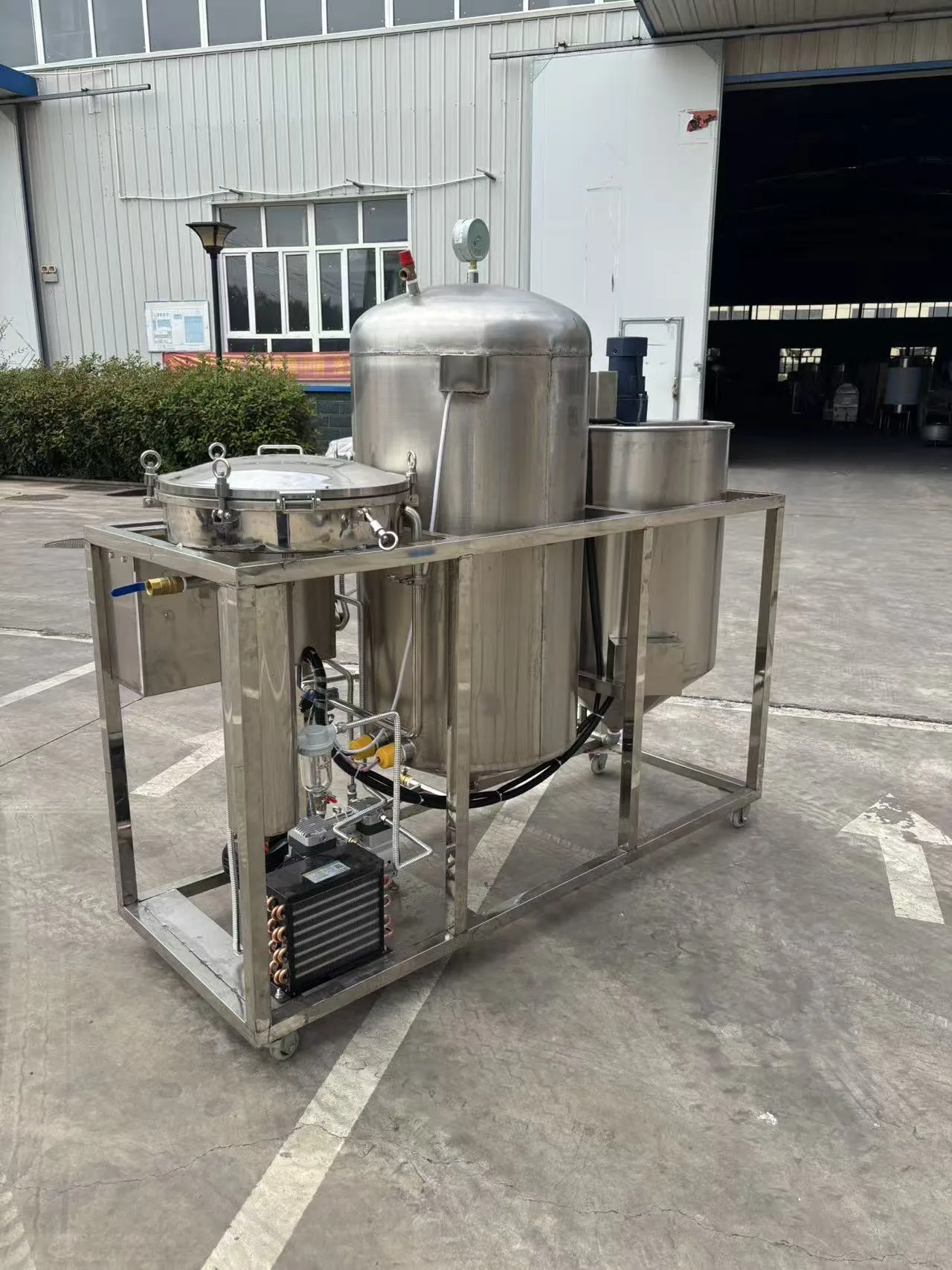
Multiple stainless-steel vessels and sight ports are arranged on a shared frame for compact batch handling.
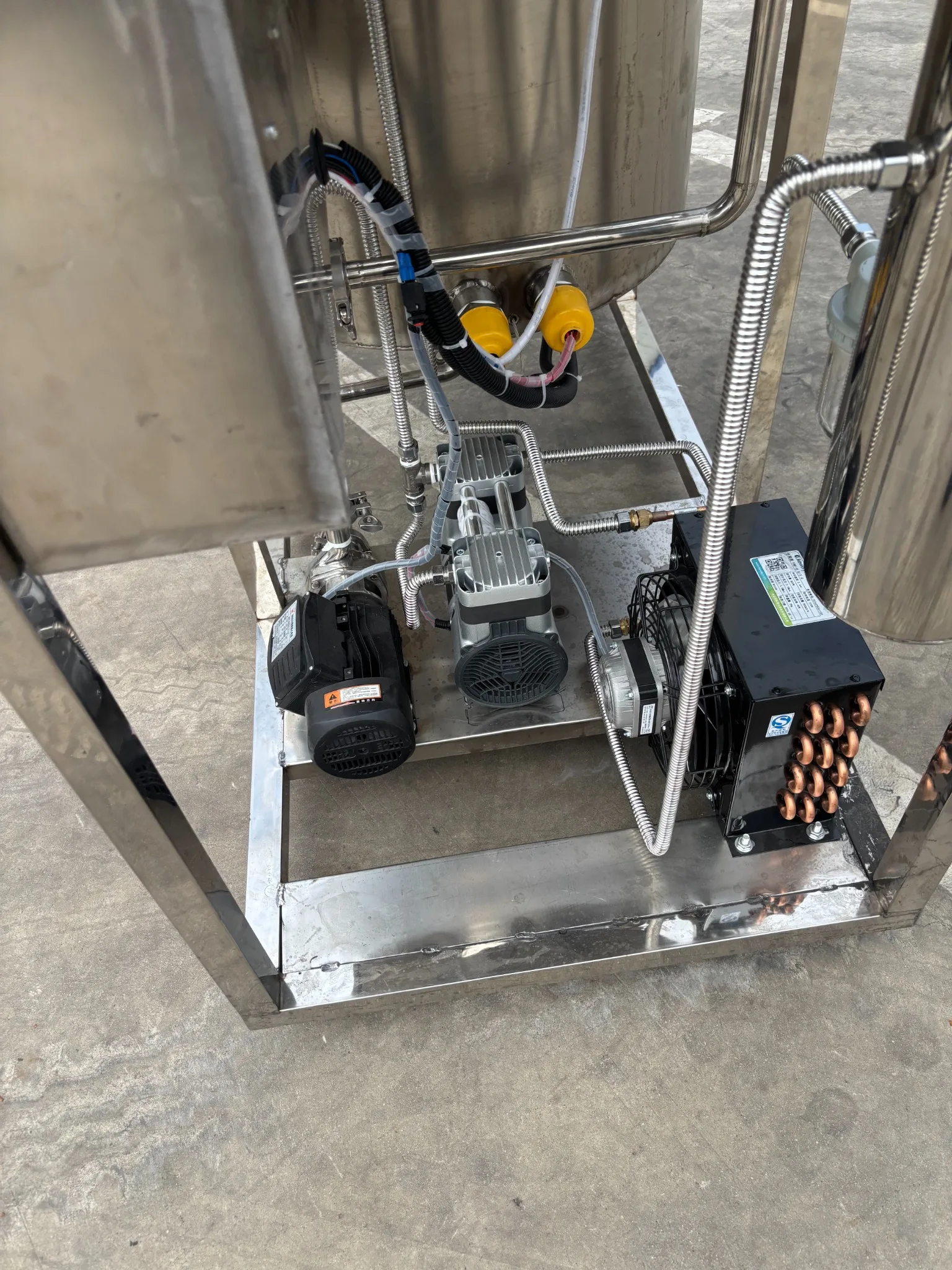
The photographed configuration includes vacuum hardware for the project-defined conditioning duty.
Dedicated pumps, flexible connections, valves and sanitary-looking pipe runs support transfer between components.
A compact finned cooling component is integrated beside the pump group.
Front-mounted controls provide accessible operation of the configured heating, mixing, pumping and vacuum functions.
The assembled unit uses a narrow frame with casters, suited to workshops where floor space matters.
Why Choose This Compact Oil Refinery?
Approx. 150 kg batches offer a lower-throughput route for buyers who do not need a multi-tonne-per-day refinery.
The confirmed overall size is 1.86 × 0.68 × 1.7 m.
Major process, vacuum, pump, cooling and control elements are assembled as one unit.
The treatment sequence can be matched to the incoming oil and the buyer's finished-oil requirement.
Suitable Uses & Oil Types
The JLJ-300 may suit small oil mills, farm or cooperative processing, pilot production, and local edible-oil businesses that work in batches. Depending on the incoming crude oil and required finished quality, it may be configured for peanut, sunflower, soybean, rapeseed or canola, sesame and similar edible oils. Send an oil sample or analysis where possible so the process can be checked before quotation.
Frequently Asked Questions
What is the batch capacity of the 300-Type edible oil refining machine?
The confirmed customer-facing capacity is approximately 150 kg per batch. Actual usable batch size can vary with the crude oil, process recipe and configured working volume, so the final capacity should be confirmed in the technical proposal.
Which edible oils can the JLJ-300 process?
It may be configured for common crude edible oils such as peanut, sunflower, soybean, rapeseed or canola, and sesame oil. Suitability and the required treatment stages depend on the incoming oil condition and the finished-oil target.
Does this machine include a vacuum system?
The photographed configuration includes a vacuum system, pump group and condensing or cooling components. The required vacuum-assisted duty and final component list are confirmed for each order.
What power supply does the JLJ-300 require?
The confirmed unit is rated for 380 V with 22 kW heating power. Frequency, phase, plug or terminal arrangement, and other electrical details must be matched to the destination before production.
Can the refining process be customized?
Yes. The general batch sequence and component arrangement can be matched to the crude oil, target quality, utilities and downstream filtration. The final process stages and technical specification are confirmed in the project proposal.
Is 150 kg per Batch the Right Size for Your Project?
Tell us your crude oil, target finished quality, batches per day, local power supply and workshop space. We will confirm the process configuration and send a project-specific quotation.
Request JLJ-300 Proposal →