
Why Edible Oil May Turn Cloudy or Acidic After Hydration and Centrifugal Separation
Hydration and centrifugal separation remove hydrated impurities, but the oil may still contain water or remain at an unsuitable condition for stable storage. Diagnose residual moisture, incomplete separation, contamination, temperature and storage separately before selecting equipment.
Short answer
Cloudiness and rising acidity are symptoms, not a machine-selection instruction. Record when the change appears, compare samples before and after each process stage, and use laboratory data where a quality claim matters.
Separate the symptoms first
Cloudy immediately
Check entrained water, suspended hydrated material, temperature and incomplete phase separation.
Clear when warm, cloudy when cool
Record the temperature at which the appearance changes. Do not assume every temperature-related haze is water.
Condition worsens in storage
Check residual moisture, tank cleanliness, exposure to air, hold time, temperature history and contamination.
A practical diagnostic sequence
- Preserve samples. Keep labeled samples before hydration, after separation, after dehydration and after cooling where possible.
- Record the process. Note water addition, mixing, hold time, separation behavior, temperature and transfer timing.
- Check moisture and separation. Look for free water, interface carryover and settled material; use laboratory testing for decisions tied to oil quality.
- Check storage and contamination. Review tank cleanliness, previous product, air exposure and time before packaging.
- Test a controlled correction. Evaluate dehydration or cooling only after the likely cause is defined.
Where vacuum dehydration and rapid cooling may fit
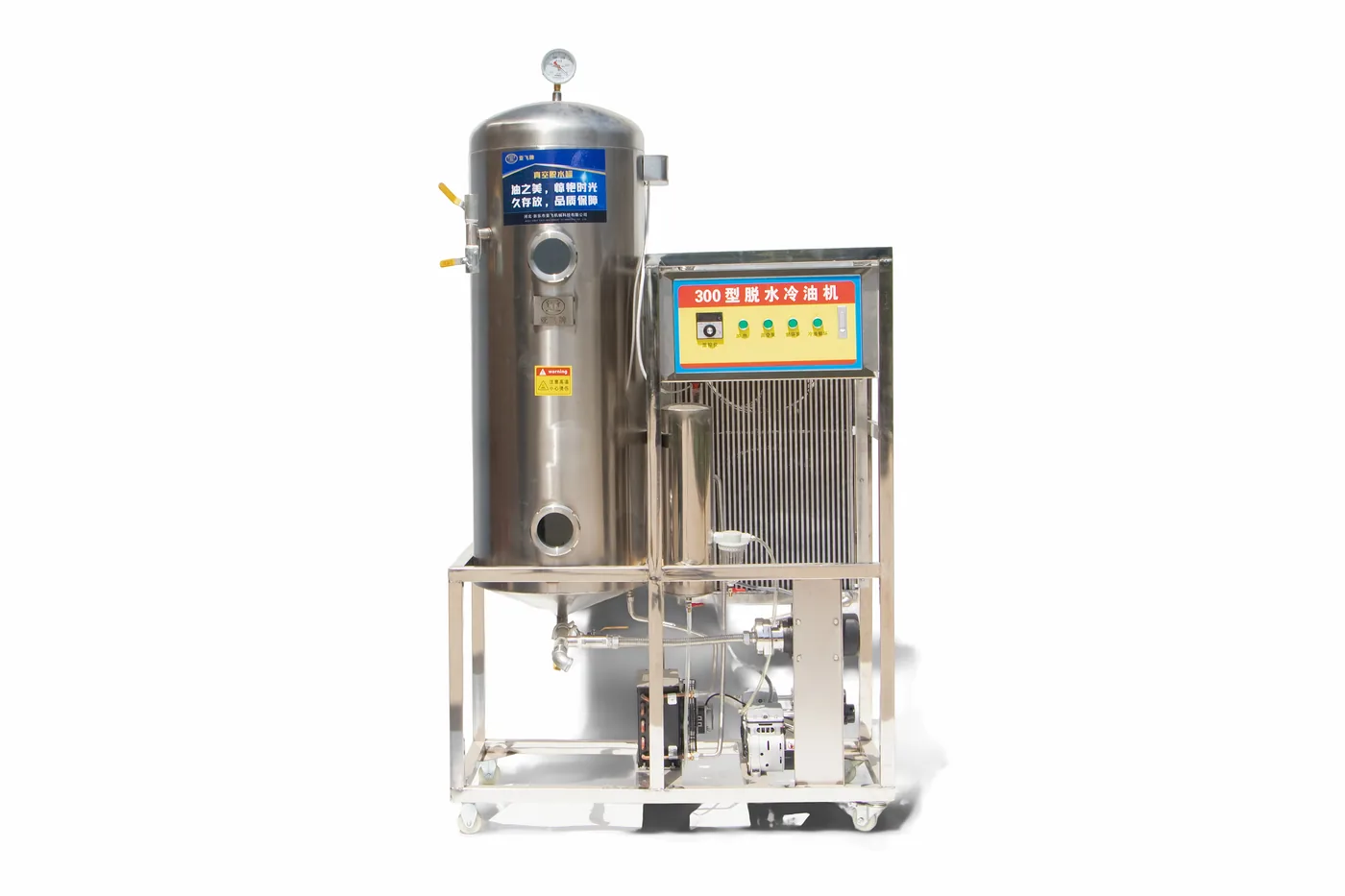
Vacuum dehydration may be reviewed when residual water remains after upstream processing. Rapid cooling may be reviewed when the oil must reach a suitable downstream temperature promptly. A combined machine can address both duties in sequence, but it should not be described as a universal cure for cloudiness or acidity.
Data to send with the oil condition
| Record | Useful detail |
|---|---|
| Oil and feedstock | Oil type, raw material condition and upstream process. |
| Symptom timing | Immediate, after cooling, after transfer or after storage. |
| Temperature history | At separation, transfer, storage and observation. |
| Samples or test results | Moisture, acidity and other relevant laboratory results. |
| Storage details | Tank condition, hold time, cleaning and product history. |
Claims that require technical evidence
Do not publish a fixed water, temperature or acidity threshold without an identified test method, oil type and technical review. The equipment page can explain the intended duty; the project specification must define the actual acceptance condition.
Technical review boundary
General selection and diagnostic guidance can be used for planning. Final model data, settings, limits, utilities, test conditions and acceptance criteria must come from the current approved technical file for the supplied machine. Fields without a recorded technical source remain pending review.
Frequently asked questions
Does cloudiness always mean water?
No. Water is one possibility, but temperature, suspended material, incomplete separation and contamination can also affect appearance.
Will dehydration reverse acidity?
Dehydration removes water; it should not be presented as reversing every cause of acidity. Diagnose the cause and use appropriate testing.
Why cool the oil after dehydration?
Cooling may be required for the next storage or packaging step. The target and cooling duty must be defined for the project.
Send the material, present process, required duty, utilities and target outlet condition.